The heat hits you the moment you step off Buffalo Road, near the bustling Tekka Market and Tekka Pasar. Then comes the noise. It is a relentless, beautiful chaos. You hear the sharp thud of a butcher’s cleaver; the aggressive hiss of prata hitting a hot oiled griddle; and a dozen different languages bouncing off the low ceilings.
I have spent years returning to this building complex. I have learned its rhythms. I have learned how to navigate the narrow aisles without bumping into heavily loaded trolleys. Tekka Centre is not just a place to eat. It is a living, breathing historical document of Singapore’s multicultural identity. If you want to understand our heritage, you do not need to read a textbook. You just need to spend two hours walking through this exact market.
In this Tekka Centre food guide, I will show you exactly how to tackle this legendary food centre. We will cover the history, the diverse hawker stalls, and the unspoken rules of survival.
Tekka Hawker Centre: The Real Story Behind the Name
You might be wondering why a building in the heart of Little India sounds like a Chinese name. This is one of the most common questions I get from friends visiting from overseas.
The name “Tekka” actually comes from the Hokkien phrase Tek Kia Kha. It translates directly to “the foot of the small bamboos,” referencing bamboo plants that once grew wild along the nearby Rochor Canal. However, if you look at older maps, the area was formally known as Kandang Kerbau, which in Malay means “buffalo pens.” The entire district was originally the center of Singapore’s cattle trade, complete with slaughterhouses and buffalo pens.
The original market was built back in 1915 and was known as Kandang Kerbau Market or Buffalo Road Market. It was a massive trading hub where different immigrant communities collided daily. In 1982, that original market was demolished to make way for urban redevelopment. The hawkers and stallholders were relocated across the street into the brutalist, multi-story complex you see today. Initially, the government named the new building Zhujiao Centre, but locals stubbornly kept calling it Tekka. Finally, in 2000, the government officially renamed it Tekka Centre.
Insider knowledge: The building you are standing in is not the 1915 original. It dates to 1982 and had a massive renovation in 2008. When you talk to the older hawkers, they will still share stories about the dirt floors and open air of the original Kandang Kerbau market.
Duck Rice and More: Clearing Up Misconceptions about Tekka Centre
People make a lot of assumptions about Tekka Centre. Let us clear them up right now.
Misconception 1: It is exclusively Indian cuisine.
Because Tekka sits at the gateway to Little India, many first-timers assume it only sells Indian food and goods. This is completely false. Tekka is the ultimate melting pot. You will find Malay aunties serving nasi padang, Chinese uncles selling fresh vegetables and duck rice, and Indian spice merchants grinding custom masala blends. It is normal to see a Chinese vendor speaking fluent Tamil to a customer.
Misconception 2: It is a tourist trap.
I hear this a lot. People think famous places are automatically ruined by tourism. Tekka Centre remains heavily used by actual locals. The wet market on the ground floor is where restaurant chefs and Little India residents buy their daily groceries. The food centre upstairs feeds thousands of office workers every single day.
Misconception 3: It is just another food court.
Most hawker centres were built purely to feed the neighborhood. Tekka was built to replace a massive, historical trading hub. It carries the weight of the early cattle trade, the textile merchants, and the immigrant settlement of Little India. It represents Singapore’s painful but necessary transition from chaotic street hawking to regulated, hygienic food centres.
Little India Food Centre: Step-by-Step How to Experience Tekka Centre
If you walk in blindly, you will get frustrated. You need a simple game plan. This takes about two to three hours to do properly.
Step 1: Start early in the wet market (8:00 AM)
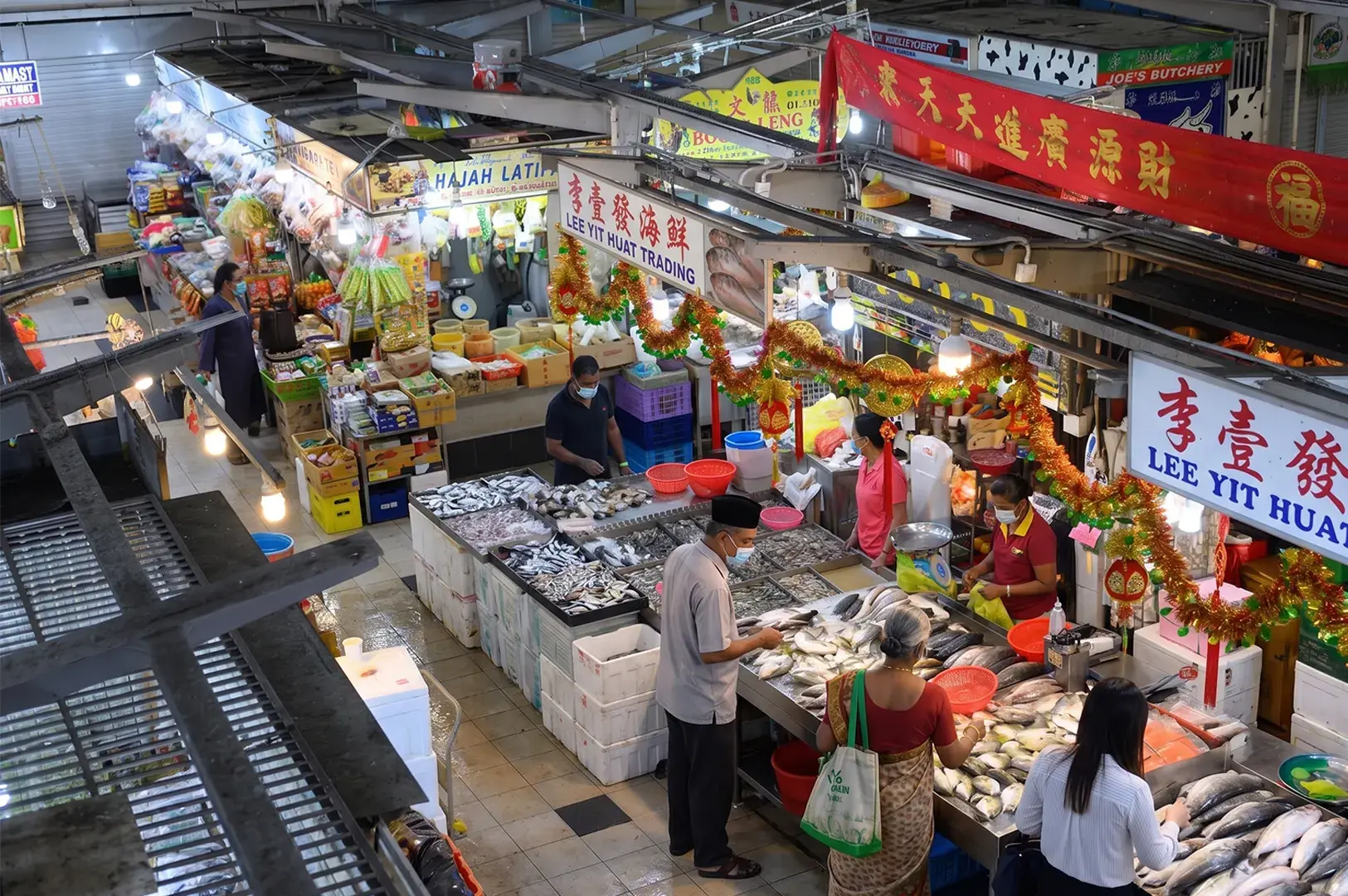
Do not sleep in. The wet market is on the ground floor, and it is the absolute heart of the complex. Arrive by 8:00 AM to see it at its peak. You will see massive whole fish laid out on crushed ice, butchers breaking down fresh duck meat and pork belly, and vibrant displays of tropical fruits. The floors are wet (hence the name), so wear proper shoes. Watch how the locals bargain. Listen to the colourful mix of languages.
Step 2: Walk the perimeter of the food centre (10:30 AM)
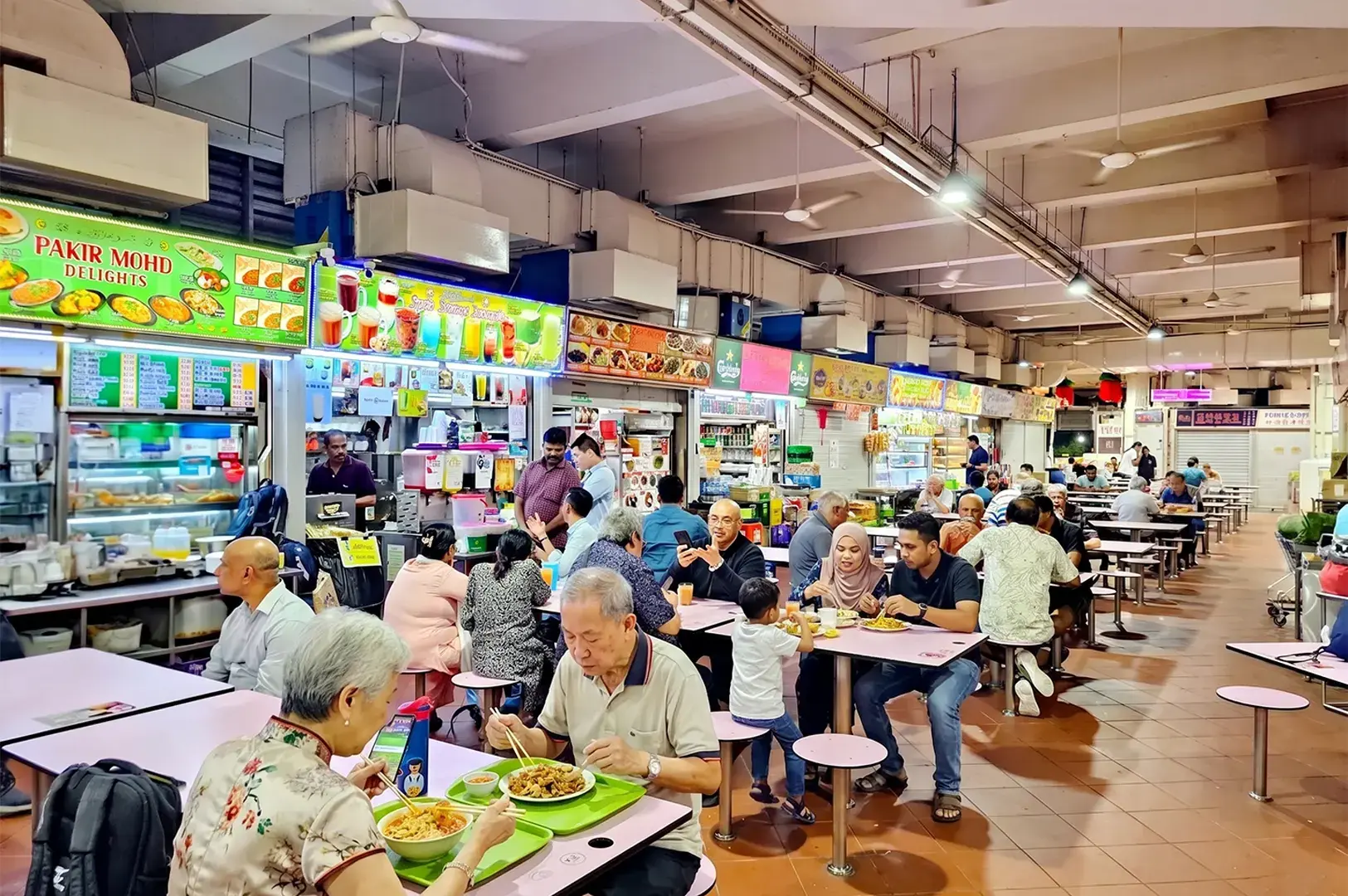
Before the lunchtime crowd descends, head over to the hawker stalls upstairs. Do not order anything yet. Walk one full round. Look at the stalls. You will notice many display faded newspaper clippings from twenty years ago. These are the legacy stalls. Observe what the uncles sitting alone at the tables are eating. They know exactly what is good.
Step 3: Secure a table and order (11:15 AM)
If you wait until 12:30 PM, you will not find a seat. Find a table early. In Singapore, we “chope” (reserve) seats by leaving a packet of tissue paper on the table. If you see a table with tissues or an umbrella on it, do not sit there. It is taken. Once you have a table, split up if you are in a group. Go queue for different dishes and bring them back to share.
Hawker Stalls and Dishes: What to Expect at Tekka Hawker Centre
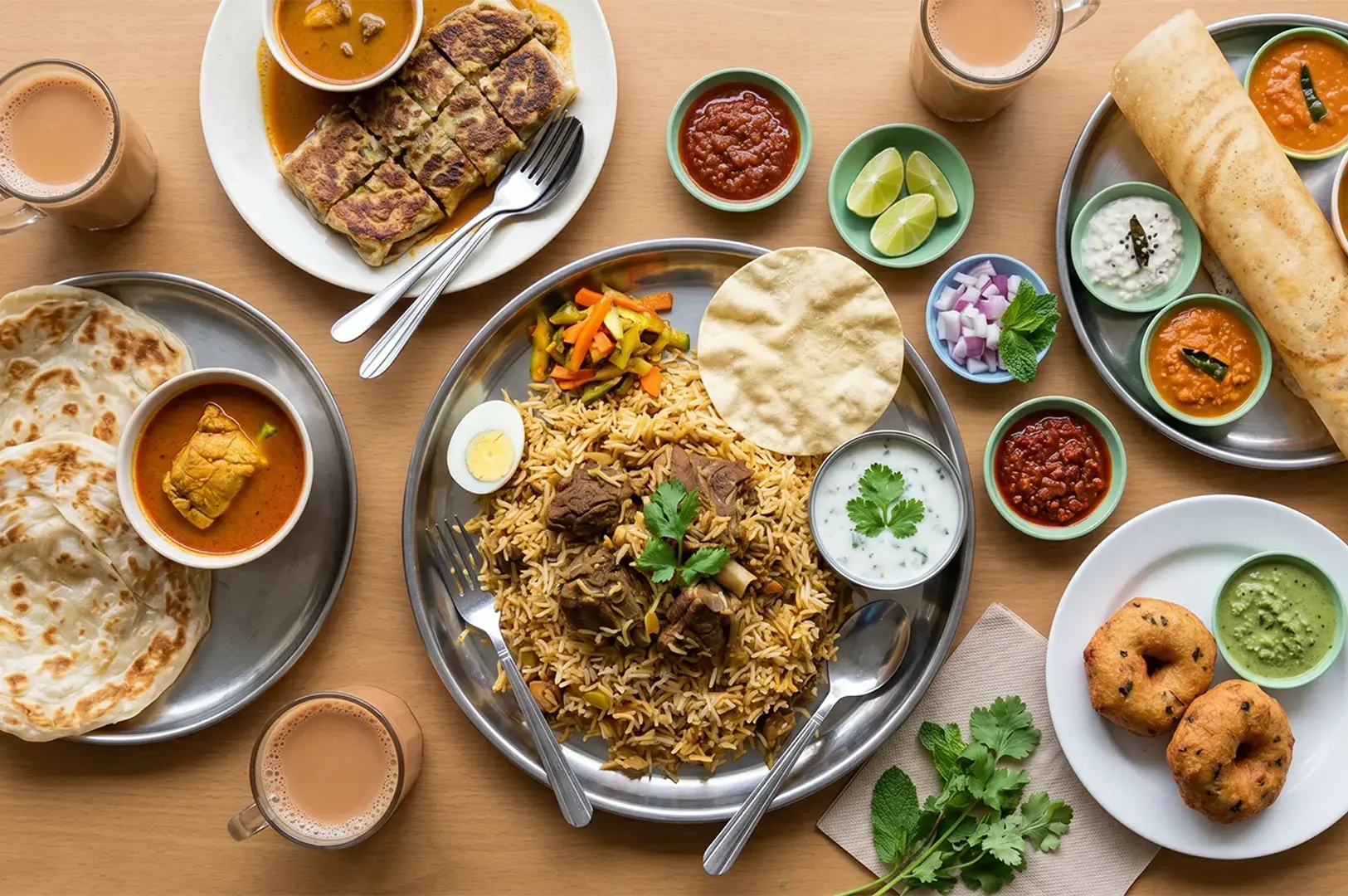
You are here to eat. The options are intimidating, but the prices are incredibly affordable. Expect to spend between $10 to $15 per person for a generous amount of food.
Here is what you should look for:
- Mutton Curry and Fish Briyani: This is the undisputed king of Tekka Centre. Stalls like Allauddin’s Briyani or Delhi Lahori serve massive mounds of fragrant, spiced basmati rice with tender chunks of mutton or fish. A plate will cost you around $6 to $8. It is heavy, rich, and deeply satisfying.
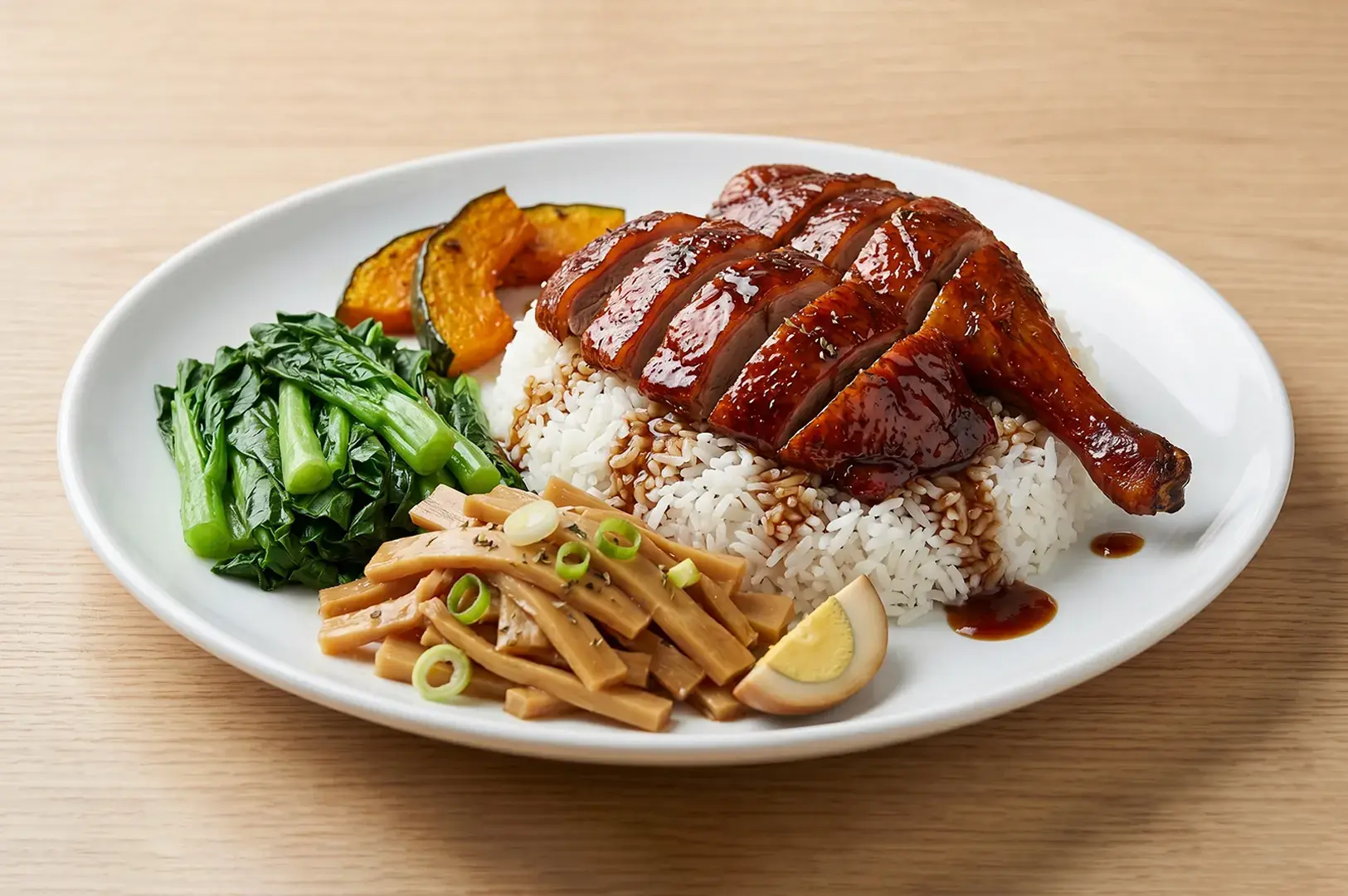
- Duck Rice and Heng Gi Goose: Heng Gi Goose and Duck Rice is famous for its succulent braised duck rice served with a bowl of herbal soup. The duck meat is tender and soaked in a rich braising sauce. Despite its name, the stall no longer serves goose due to import restrictions but remains a must-try. Duck rice is served with a generous amount of shredded turnip and spring onions, giving it a unique taste.
- Chilli Chicken and Fried Chicken: For those craving spicy and crispy delights, many stalls offer chilli chicken and fried chicken dishes. These are popular for their spicy, flavourful recipes and are often paired with garlic naan or cheese naan to balance the heat.
- Grandma Mee Siam and Mee Siam: Grandma Mee Siam is a beloved stall offering traditional mee siam, a spicy and tangy rice vermicelli dish garnished with boiled egg and spring onions. The stall also serves prawn fritters and ladle cake, a unique snack made from a recipe passed down from the owner’s grandmother, combining shredded turnip, pork belly, and hei pia (prawn fritters).
- Specialty Coffee and Iced Dirty Matcha: After a hearty meal, many visitors stop by Ar Rahman Cafe for specialty coffee options like flat white, iced dirty matcha, or teh tarik. Ar Rahman Cafe is also famous for its coconut milk-based chendol, a sweet dessert drink perfect for cooling down.
- Chee Cheong Fun and Peanut Porridge: For lighter bites, stalls offer chee cheong fun, a steamed rice roll served with sweet sauce, and peanut porridge, a comforting bowl made with coconut milk and peanuts.
For more detailed guide on what to try in Singapore’s Little India, why not try and find out what to in Tekka Centre in Singapore.
Tekka Market and Tekka Pasar: More Than Just Food
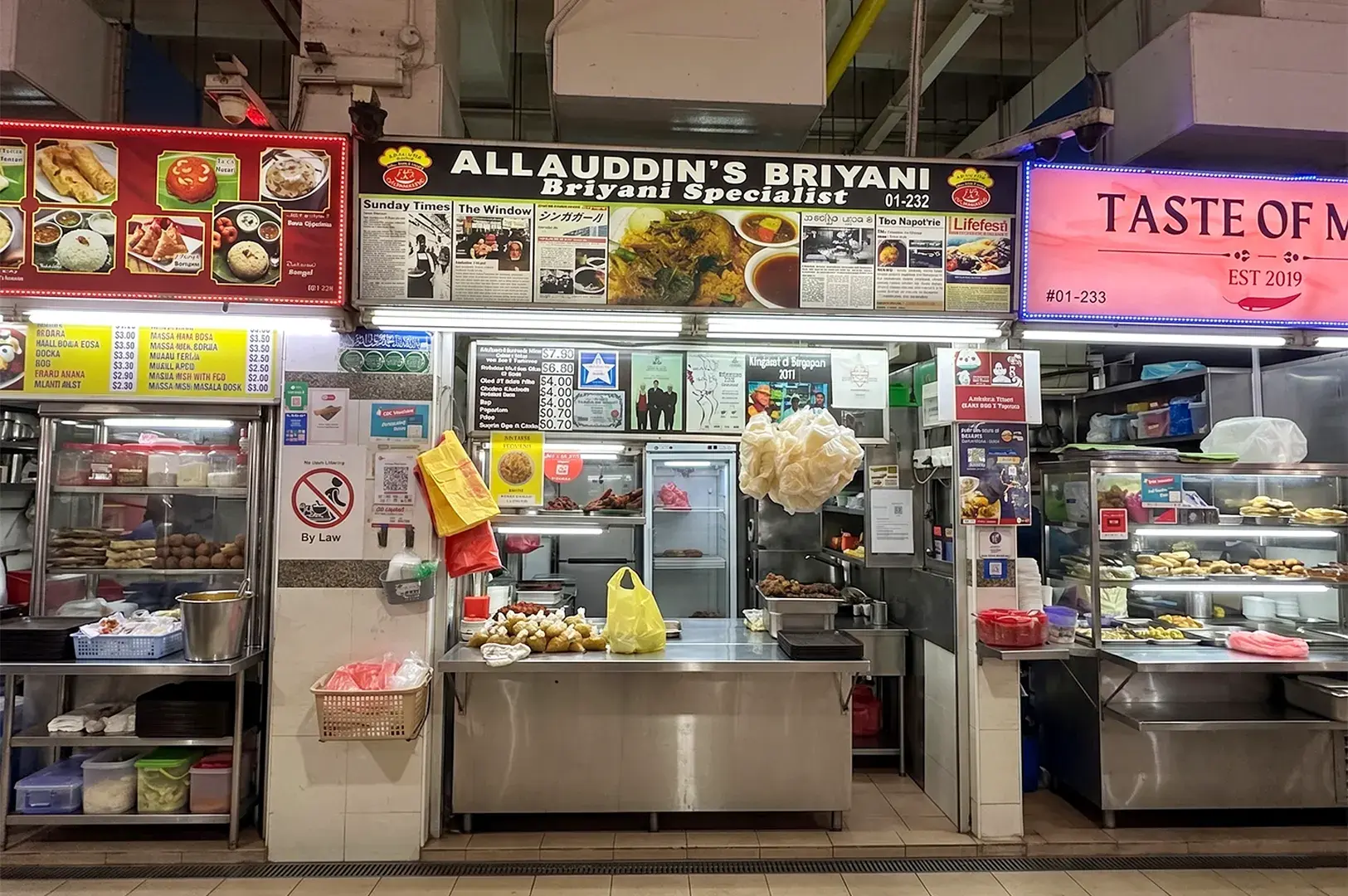
Tekka Centre is more than just a food centre. The wet market downstairs is Singapore’s largest wet-and-dry market, featuring 284 stalls selling fresh fish, duck meat, pork belly, spices, and produce. It is a vital hub for chefs and locals alike.
The market’s colourful mix of vendors includes non-Chinese sellers offering Indian spices, Malay ingredients, and fresh bamboo plants. This diversity reflects Singapore’s multicultural fabric and the vibrant heritage of Little India.
Tekka Hawker Centre: A Place Recognized by the Michelin Guide
Several stalls at Tekka Centre have been recognized by the Michelin Guide, including Allauddin’s Briyani and Heng Gi Goose and Duck Rice. Delhi Lahori, specializing in northern Indian and Pakistani cuisine, also holds a Bib Gourmand. These stalls offer authentic recipes with rich spices, mutton keema, dhal curry, and garlic naan, attracting food lovers seeking genuine Indian cuisine at affordable prices.
The Core Lesson of Tekka Centre
Tekka Centre is a beautiful, chaotic survivor. It survived the demolition of the old buffalo pens and cattle district. It survived the modernization of Singapore. It survives every single day through the sheer hard work of the hawkers who wake up at four in the morning to grind spices and boil broths.
When you sit down at a slightly sticky yellow table and eat a plate of chicken briyani or tuck into a bowl of prawn noodles, you are actively participating in our history. You are sharing a space with people from every possible background, united entirely by the love of cheap, excellent food.
Do not let the noise intimidate you. Walk in with cash in your pocket, an empty stomach, and an open mind. You will find exactly what you are looking for.
If you enjoyed this deep dive into our local food history, you can check out Singapore Hawkers for more similar articles to read and explore. We are constantly documenting the stalls, the people, and the legacy of our incredible food culture.