
The smell is usually the first thing that brings me back. Hot oil, chicken stock, sambal, kopi, and rain drying on the pavement outside. Then comes the sound: plastic chairs scraping, hawkers calling out orders, aunties asking if you want chilli, uncles stirring kopi with the same rhythm they have kept for years.
For many people, a hawker centre is simply a place to eat. For those of us who grew up in Singapore, it often feels like something more intimate. It feels like family.
As a child, the hawker centre was where weekends began. My grandparents would bring me there early in the morning, when the breakfast crowd was just starting to build. They never needed to discuss what to order. My grandfather had his kopi, my grandmother knew which noodle stall she liked, and I would sit at the table, swinging my legs, watching the whole place come alive.
Back then, I thought this was just routine. I did not yet understand that I was growing up inside one of Singapore’s most important social spaces. The hawker centre was not only feeding us; it was teaching us how to live with one another.
You learn a lot at a shared table. You learn to “chope” seats, carry trays carefully, make space for strangers, and say thank you to the stallholder. You learn that a packet of tissue can reserve a seat, that everyone has an opinion on the best chicken rice, and that waiting in line is part of the experience.
This everyday culture is also what makes hawker centres so meaningful to visitors. For foodie travelers, Singapore’s hawker centres are not just convenient dining spots; they are an entry point into the country’s history, habits, and multicultural identity. Guides like this website often point travellers toward hawker food because it offers a direct taste of how Singapore eats, gathers, and remembers.
But for locals, the experience runs deeper. A plate of nasi lemak after a market trip, a bowl of fishball noodles before school, or a cup of teh peng on a humid afternoon can carry years of memory. Food becomes a language between generations. Sometimes, it is how grandparents show love without saying too much.
That is why the hawker centre feels like family. It has watched us grow up.
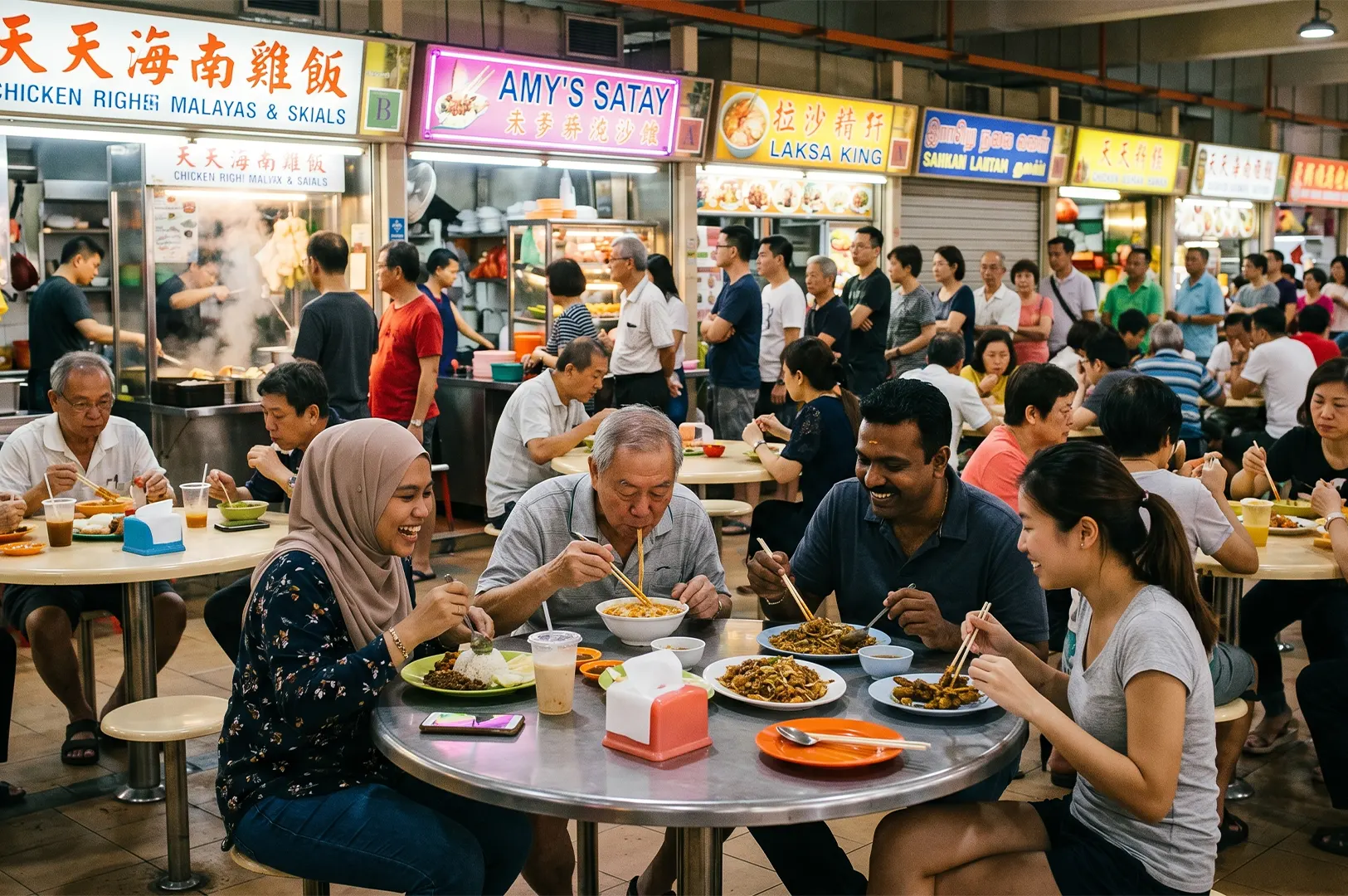
Singapore’s hawker culture has also received global recognition. In 2020, it was inscribed on UNESCO’s Representative List of the Intangible Cultural Heritage of Humanity, acknowledging hawker centres as community dining spaces where people from diverse backgrounds gather. The MICHELIN Guide has also helped introduce many travellers to Singapore’s hawker scene, highlighting how remarkable meals can be found in humble, everyday settings.
Still, no award fully explains what these spaces mean to us. To understand that, you have to sit in a hawker centre during breakfast rush. You have to hear five conversations happening at once, watch families divide dishes across the table, and see office workers, retirees, students, tourists, and cleaners all eating under the same roof.
As shared in this reflection on how hawker centres shape the Singaporean experience, these places are more than food destinations. They are part of how Singaporeans connect, remember, and belong.
The hawker centre is not perfect. It can be hot, crowded, noisy, and messy. Sometimes the queue is too long, the favourite dish is sold out, or there is no seat in sight. But maybe that is also why it feels so human.
Like family, it is full of movement, personality, and occasional frustration. Still, we return.
We return because the food comforts us. We return because the place remembers us. Most of all, we return because every meal feels like a small reunion; not just with people we love, but with the Singapore we grew up in.