
When people talk about Singapore’s multicultural identity, they often point to major celebrations, national campaigns, or the country’s diverse neighborhoods. While these are important, I believe one of the most authentic examples can be found in a much simpler place; the hawker centre.
Growing up in Singapore, I spent countless hours at hawker centres with family and friends. Whether it was a quick breakfast before school, a late-night supper, or a weekend meal with relatives, there was one thing that always stood out. The tables rarely belonged to just one group of people.
In many hawker centres, especially during busy hours, shared seating is simply part of the experience. You might sit beside an elderly couple enjoying kaya toast, a family sharing plates of satay, office workers on their lunch break, or tourists exploring local dishes for the first time. Everyone comes from different backgrounds, yet for that moment, they occupy the same space.
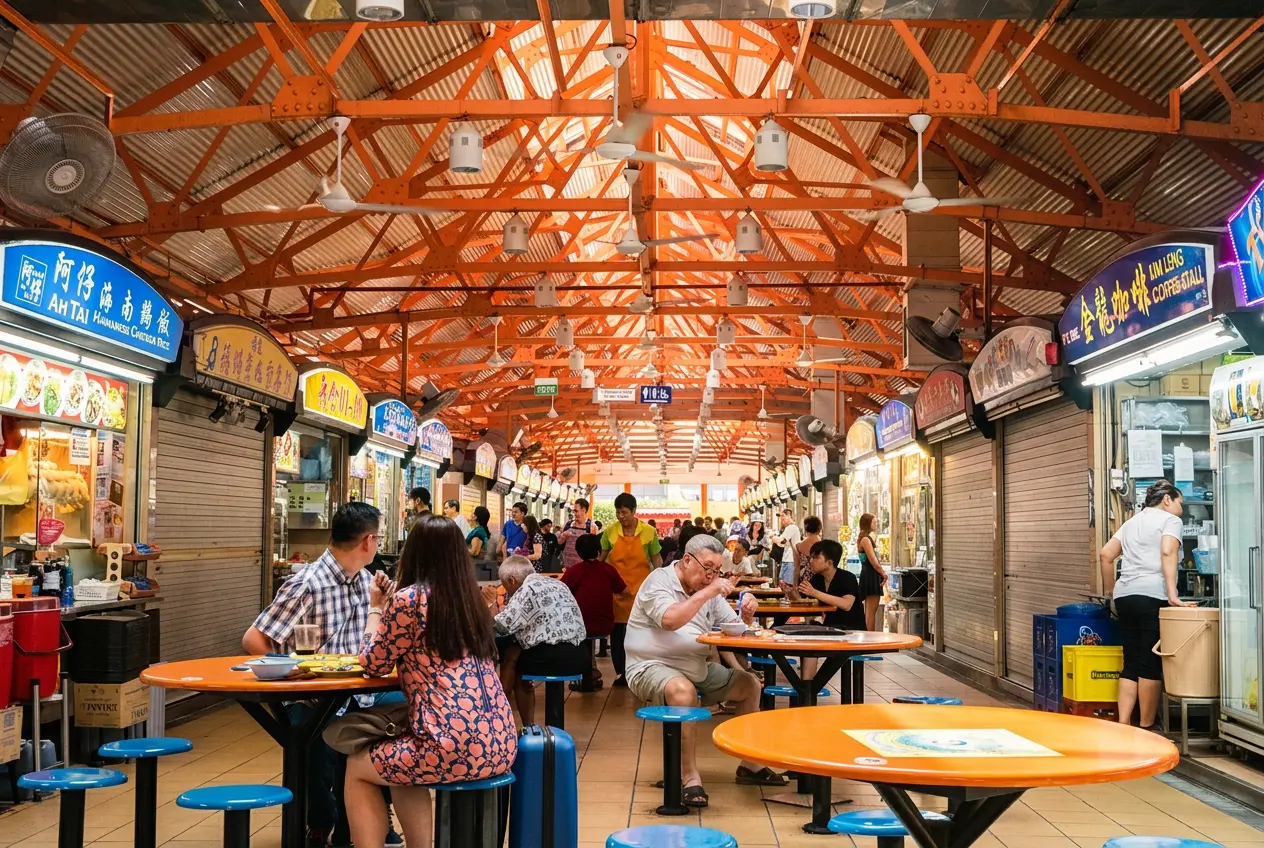
What makes this unique is how natural it feels. There is no formal introduction and no expectation of interaction. Sometimes there is a brief exchange over an empty seat or a polite request to move a tray. Other times, people simply enjoy their meals side by side. Despite these small interactions, the shared table creates a quiet sense of community that reflects Singapore’s multicultural society.
The hawker centre removes many of the social boundaries that often exist elsewhere. The banker, the student, the retiree, and the delivery rider may all be seated at the same table. Food becomes the common ground. The focus is not on differences but on the shared experience of enjoying a meal.
This is especially meaningful in a country where food plays such a central role in everyday life. Singapore’s hawker culture itself is built upon contributions from different ethnic communities. Chinese, Malay, Indian, and other culinary traditions have shaped the dishes that locals enjoy today. Sitting together in a hawker centre becomes a reflection of that same cultural blending.
I have always found something reassuring about this environment. In a fast-paced city where people are constantly moving between work, school, and personal commitments, the hawker centre remains one of the few places where individuals from all walks of life naturally gather. The simple act of sharing a table reminds us that multiculturalism is not only expressed through policies or celebrations; it is also practiced in everyday moments.
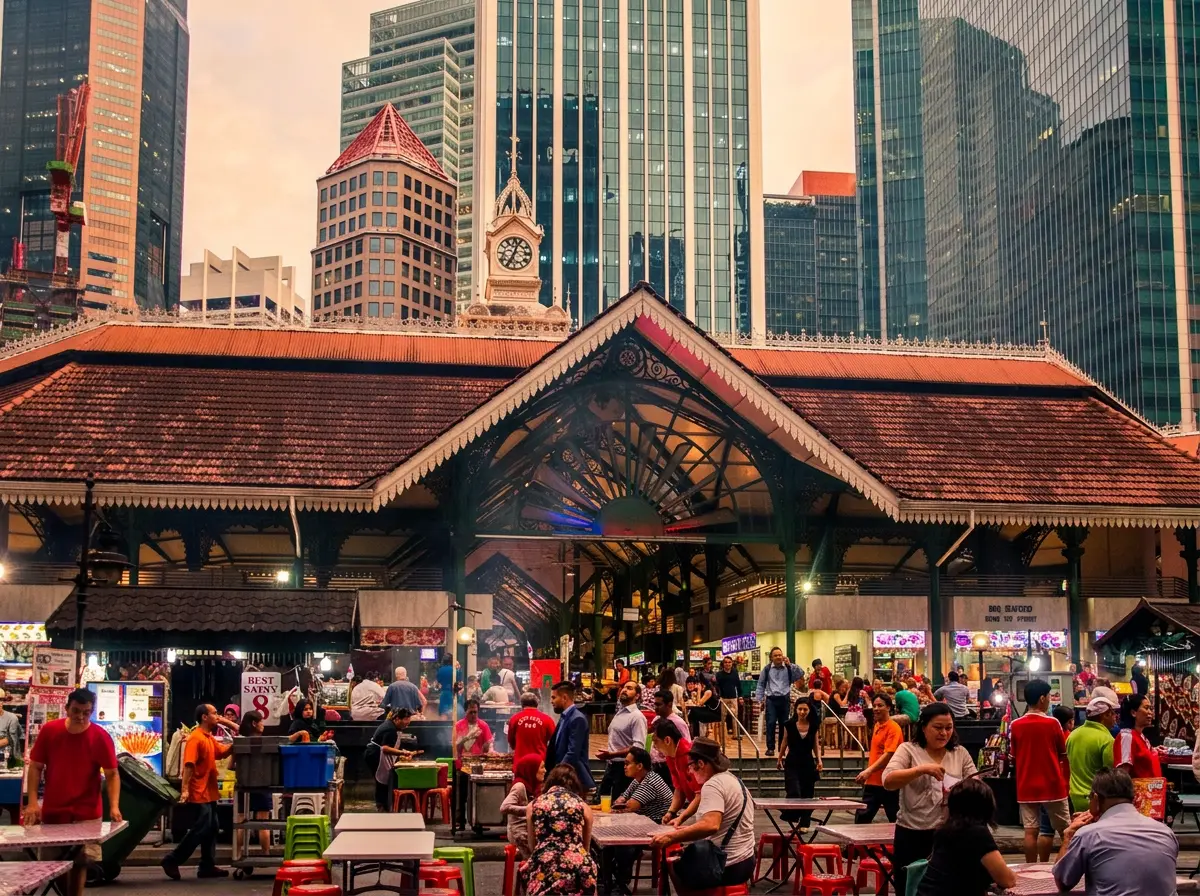
For visitors, this may seem like a practical arrangement driven by limited seating. For many Singaporeans, however, it represents something deeper. It reflects a culture that values coexistence, mutual respect, and shared experiences. The kopitiam table is more than just a place to eat; it is a small but meaningful symbol of how diverse communities can come together in everyday life.
Every time I sit down at a crowded hawker centre and make room for someone else, I am reminded that Singapore’s multicultural identity is not just something we talk about. It is something we live, one shared table at a time.
“A shared table may bring strangers together, but it often reminds us how much we have in common.”
Discover more stories celebrating Singapore’s food culture and community spirit by visiting Singapore Hawkers.