
Every year, when durian season arrives in Singapore, I notice something familiar. Conversations shift from work to fruit recommendations. Friends begin planning late-night meetups, families ask which stall has the freshest batch, and social media fills with debates over Mao Shan Wang, Red Prawn, and D24. It reminds me that durian has never been just another fruit. It has always been an excuse to gather.
Long before dedicated durian cafés became popular, many Singaporeans enjoyed the fruit near old hawker centres, roadside fruit stalls, and neighbourhood markets. It was never about creating a luxurious dining experience. Plastic stools, simple tables, newspapers spread across the surface, and a bucket for the empty husks were enough. The setting was ordinary, but the conversations were memorable.
I often think about how naturally these places brought people together. Nobody worried about matching tableware or carefully planned menus. Someone would buy a few durians, another person would order sugarcane juice from a nearby hawker stall, and everyone simply found a place to sit. The strongest opinions were usually about which durian deserved to be crowned the best, and those friendly disagreements became part of the fun.
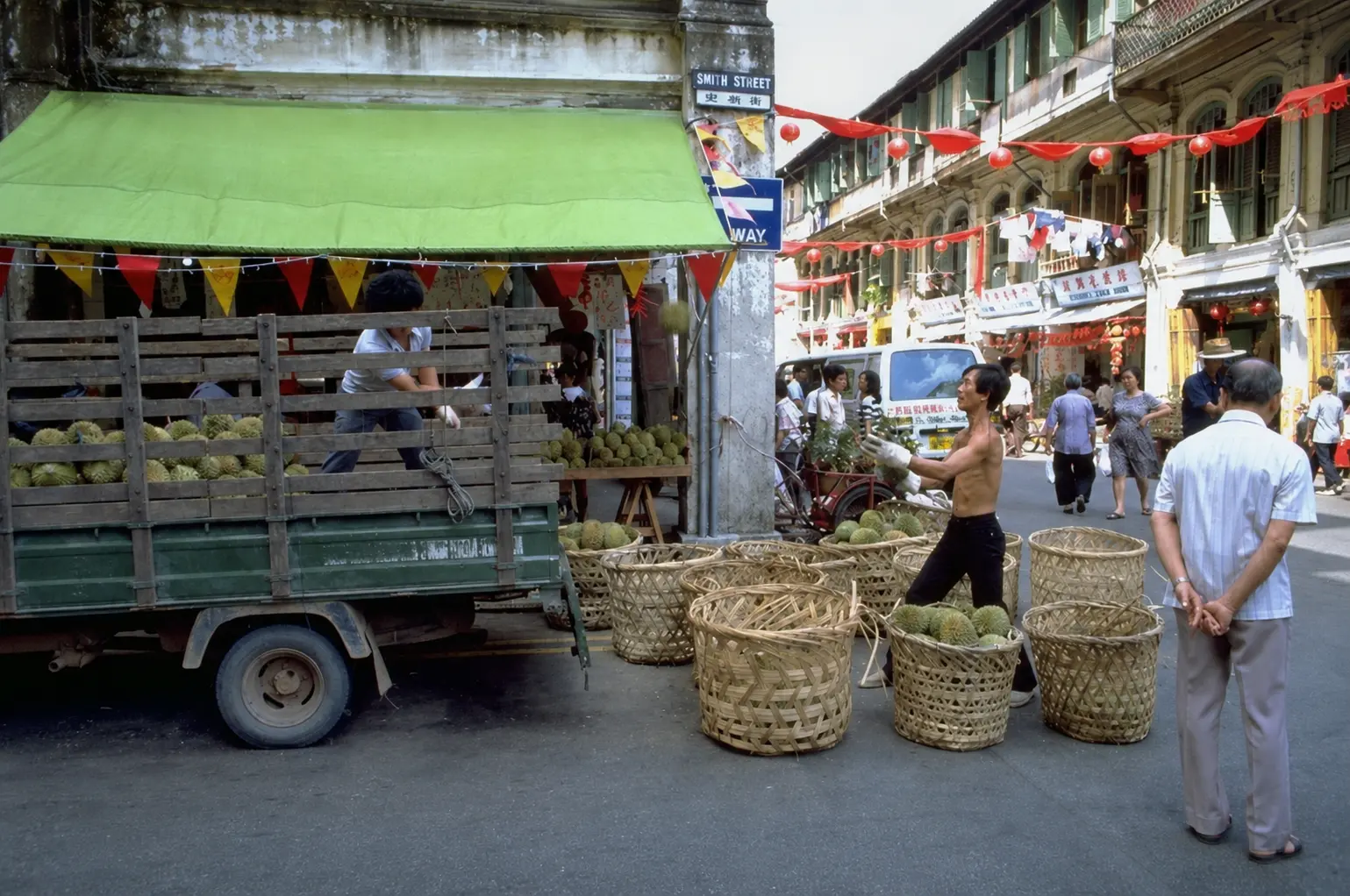
Old hawker stalls played an important role in these moments. They were already places where people from different backgrounds crossed paths every day. During durian season, that sense of community became even stronger. Strangers exchanged recommendations, regular customers greeted familiar stall owners, and children learned how to identify good fruit simply by watching experienced buyers inspect the shell.
These experiences taught something that cannot easily be found in modern dining trends. Gathering did not require an occasion. It only required people willing to share food and spend time together.
Today, many things have changed. Some traditional fruit stalls have disappeared, while newer durian businesses offer air-conditioned spaces, online reservations, and home delivery. Convenience has certainly improved, but I sometimes wonder whether something small has been left behind. When the fruit arrives neatly packed at my doorstep, I enjoy the taste, but I miss the conversations that happened while waiting for the seller to crack open the shell.
That is why I still appreciate visiting hawker centres and neighbourhood fruit stalls during durian season. The experience feels slower, yet somehow more rewarding. I hear different dialects spoken around me, watch people compare their favourite varieties, and see families introducing younger generations to a tradition they grew up with themselves.
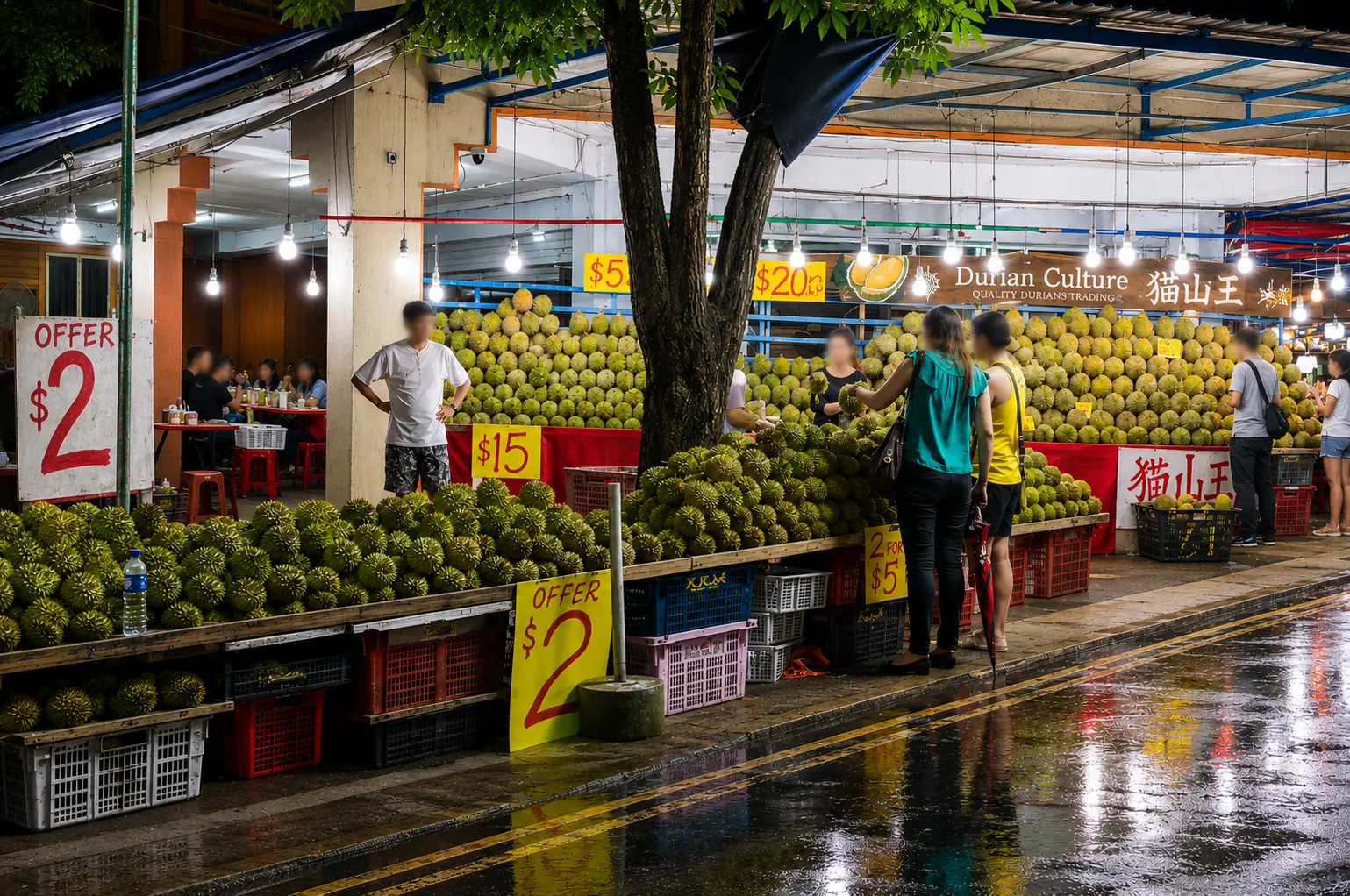
Perhaps that is the quiet lesson of durian season. The fruit may be famous for its strong smell and rich flavour, but its greatest contribution has always been its ability to bring people together. In a country where food is deeply connected to identity, even a simple evening around a table can become part of a shared history.
As Singapore continues to grow and evolve, I hope we continue making room for these small traditions. They remind us that community is not built only through celebrations or grand events. Sometimes, it begins with a few people gathering around freshly opened durians at a familiar hawker stall.
“The sweetest memories are rarely made by the food alone, but by the people who shared the table.”
Discover more stories celebrating Singapore’s food heritage and hawker culture by visiting Singapore Hawkers.