There are some dishes we do not simply eat. We return to them.
For me, bak chor mee has always felt like one of those dishes. It is not the fanciest thing on the table, and it does not try to be. A bowl of noodles, minced pork, liver, meatballs, chilli, vinegar, and that sharp smell that reaches you before the first bite. It is the kind of food that can wake up an old memory before you are ready for it.
That was what I thought about when I visited Hill Street Tai Hwa Pork Noodle at Crawford Lane. The stall has been around since 1932 and is known as one of Singapore’s most famous bak chor mee stalls, with its Michelin star bringing even more attention to a name many locals already knew.
But standing in the queue, I was not thinking about awards. I was thinking about family.
Every family has a dish that becomes part of its language. For some, it is chicken rice bought after school. For others, it is fishball noodles on Sunday mornings. In my family, noodles often appeared when nobody had the energy to explain love in words. A packet was placed on the table, still warm. That was enough.
At Tai Hwa, the bowl arrives with a kind of old-school confidence. The vinegar is bold, the noodles are springy, and the pork gives the dish its familiar comfort. It is not a quiet bowl. It has bite, heat, and attitude. Yet somehow, it still feels deeply domestic, like something a father might buy for his children because he knows exactly how they like it.
That is what hawker food does well. It carries family habits without making them look important. The way someone orders extra chilli. The way an older person reminds you to mix the noodles properly. The way a child learns, slowly, that vinegar is not too strong once you grow into it.
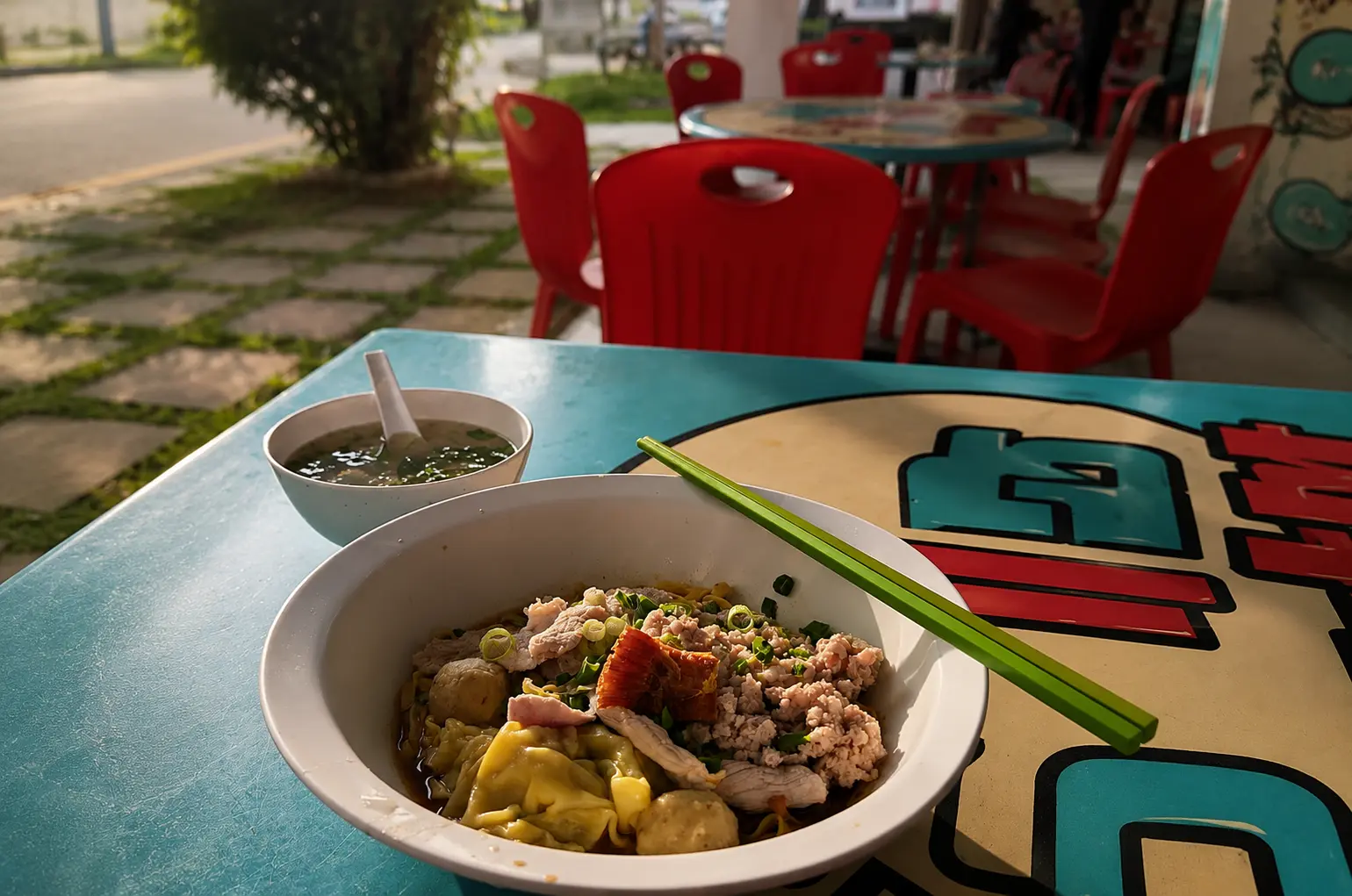
Hill Street Tai Hwa Pork Noodle is often discussed as a success story, and it is. But to me, it also feels like a family story that became part of Singapore’s larger memory. A recipe passed down, a stall that moved through time, and a bowl of noodles that still makes people wait.
Maybe that is why certain hawker dishes stay with us. They are not only about taste. They remind us who fed us, who sat beside us, and who taught us how to eat.
“A family story does not always begin with words; sometimes, it begins with a bowl placed gently on the table.”
Visit Singapore Hawkers for more stories that celebrate the people, places, and dishes behind Singapore’s hawker culture.