
Some meals stay with you longer than the queue you stood in for them.
I still remember the first time I ate at Maxwell Food Centre, standing with a foam plate in one hand and a plastic spoon in the other, no table in sight. The chicken rice was warm. The uncle at the next stall was wiping down his counter without a word. Nobody was there for photos. They were just there to eat.
That is the Singapore I grew up in, and it is the one we keep chasing when we write.
Over the past few years, our team has worked our way through every Michelin-recognised hawker stall we could find inside proper hawker centres (not fancy shophouse spin-offs, not air-conditioned outlets). We queued, we tried again on off days, we came back when things sold out. Between the lot of us, we have eaten at these stalls more times than we can honestly count. Along the way, we also came across names like Hawker Chan, Hill Street Tai Hwa, Chef Kang’s Noodle House, and He Ben Ji, each earning their own kind of Michelin recognition in Singapore’s street food scene. We passed stalls selling fish head bee hoon, braised duck rice, and prawn noodles. We stopped at corners famous for han kee fish soup and fried fish head. We ate kaya toast at seven in the morning and bak kut teh in the heat of noon. All of it, taken together, is what makes Singapore’s hawker culture worth documenting seriously.
Singapore’s best Michelin street food is not always in a restaurant. Anthony Bourdain understood that. He said it plainly: some of the most important food in the world is served on a plastic tray. Our list is built on the same belief.
A quick note before we begin. Almost none of these are Michelin-starred hawker stalls in the traditional sense. They are Bib Gourmand or Michelin Guide-listed, which is Michelin’s way of honouring quality food at honest prices. That distinction matters to us, because this is not about prestige. It is about a plate of food doing exactly what it set out to do.
Here is our honest take on ten of them.
Quick Summary: The Ten Stalls at a Glance
| Stall | Hawker Centre | What to Know |
|---|---|---|
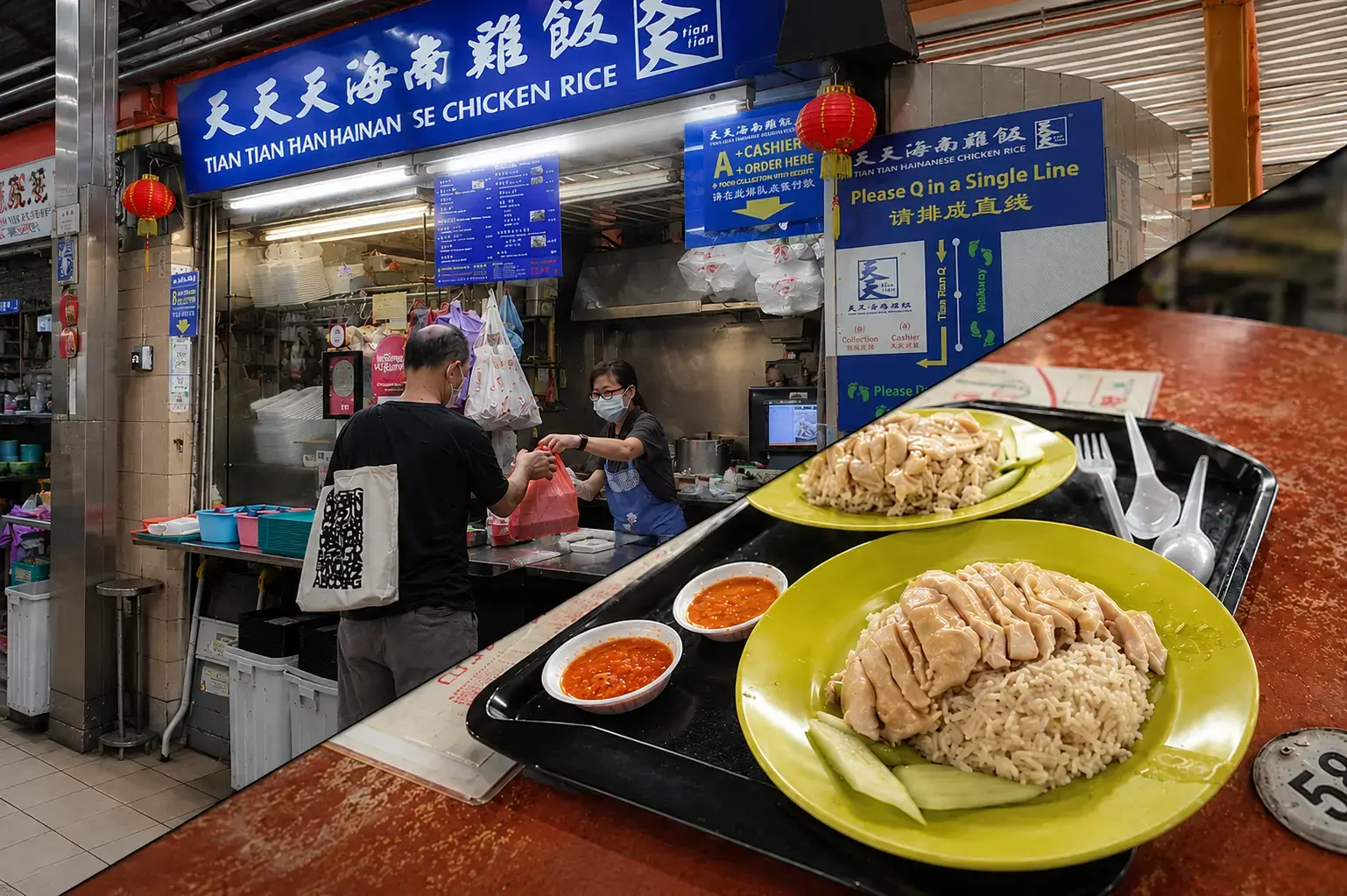
| Tian Tian Hainanese Chicken Rice | Maxwell Food Centre | The famous one. Smooth steamed chicken rice, fragrant rice, tourist crowds. |
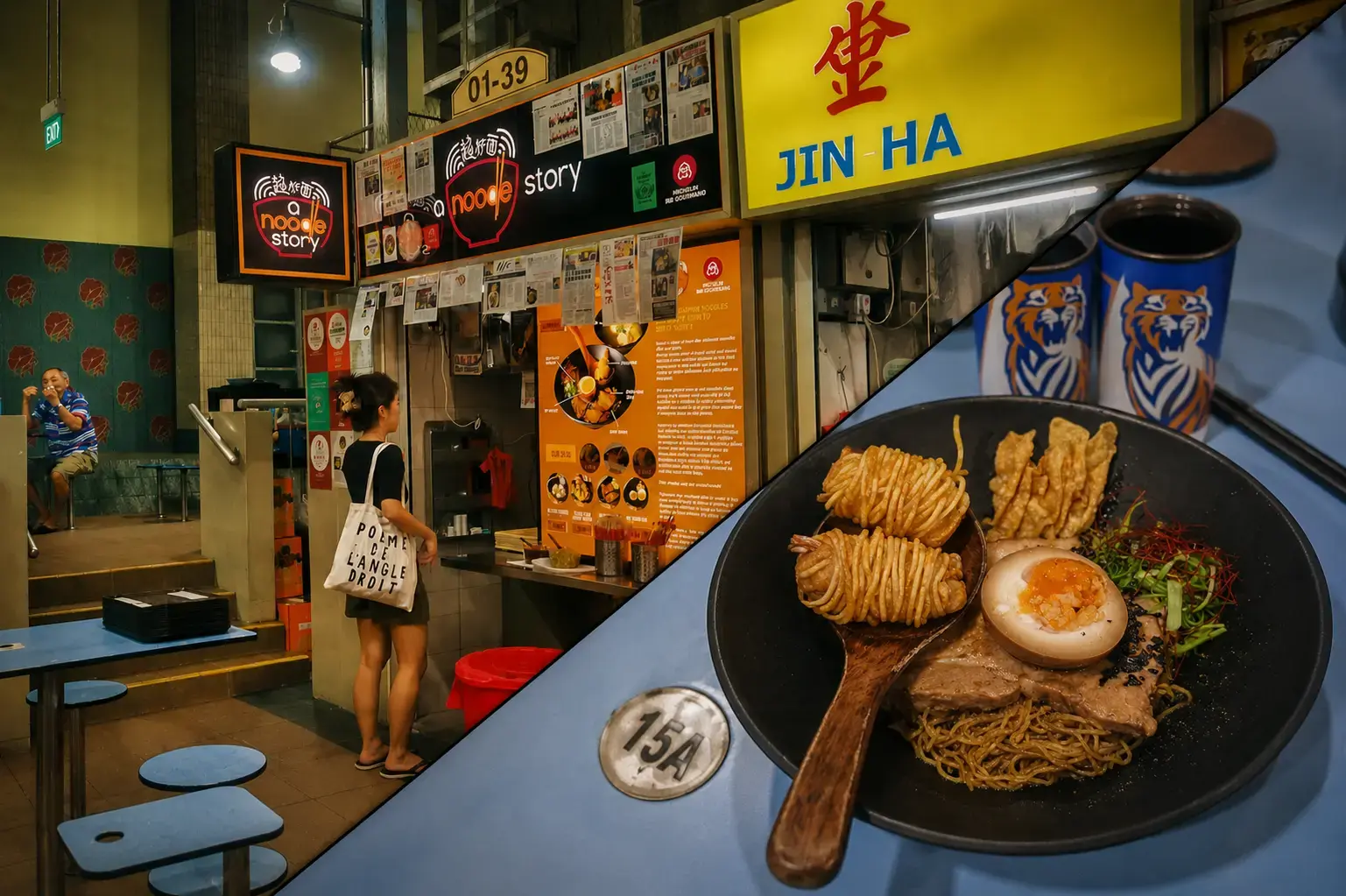
| A Noodle Story | Amoy Street Food Centre | A newer voice in the hawker world, ramen meets wanton mee. |
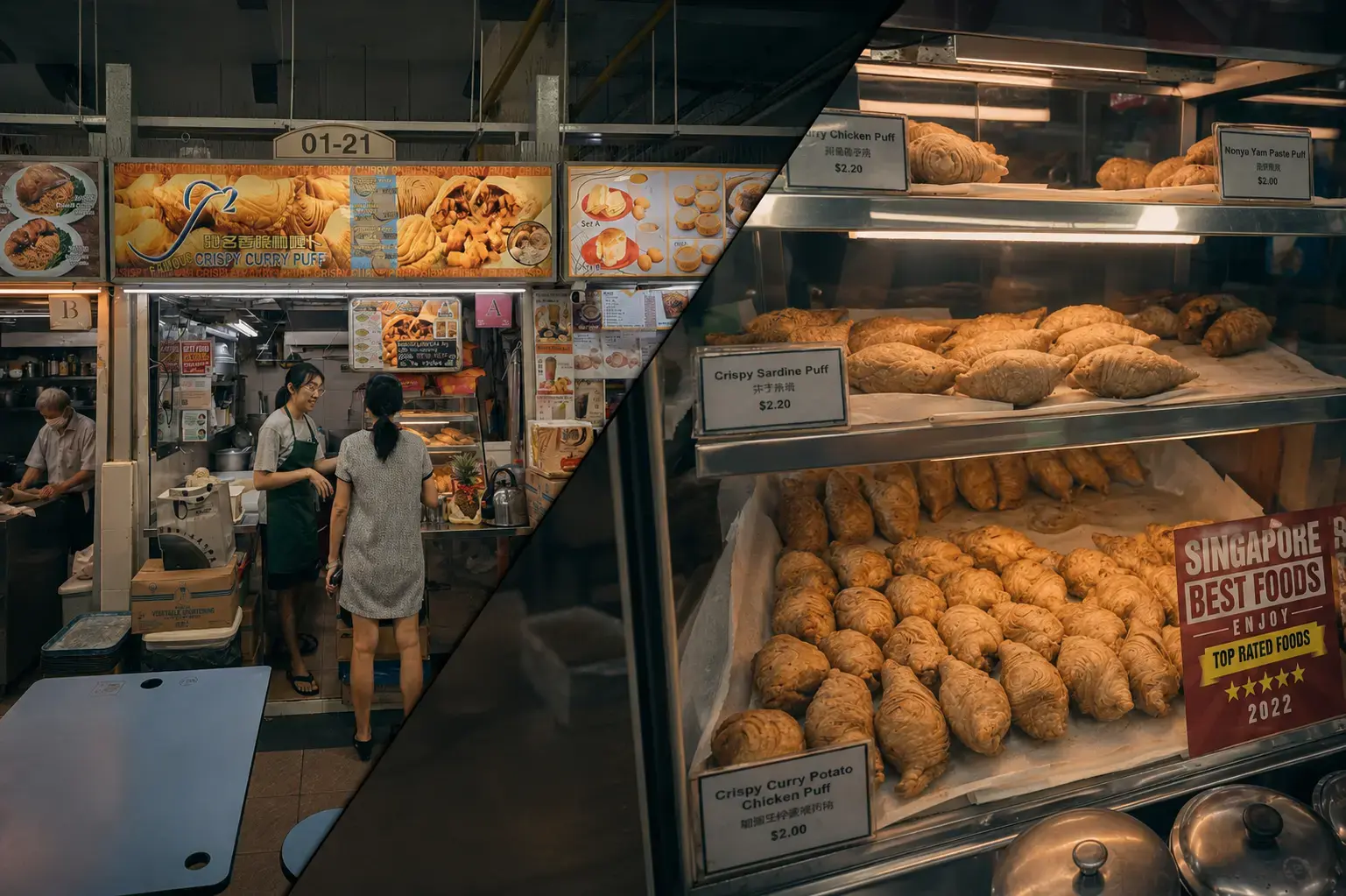
| J2 Famous Crispy Curry Puff | Amoy Street Food Centre | Flaky, handmade, best eaten warm in your hands. |
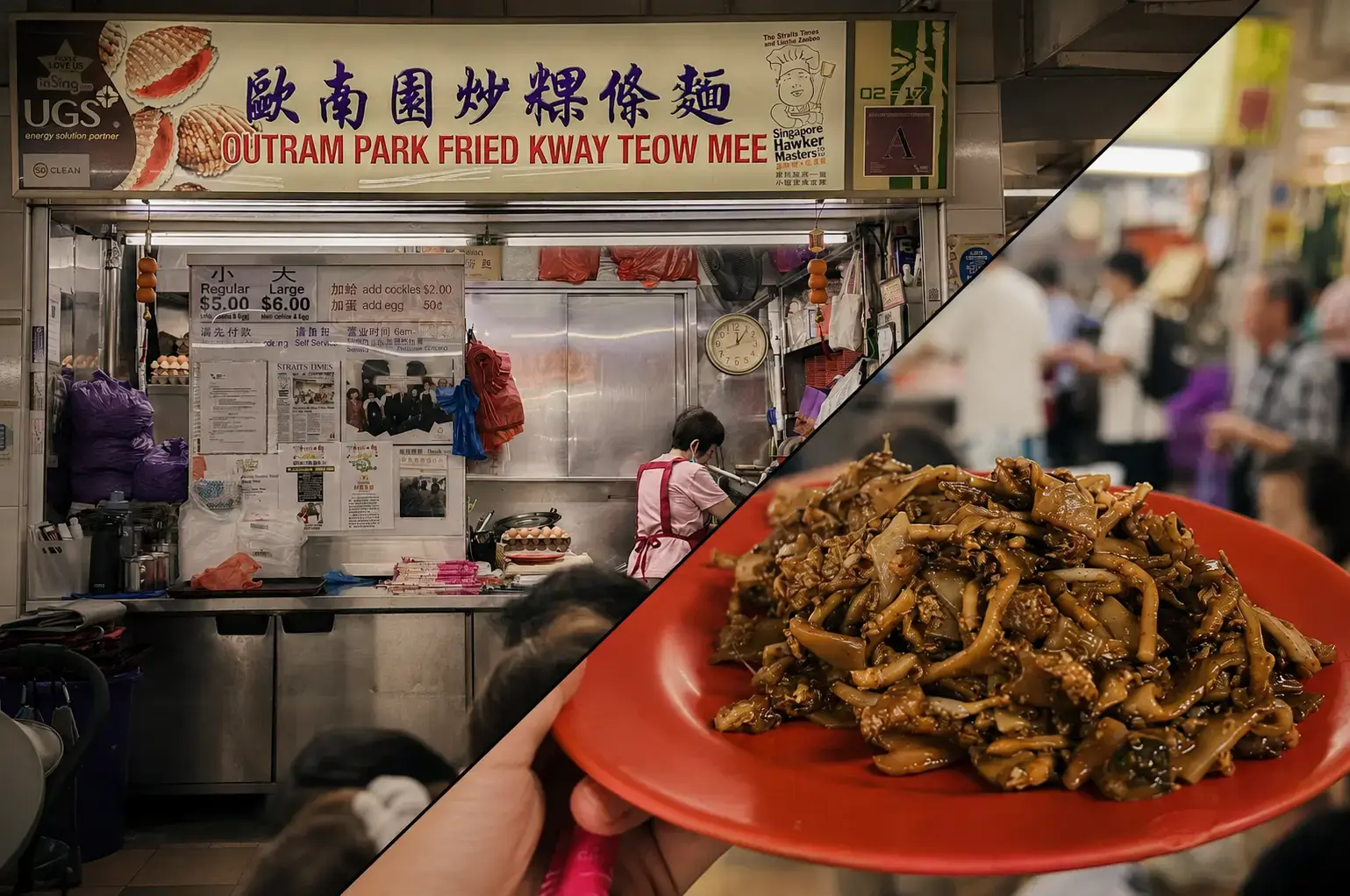
| Outram Park Fried Kway Teow Mee | Hong Lim Market & Food Centre | Old-school char kway teow with real wok hei. |
| Tai Wah Pork Noodle | Hong Lim Market & Food Centre | Vinegar-forward bak chor mee with proper bite. |
| Ji Ji Noodle House | Hong Lim Market & Food Centre | Wanton mee since 1965, crispy pork lard and homemade chilli. |
| Jian Bo Tiong Bahru Shui Kueh | Tiong Bahru Market | Soft steamed rice cakes, a breakfast memory. |
| Nam Sing Hokkien Fried Mee | Old Airport Road Food Centre | Prawn-shell broth folded into every strand. |
| Lao Fu Zi Fried Kway Teow | Old Airport Road Food Centre | A cleaner, lighter char kway teow. |
| Allauddin’s Briyani | Tekka Centre | Fragrant rice and hearty portions in Little India. |
1. Tian Tian Hainanese Chicken Rice: A Michelin Guide Singapore Hawker Classic
Price Point: Budget-Friendly (around S$5 to S$10)
Nearest MRT: Maxwell, about 2 minutes’ walk
You already know this one. It is the stall everyone points you to, the name that shows up on every list, the long queue that snakes well before noon at Maxwell Food Centre. Fame like that makes people expect too much, and sometimes they walk away underwhelmed because they came looking for magic instead of lunch.
Here is what we have found after many visits. The chicken is smooth and tender, yes, but the steamed chicken rice is the quiet hero. Each grain carries fat and fragrance, cooked the way it should be, and the chilli sauce ties everything together without shouting. Eat the rice on its own for a second and you will understand why this stall earned its Bib Gourmand recognition. Maxwell Food Centre also houses other food stalls worth knowing, including Maxwell Fuzhou Oyster Cake, which pulls its own loyal crowd, and kee chicken rice options nearby that regulars cycle between. Soya sauce chicken, duck rice, and even fried fish head appear a few stalls over if you want to build a full Maxwell crawl.
Good News for: First-timers and anyone who wants to taste the dish that started so many chicken rice arguments.
Bad News if: You hate queues or arrive expecting a religious experience instead of a very good plate of food.
Insider tip: Go before the lunch rush, and judge it by the rice, not just the chicken.
2. A Noodle Story: New-Generation Street Food at Amoy Street Food Centre
Price Point: Mid-Range (around S$10 to S$15)
Nearest MRT: Telok Ayer, about 3 minutes’ walk
This is the newer voice in an old room. A Noodle Story takes the bones of Japanese ramen and folds in the soul of local wanton mee, and the result is something you cannot quite file under either. Springy noodles, char siew, a potato-wrapped prawn, an onsen egg sitting soft on top. It sits on the second floor of Amoy Street Food Centre, which catches many first-timers off guard.
We were sceptical the first time (a hawker stall doing “Singapore-style ramen” sounded like a gimmick). It was not. The plating is careful, the flavours are layered, and it proves that hawker food can move forward without losing its footing. It has held its Bib Gourmand status for good reason. For context, Amoy Street Food Centre is also home to other respected food stalls that make it one of the more interesting hawker centres for the office lunch crowd, drawing people who cycle between this and the Chinatown Complex food centre depending on the day.
Good News for: Younger diners and anyone curious about where Singapore street food is heading.
Bad News if: You want a big, cheap bowl. Portions are modest and it costs more than your usual noodle plate.
Insider tip: Come early in the lunch hour. Popular items sell out and the queue builds fast.
3. J2 Famous Crispy Curry Puff (Amoy Street Food Centre)
Price Point: Budget-Friendly (around S$2 to S$3 per puff)
Nearest MRT: Telok Ayer, about 3 minutes’ walk
There is a particular joy in biting into a curry puff that is still warm, the pastry cracking, the filling steaming faintly in the air-conditioned corridor. J2 does the handmade kind, with flaky layers that shatter and generous fillings of potato, chicken, sardine, or yam. At Amoy Street Food Centre, it is one of the most quietly dependable Michelin-recognised stalls in the building.
We have queued here on a slow afternoon and watched a whole tray of one flavour disappear before we reached the front. It is that popular. When it is fresh, it is honestly hard to beat for a few dollars. Pair it with a bowl from a neighbouring stall and you have a lunch that costs almost nothing and delivers genuine quality food.
Good News for: Snack hunters and office workers wanting a quick, budget-friendly, Michelin-recognised bite.
Bad News if: You have a favourite flavour in mind. Certain ones sell out, and they will not hold one for you.
Insider tip: Eat it on the spot. A curry puff that sits in a bag loses the very thing that makes it special.
4. Outram Park Fried Kway Teow Mee: Char Kway Teow and Fried Kway Done the Old Way at Hong Lim
Price Point: Budget-Friendly (around S$5 to S$8)
Nearest MRT: Chinatown, about 4 to 6 minutes’ walk
This is char kway teow and fried kway the old way. Flat rice noodles, a smoky breath of wok hei, cockles tucked in, sweetness held in balance. The fried kway teow mee here carries the kind of wok aroma you remember from childhood, and nothing on the plate feels out of place. Nothing fancy, nothing reinvented, just a heritage dish cooked by hands that have done it thousands of times at Hong Lim Market & Food Centre.
Hong Lim is worth treating as a food destination in its own right. Beyond the Michelin-recognised stalls, you will find braised duck rice, claypot rice with chinese sausage, and even stalls known locally for their bak kut teh. The Chinatown Complex food centre nearby adds more to the picture, with options ranging from sliced fish soup to ben ji claypot rice and fatty ox hk kitchen, which has built its own following. It is a corner of Singapore where old food culture sits very close together, and you could easily spend a full morning here.
Good News for: Traditionalists and anyone building a Chinatown food trail.
Bad News if: You sleep in. The queue is long and it can sell out before you have finished your morning kopi.
Insider tip: Go before noon. This is better as an early meal than a late one.
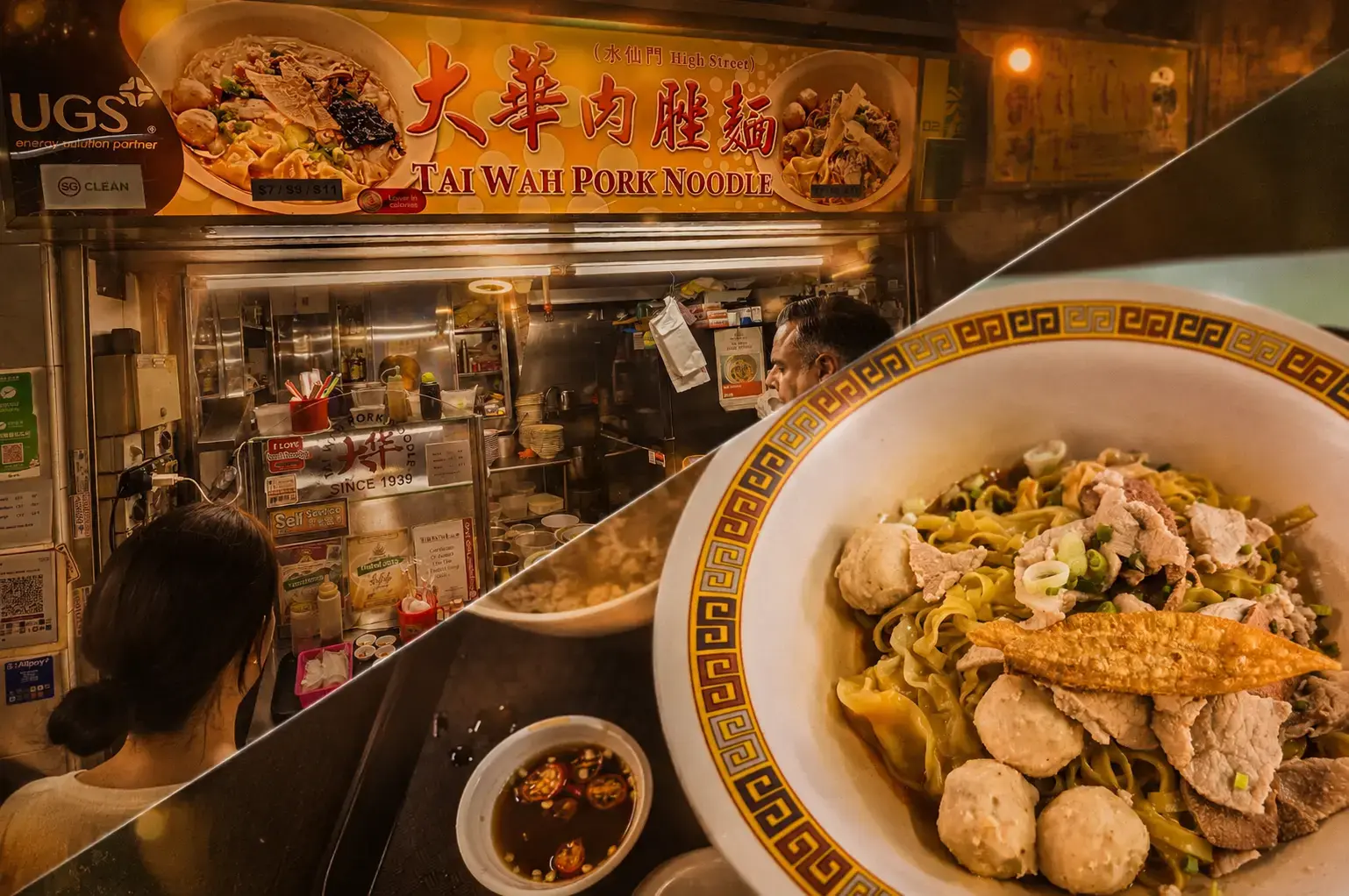
5. Tai Wah Pork Noodle: Bib Gourmand Bak Chor Mee at Hong Lim Market
Price Point: Budget-Friendly (around S$5 to S$8)
Nearest MRT: Chinatown, about 4 to 6 minutes’ walk
Bak chor mee lives or dies on its seasoning, and Tai Wah leans into the vinegar with confidence. Minced pork, meatballs, dried fish, pork liver, a tangle of noodles that grabs the chilli and holds on. It is bold, and it does not apologise for it. The Michelin Guide has listed Tai Wah as a Bib Gourmand stall, which comes as no surprise to anyone who has eaten here.
For readers who love the famous Hill Street Tai Hwa name but want it inside a proper hawker centre, this is your answer at Hong Lim Market & Food Centre. We come here when we want the flavour to hit hard. The preserved vegetables stirred into the bowl add a fermented sharpness that cuts through the richness of the pork, and it is one of those details that separates this plate from the blander versions elsewhere.
Good News for: Bak chor mee fans who like their noodles sharp and savoury.
Bad News if: You prefer gentle flavours. The vinegar-and-chilli profile is not for everyone.
Insider tip: Clarify dry or soup when you order. The dry version carries the stronger punch.
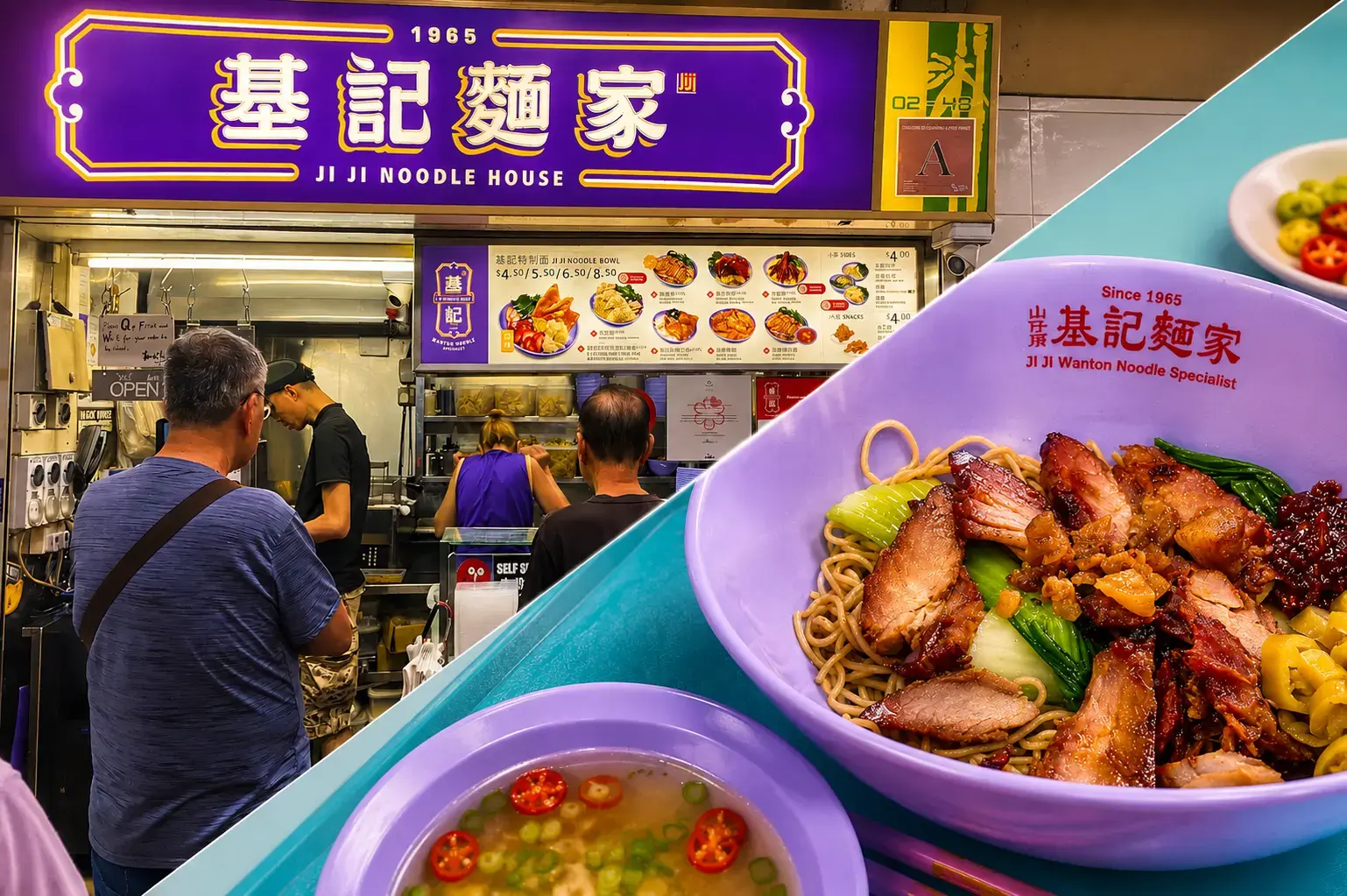
6. Ji Ji Noodle House: Fried Mee and Teow Mee with Six Decades of History
Price Point: Budget-Friendly (around S$5 to S$8)
Nearest MRT: Chinatown, about 4 to 6 minutes’ walk
Some stalls carry their years quietly. Ji Ji has been serving wanton mee, fried mee, and teow mee since 1965, and that continuity shows in the springy noodles, the crispy pork lard, the fried wantons, and a homemade chilli sauce that regulars swear by. It made the 2025 Bib Gourmand list, and rightly so. The char siu is worth noting too, glossy and lightly sweet, holding its own against the other toppings.
We have sat here during the office lunch crush, shoulder to shoulder, and watched the same faces return for the same bowl. That kind of loyalty is earned, not marketed. If you are building a longer Chinatown food trail, Ji Ji pairs naturally with a stop at the Chinatown Complex, where you will find everything from fried fish to duck rice and prawn noodles all under one roof.
Good News for: Wanton mee lovers and the office lunch crowd who want a dependable classic.
Bad News if: You need a comfortable seat at peak hour. Space is tight and the wait is real.
Insider tip: Ask for the chilli if you can take the heat. It is one of the stall’s quiet strengths.
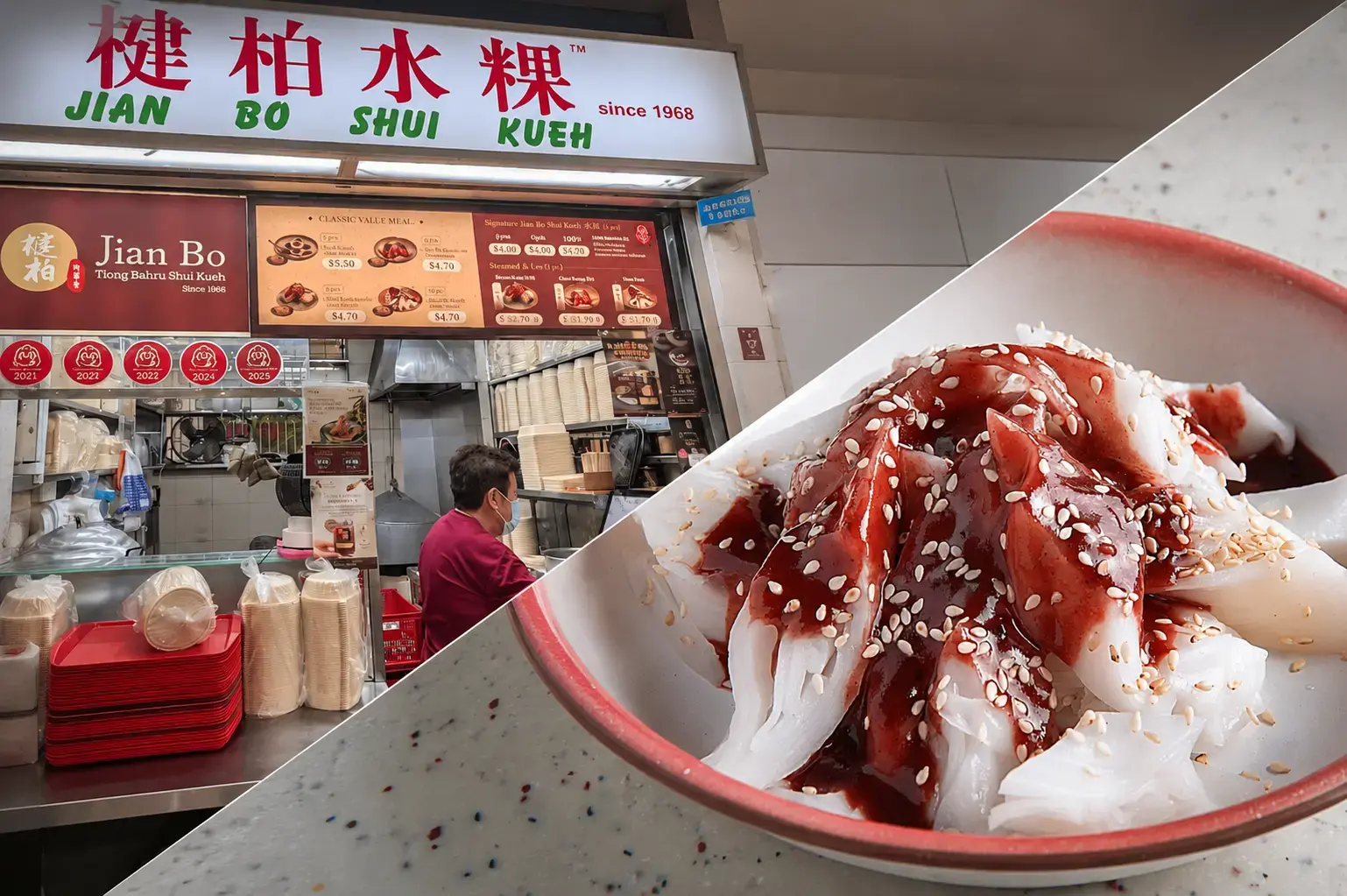
7. Jian Bo Shui Kueh: He Ben Ji’s Carrot Cake Neighbour and a Tiong Bahru Market Breakfast Staple
Price Point: Budget-Friendly (around S$3 to S$5)
Nearest MRT: Tiong Bahru, about 10 minutes’ walk
Shui kueh is breakfast for a lot of us, the kind of food tied to childhood mornings. Jian Bo does the soft steamed rice cakes topped with savoury preserved radish (chye poh) and chilli, and the texture is exactly as tender as memory says it should be. Inside Tiong Bahru Market, it sits near other morning staples including a carrot cake stall that draws its own faithful regulars. He Ben Ji is another name that comes up often in this same neighbourhood conversation.
It will not fill you up as a full meal, and it can lean oily. But as a first stop on a morning in Tiong Bahru, sitting among the market food centre’s early crowd with a cup of kaya toast and kopi from a nearby counter, it feels right. Tiong Bahru is one of those rare hawker centres where the whole morning ritual, toast, soft-boiled eggs, warm steamed cakes, plays out in the same building.
Good News for: Breakfast trails and anyone drawn to old-school Singapore snacks.
Bad News if: You want a proper meal. Treat this as a plate to share, not to fill you.
Insider tip: Ask for the chilli on the side so you control the spice and the oil yourself.
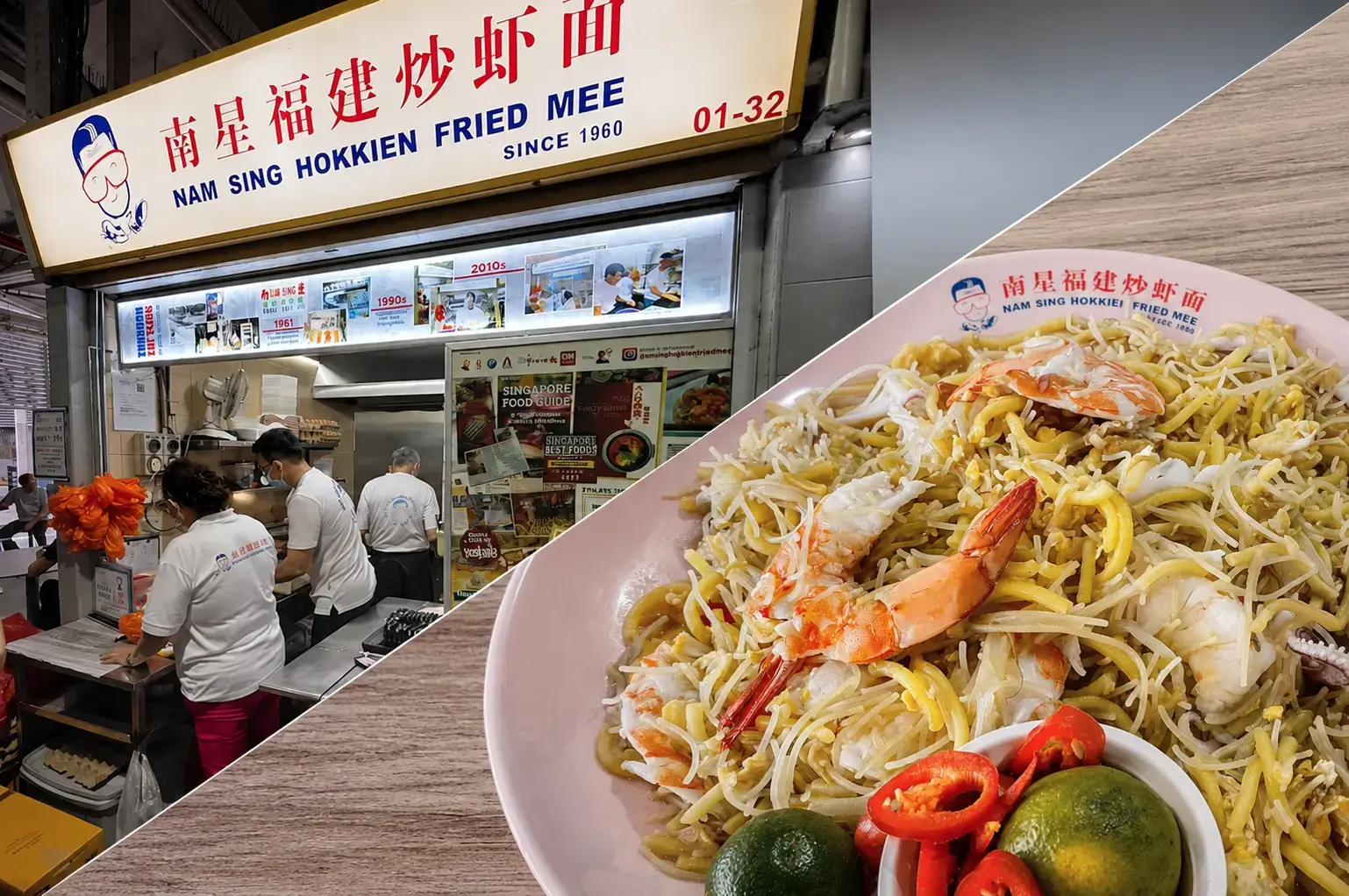
8. Nam Sing Hokkien Fried Mee: Heritage Hokkien Mee at Old Airport Road Food Centre
Price Point: Budget-Friendly (around S$5 to S$8)
Nearest MRT: Dakota, about 6 to 8 minutes’ walk
Founded in 1960, Nam Sing builds its Hokkien mee on a broth made from prawn shells and tomalley, which gives the noodles a depth you can taste in every strand. The rice noodles soak in that prawn sweetness, and the result is a plate that earns its place in any honest list of Singapore hawker centre classics. It is not the wettest version, and it is not the driest. It sits in its own lane at Old Airport Road Food Centre.
Old Airport Road is one of those sprawling food centres that rewards a slower pace. Beyond Nam Sing, you will find stalls selling fried fish, sliced fish soup, and even chilli crab-inspired dishes on certain days. It is the kind of place that draws regulars from across the island, and for good reason. Yuhua Village Market gets mentioned in the same breath by some noodle purists, but Old Airport Road remains its own destination.
Good News for: Hokkien mee fans and anyone building an Old Airport Road food centre crawl.
Bad News if: You need perfect consistency. Batch to batch can vary, and the queue tests your patience.
Insider tip: Eat it at the centre. Hokkien mee loses its texture when it sits too long in a packet.
9. Lao Fu Zi Fried Kway Teow: A Lighter Take on Char Kway Teow and Fried Kway at Old Airport Road
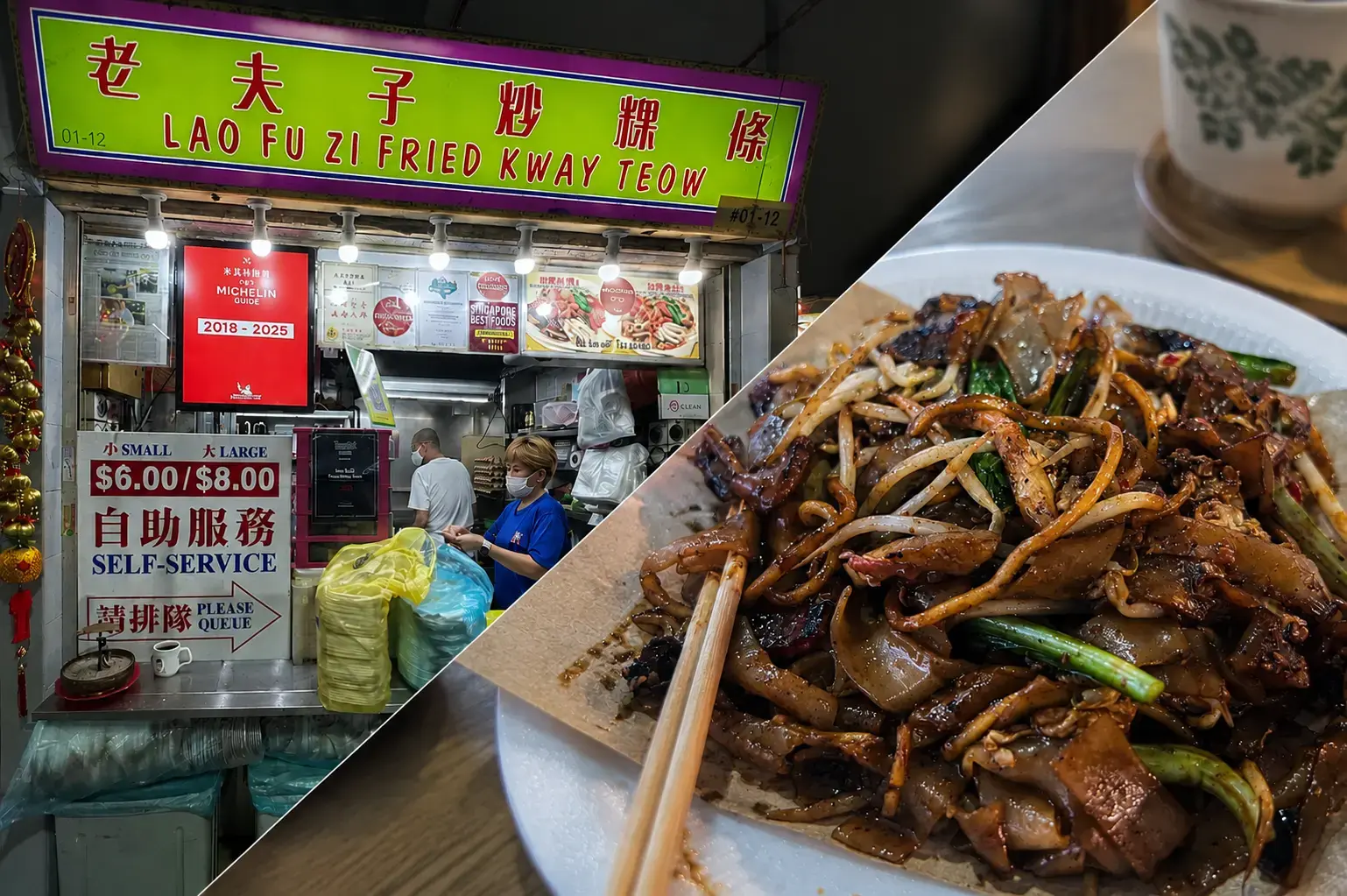
Price Point: Budget-Friendly (around S$5 to S$8)
Nearest MRT: Dakota, about 6 to 8 minutes’ walk
If Outram Park is the heavy, smoky end of char kway teow, Lao Fu Zi sits at the cleaner, lighter end. Less grease, more balance, with cockles and lap cheong and bean sprouts still doing their work. It is fried kway teow and fried kway for people who find the classic version too rich, and it has held its Michelin Guide recognition while staying true to its moderate prices.
Some diners come expecting a wall of wok hei because of the Michelin tag, and they leave surprised. We think that is a matter of expectation, not quality. Indian cuisine stalls, han kee fish soup counters, and fried fish head options fill out the rest of the hawker centre if you want to make a proper afternoon of it.
Good News for: Anyone who loves char kway teow but wants a less oily plate.
Bad News if: You live for that heavy, smoky, greasy hit. This is a gentler take.
Insider tip: Choose the black version for the sweeter, darker, more familiar profile.
10. Allauddin’s Briyani (Tekka Centre)
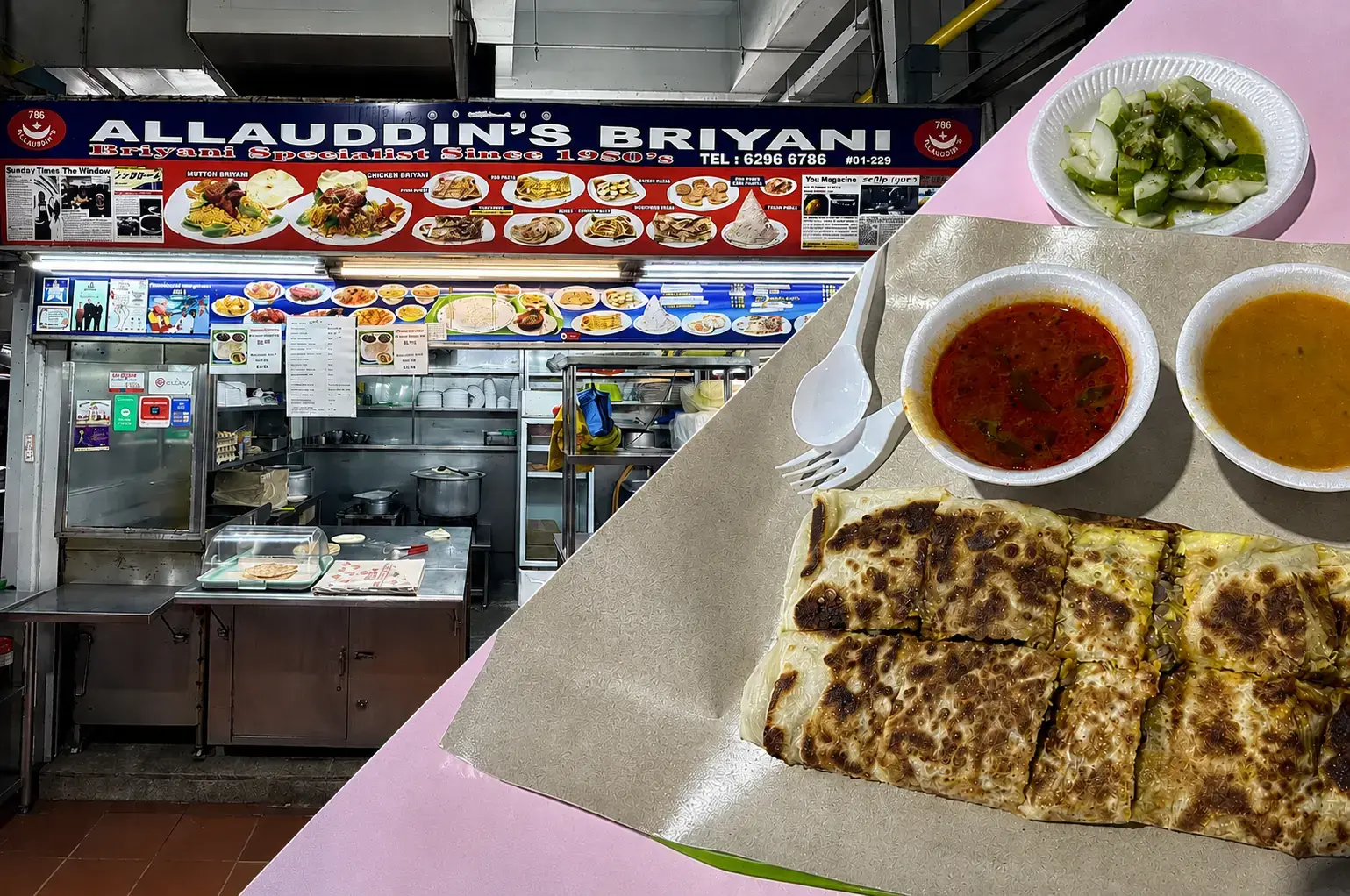
Price Point: Budget-Friendly (around S$6 to S$10)
Nearest MRT: Little India, about 2 minutes’ walk
Tekka Centre has a rhythm all its own, loud and warm and full of movement, and Allauddin’s sits right in the middle of it. The briyani here is fragrant, the portions hearty, the value honest. It is Michelin Guide-listed, and it carries the everyday energy of Little India in every plate. The indian cuisine on offer here goes beyond briyani, with chicken curry options drawing their own crowd, and the opening hours generous enough to catch both the morning and lunch rush.
We have eaten here on busy afternoons when the seats were full and the service was quick to the point of brisk. That is part of the charm. This is not a place to linger over. It is a place to eat good food and move on. For those building a Little India food trail, the hawker centre also offers a window into how indian cuisine sits naturally alongside the rest of Singapore’s best Michelin street food story.
Good News for: Little India food trails and anyone wanting a hearty, halal-friendly hawker meal.
Bad News if: You want calm and comfort. Peak hours are crowded and seating is limited.
Insider tip: Choose mutton for deeper flavour, but chicken is the safer first-time order.
A Last Word Before You Queue
Ten stalls, five hawker centres, and a lot of plates between us. What ties them together is not the Michelin recognition, though that is a fine excuse to try them. It is that each one does something honest and does it well, whether that is a bowl of noodles handed over without ceremony or a curry puff that cracks just right in your hand. Singapore’s hawker culture has always been about quality food cooked with care at moderate prices, and that is what the Michelin Guide keeps finding here, in stalls with plastic stools and handwritten signs.
We would say try them slowly. One or two on a morning, not all ten in a rush. Let the queue be part of it. Talk to the uncle or auntie if they have a moment. These stalls have fed people for decades, and they are worth more than a quick photo and a checked box.
If this list spoke to you, come read more with us at Singapore Hawkers, where we keep telling the stories behind the food and the people who cook it. There is always another plate worth remembering.