The first time I brought a friend to Tiong Bahru Food Centre, located in the heart of Tiong Bahru Singapore, I made the classic mistake. We arrived close to 1pm, hungry and confident. The place was buzzing, seats were tight, queues were long, and half the breakfast items I wanted to show her were already gone.
That visit taught me something simple: Tiong Bahru Market food and the adjacent food centre reward a little planning. It is not difficult to navigate, but it can feel overwhelming if you walk in without knowing what to eat, when to go, or how the hawker-centre rhythm works.
This guide will help you plan a smoother visit to this iconic hawker centre. I’ll cover when to go, how to order, what to eat, how to chope seats politely, what to expect after its July 2025 renovation, and how to enjoy the place without feeling lost. Along the way, I’ll introduce you to some of the best local eats and traditional dishes that make Tiong Bahru a go to spot for many Singaporeans and food lovers alike.
Why Tiong Bahru Singapore’s Food Centre Is Worth Understanding
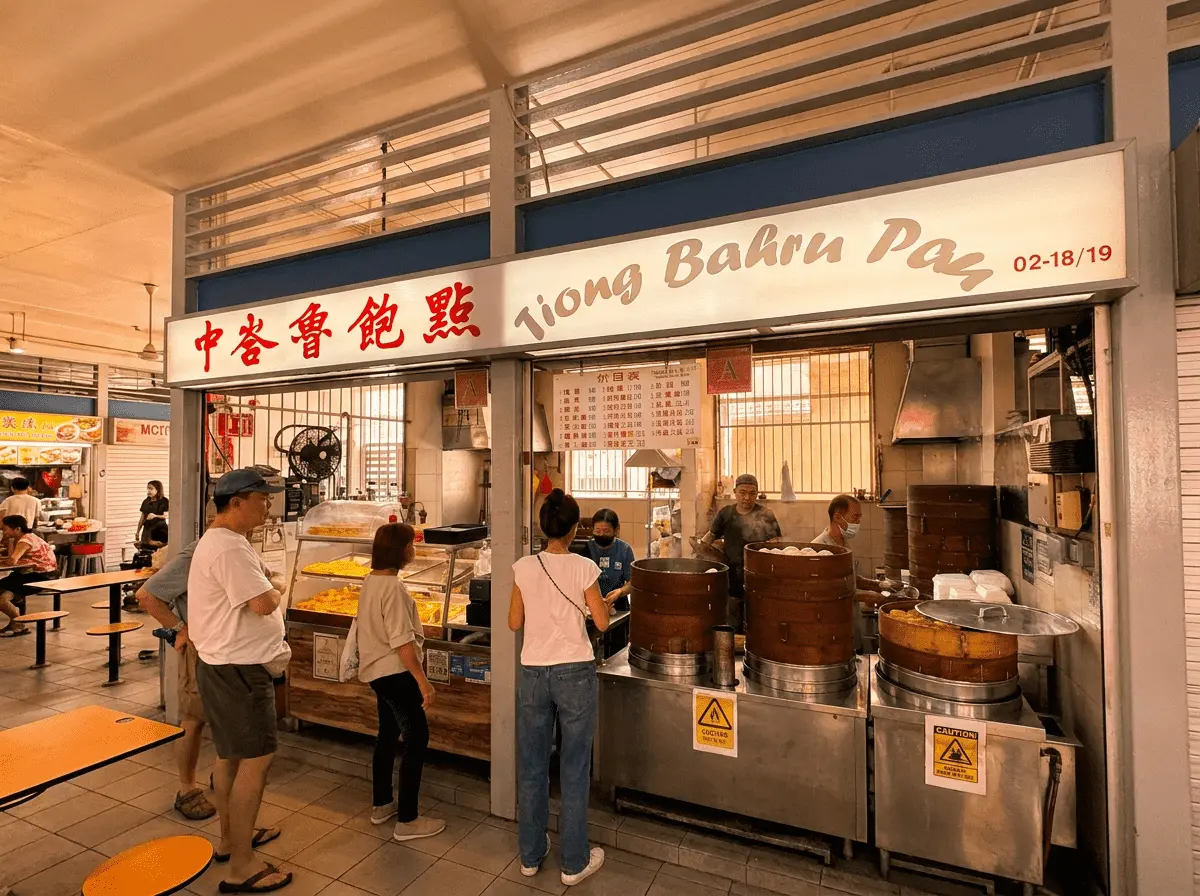
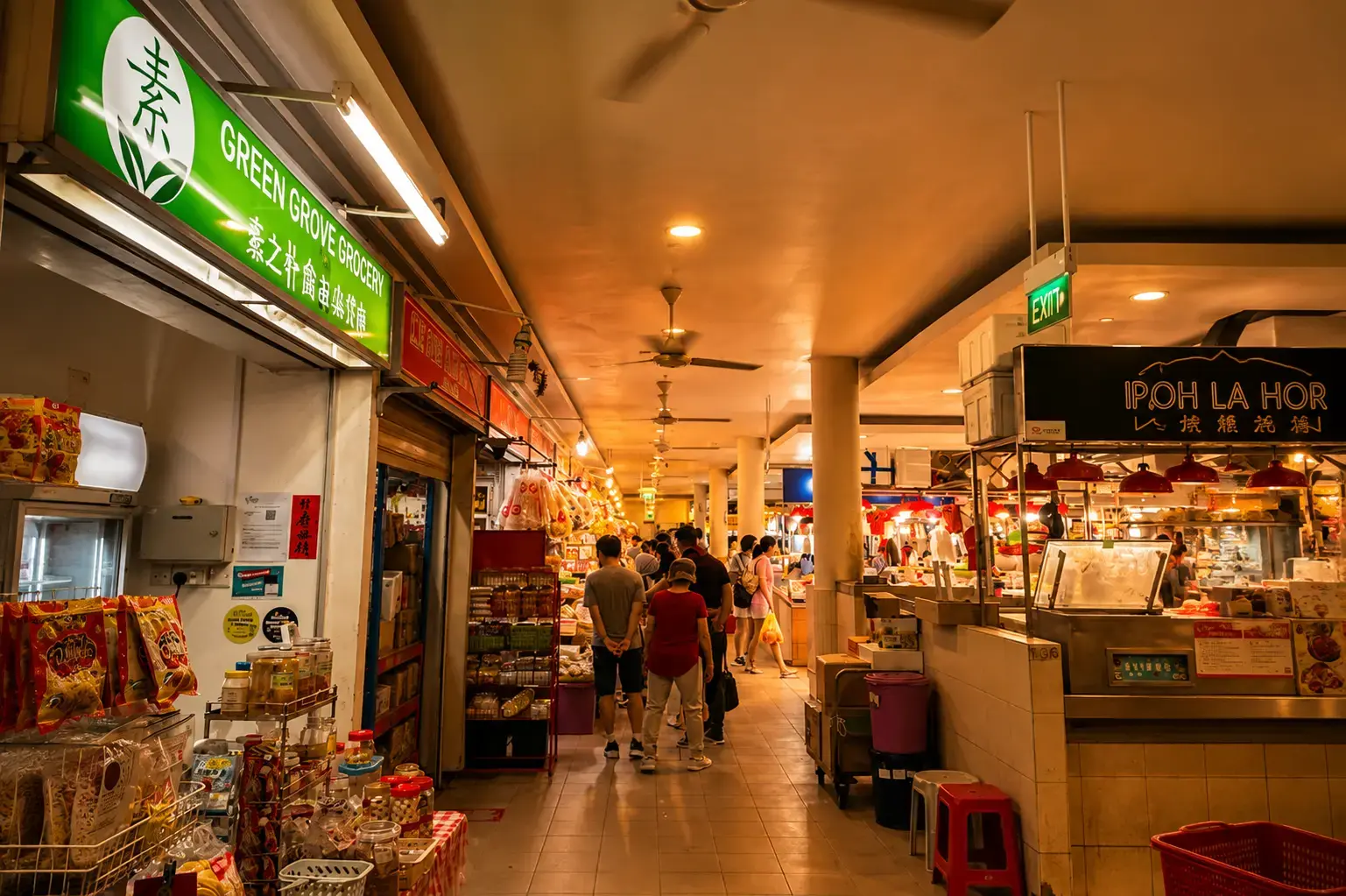
Tiong Bahru Market & Food Centre sits at 30 Seng Poh Road, Singapore 168898, a neighbourhood rich in history and culture. The wet market downstairs sells fresh produce, including fresh fish, vegetables, and other essentials, while most of the cooked-food stalls are upstairs. That layout matters because first-timers sometimes walk into the wet market level and wonder where all the famous food went.
The centre reopened after renovation in July 2025, so it now feels like a mix of old and refreshed. You still get the heritage mood of Tiong Bahru, but with a cleaner, updated hawker-centre experience. I like that balance. It does not feel like a polished mall food court, and it should not.
Tiong Bahru itself is one of Singapore’s oldest neighbourhoods, developed in the 1930s by the Singapore Improvement Trust (SIT), the predecessor of the Housing Development Board (HDB). The estate features distinctive pre war flats with Art Deco and Streamline Moderne architecture—rounded balconies, spiral staircases, and porthole windows that resemble the shape of ocean liners. Walking through the estate feels like stepping into a time capsule, where the past meets the present.
Around the food centre, you’ll see these pre war flats, small cafes, boutique shops, and indie boutiques, alongside the daily bustle of residents shopping for groceries or grabbing a bite. The market began as Seng Poh Road Market in the 1950s, so when you eat here, you are not just ticking off stalls—you are stepping into a part of local food history.
Insider knowledge: If you are visiting Tiong Bahru Singapore for the first time, give yourself about 2 hours. Eat upstairs, then take a short walk around the old flats, boutique shops, and cafes nearby to soak in the unique neighbourhood vibe.
Best Time to Visit Tiong Bahru Market Food Centre
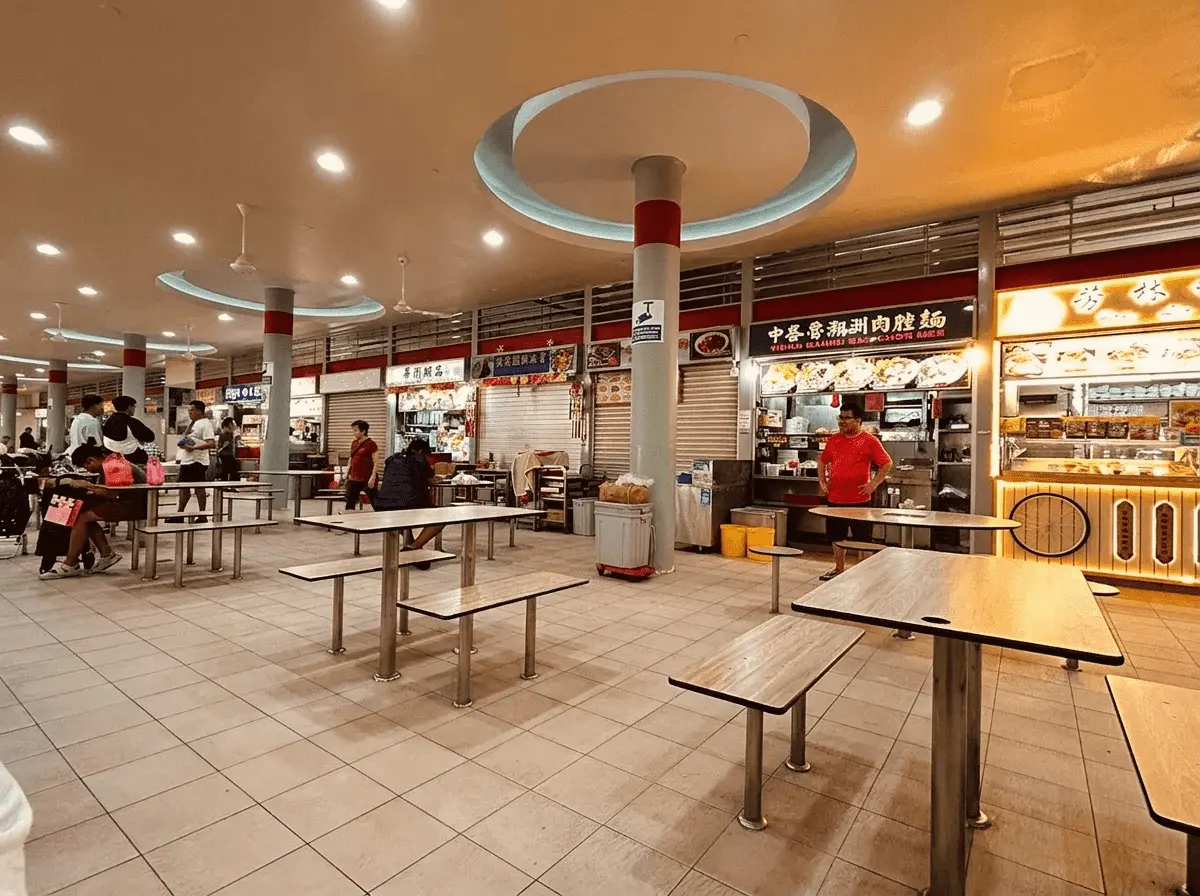
In my experience, timing makes or breaks your visit to this beloved hawker centre.
If you want breakfast classics like the famous chwee kueh from Jian Bo Shui Kueh, go between 7am and 9am. This is when the centre feels most alive in a local way. You see office workers eating quickly, older residents reading papers, and regulars who already know which stall is open.
If you feel nervous about crowds, go before noon. I’d suggest avoiding 12pm to 1pm, especially if you are a first-timer, visiting with kids, or bringing someone who dislikes queueing. Lunch hour can get tight fast.
The mistake I made early on was assuming famous hawker stalls operate like restaurants, with fixed long hours and full menus all day. They do not. Some stalls sell out. Some slow down after peak hours. Some open only on certain days.
Pro tip: For jian bo shui kueh, handmade pau, or other breakfast-style items, arrive early. By late morning, you may still find food, but not always the item you came for.
What to Eat at Tiong Bahru Market Food Centre: A Simple Strategy That Works
Tiong Bahru Market food has enough famous stalls to make you overthink. When I first tried this place seriously, I wanted to order everything. Bad idea. You get full too quickly, and you stop paying attention to what makes each dish good.
I prefer a simple three-part strategy:
- One heritage dish
- One noodle or rice dish
- One snack or takeaway item
This gives you range without turning your visit into a food marathon and lets your taste buds explore different sides of Singapore’s culinary heritage.
Start With a Heritage Dish: Jian Bo Shui Kueh and Hwa Yuen Porridge
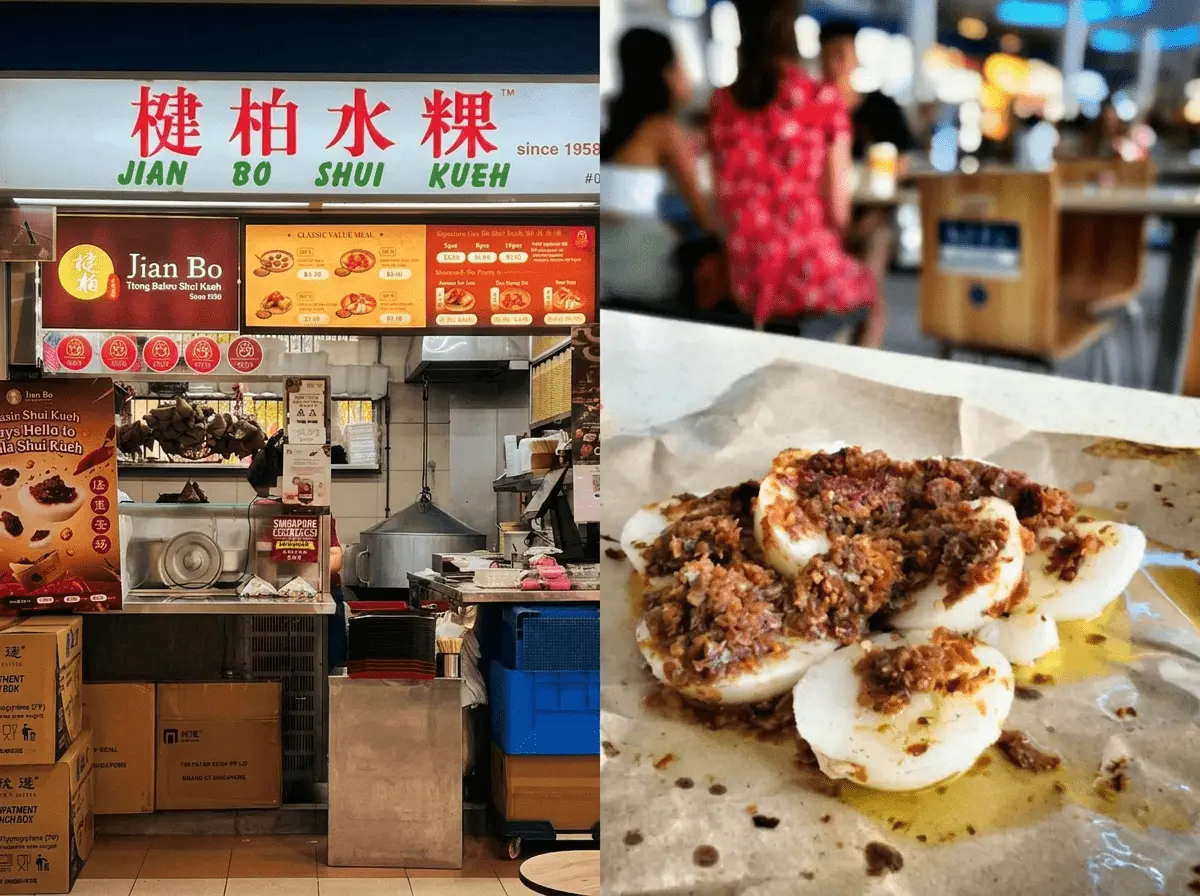
For many people, the natural first stop is Jian Bo Shui Kueh, known for its famous chwee kueh—steamed rice cakes topped with savory preserved radish and a touch of sweetness from the sambal. The rice cake should be soft but not watery, and the chai poh should bring salt, oil, and a little sweetness. This traditional dish is a favourite breakfast item for many Singaporeans.
Another heritage gem is Hwa Yuen Porridge, serving thick, aromatic porridge bowls that go far beyond plain congee. Their signature Mixed Pig’s Organ Porridge features an assortment of lean pork, innards, and meatballs, all in a rich, comforting broth. For those who prefer something simpler, the classic Pork or Fish Porridge bowls are equally satisfying and full of flavour.
Add a Hearty Plate: Loo’s Hainanese Curry Rice and Hong Heng Fried Sotong Prawn Mee
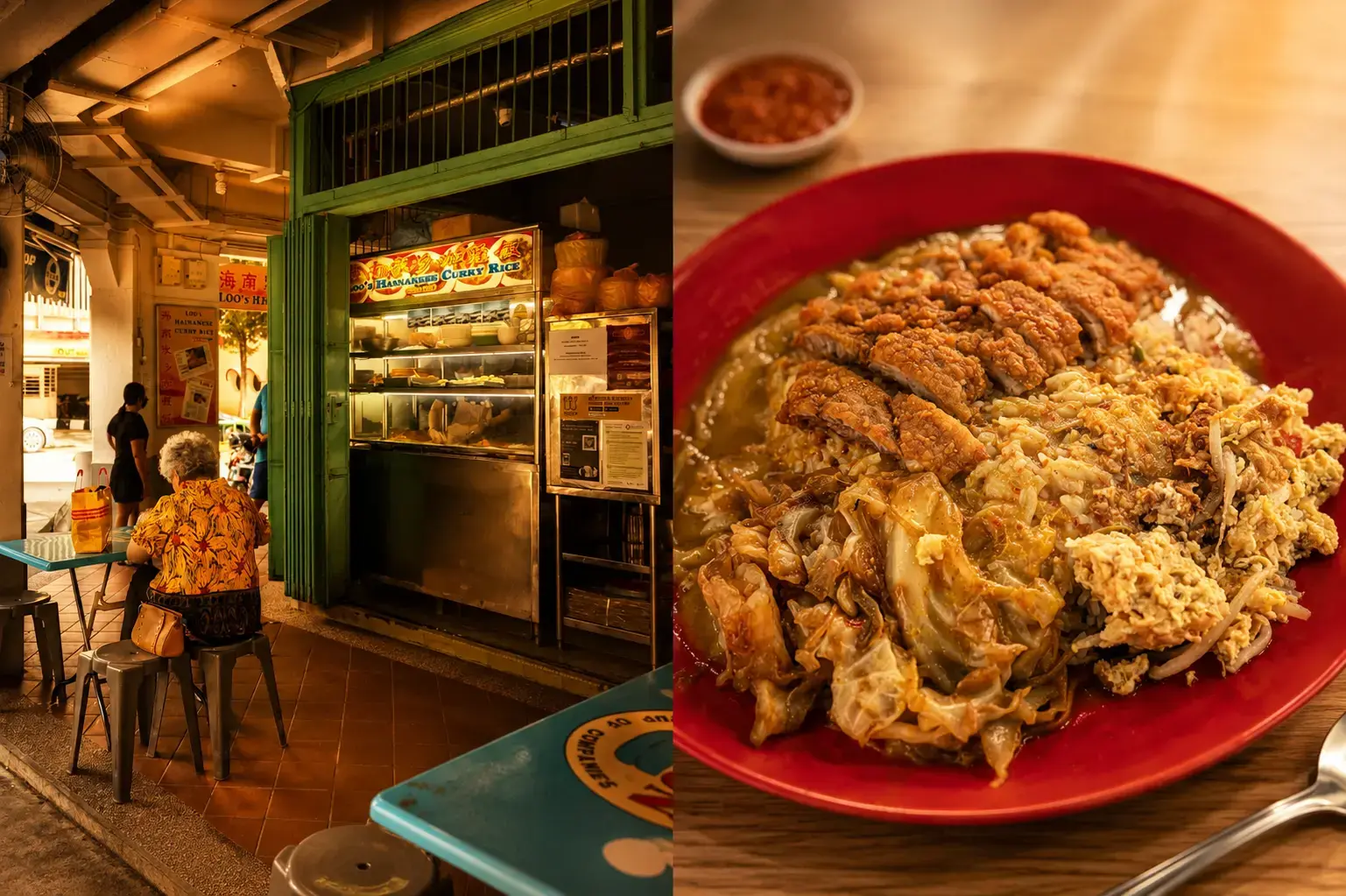
If you want a more filling meal, look at Loo’s Hainanese Curry Rice, a legendary stall that has been serving this hearty plate since 1946. Expect curry-soaked rice covered in thick, rich gravy, accompanied by crispy pork cutlets, vegetables, and sometimes a fried egg. This is comfort food at its best—messy, satisfying, and full of umami.
For noodle lovers, the Hong Heng Fried Sotong Prawn Mee is a must-try. This hokkien mee or sotong prawn mee is famous for its fresh prawn and tender sotong (squid), cooked with a perfect balance of wok hei (the smoky char from the wok) and a rich seafood broth. Hong Heng’s version is a Michelin Bib Gourmand winner, making it a true go to spot for those craving authentic fried sotong prawn mee.
Finish With Noodles or a Snack: Fried Kway Teow, Lor Mee, Char Siew Rice, and Chee Cheong Fun
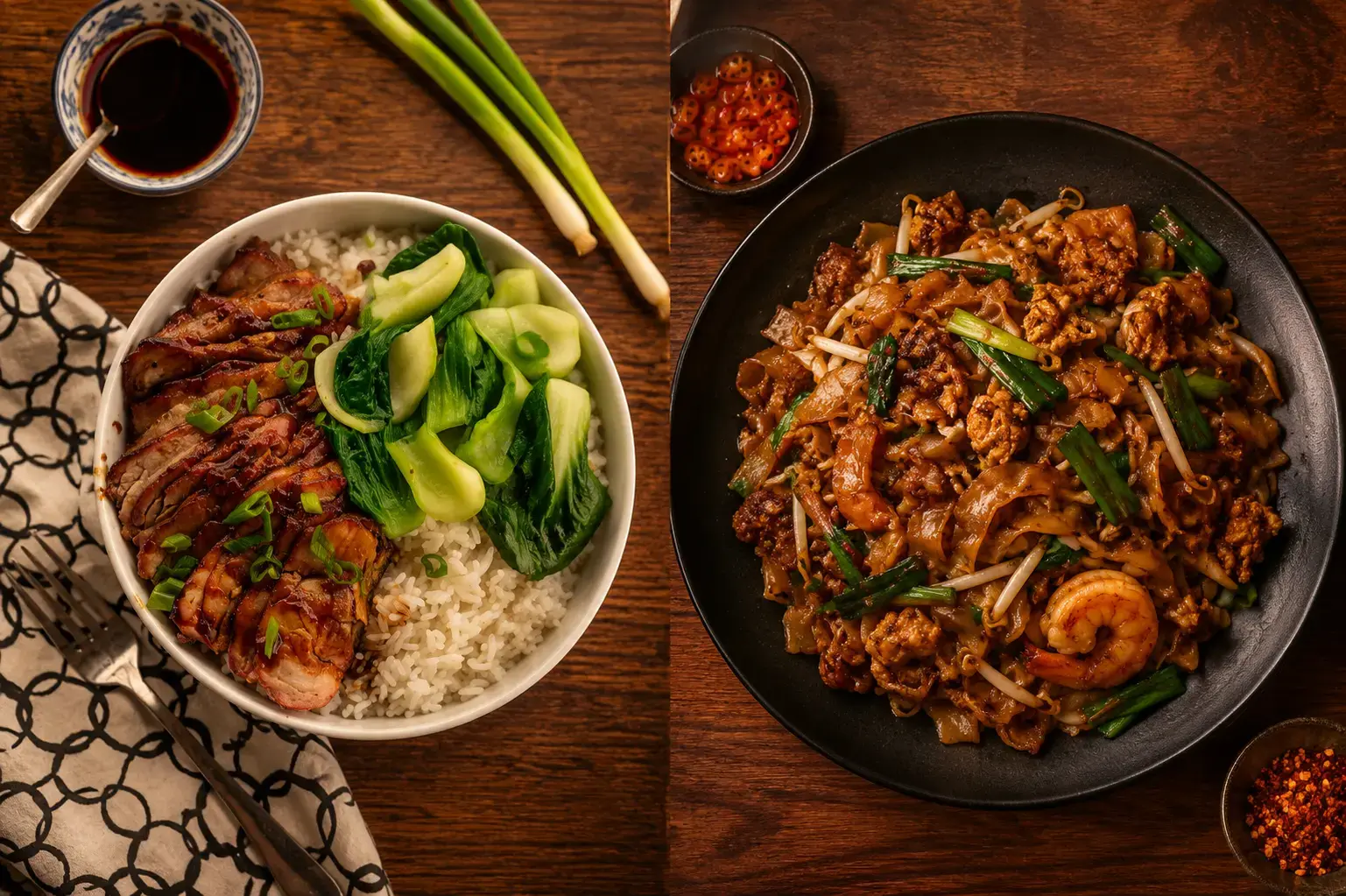
For a lighter finish or an additional dish, try some of the other iconic noodles and snacks:
- Fried Kway Teow here is a crowd-pleaser, priced around $4 per plate and served with fresh cockles, slices of Chinese sausage, and egg. The dish is known for its balanced wok hei and slightly sweet yet savoury flavour.
- Lor Mee offers thick yellow noodles in a rich, slightly sticky gravy, often topped with pork slices, fish cake, and sometimes a boiled egg. It’s a comforting bowl that warms you from the inside out.
- Char Siew Rice is another popular choice, featuring tender char siew (barbecued pork) slices glazed with a sweet, caramelised sauce over fluffy white rice. The char siew rice here is a testament to the skill of the hawkers, delivering a perfect mix of sweet and savoury.
- For something steamed and soft, Grandpa Homemade Chee Cheong Fun offers colourful rice rolls filled with prawns, char siew, or other ingredients. The rolls are silky smooth and served with a sweet soy sauce, making them a delightful snack or light meal.
If you want to explore more food in Tiong Bahru Food Centre, we got you covered!
How Much to Budget for Your Tiong Bahru Market Visit
Most meals at Tiong Bahru Market food centre cost around S$4 to S$8. Some snacks like pau or smaller chwee kueh portions may be cheaper. If you are doing a casual food trail, I’d budget around S$12 to S$20 per person, depending on how many items you want to share.
Bring cash. Some stalls accept QR payment, but you should not assume every stall does. Having small notes makes the whole process smoother, especially when queues are moving fast and the hawkers are serving many customers at once.
How to Roam Around Tiong Bahru Hawker Centre Step by Step
If you are new to hawker centres, the process can feel unclear. Nobody gives you instructions when you arrive. You just watch what everyone else does.
Step 1: Find a Table First
Before ordering, scan for seats. If you are alone, look for shared tables with empty spaces. Sharing tables is normal in Singapore hawker centres, especially during busy hours.
If you need to reserve a seat, you can chope politely. People often use tissue packets, umbrellas, name cards, or small personal items. Do not reserve a large table for too long if your group is nowhere nearby.
Step 2: Order at the Stall
Go to the stall you want and join the queue. Long local queues can be a good sign, but they are not the only sign. Look for focused menus, high turnover, visible awards, and stalls known for one signature dish.
If you are worried about limited English confidence, keep it simple. Point at the menu. Say the dish name. Mention portion size if needed. Most hawkers are used to different customers, including tourists.
Step 3: Pay and Collect Your Food
Some stalls give you food immediately. Others may ask you to wait nearby. Watch how the queue works before stepping forward. Again, it is important to note that you might need to bring cash, as some other hawker stalls still does not accept card or e-wallet payments.
Avoid blocking the collection area while deciding what to order. Stand aside if you are waiting.
Step 4: Eat, Then Return Your Tray
After eating, return your tray and crockery to the tray return station. This is mandatory in Singapore hawker centres. First-time offenders may receive a written warning, while repeat offenders may face fines.
It sounds strict, but the habit is simple. Eat, clear your table, return your tray. The next person gets a clean space, and the whole centre works better.
Final Thoughts on Tiong Bahru Market Food Centre
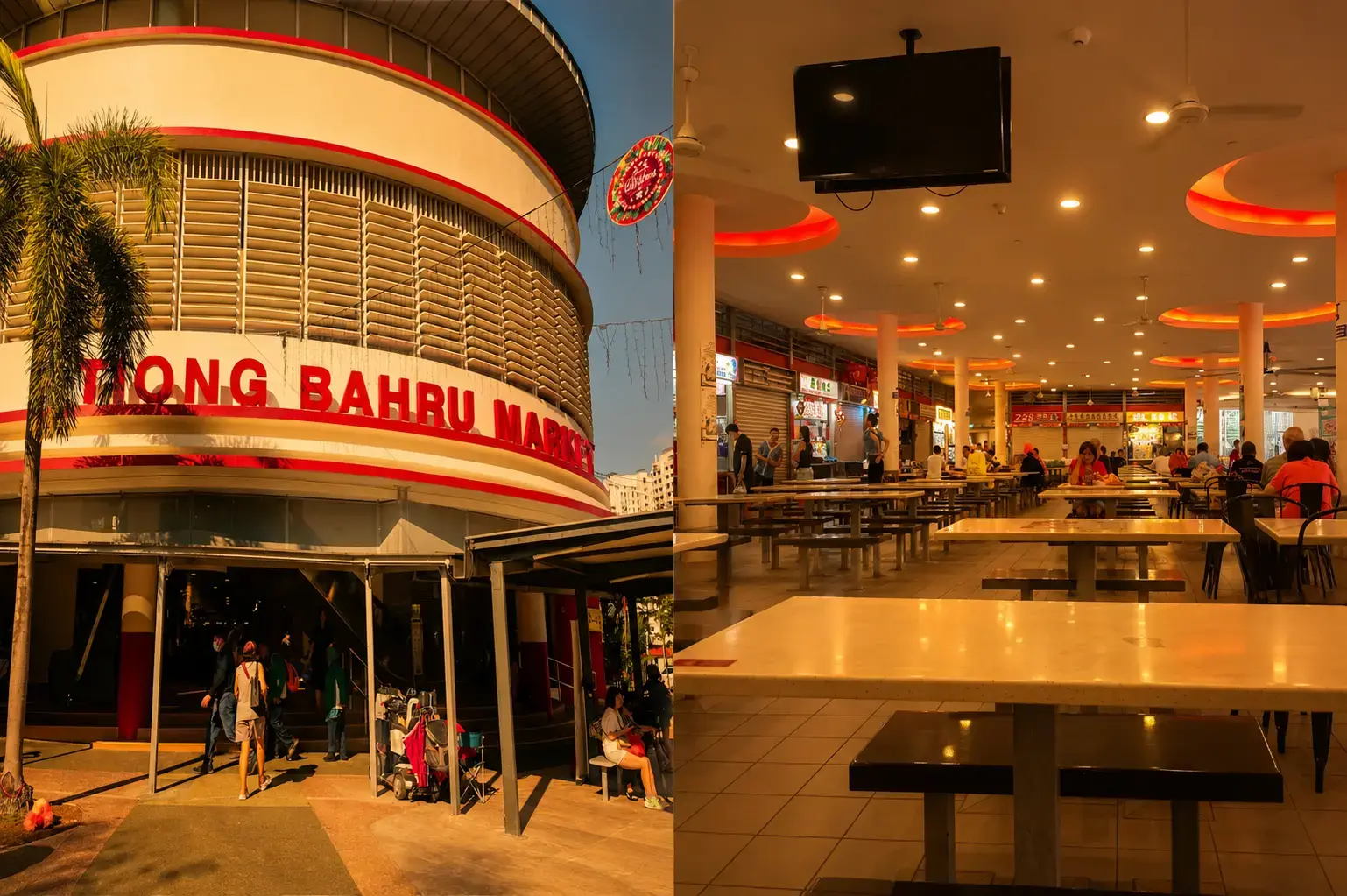
Tiong Bahru Market food centre is a living heritage site where many Singaporeans come to enjoy good food in a setting that blends traditional and modern Singapore. From the fried sotong prawn mee at Hong Heng, the lor mee and fried kway teow stalls, to the comforting hwa yuen porridge and the char siew rice plates, this hawker centre offers a taste of Singapore’s culinary diversity.
The fresh produce downstairs, the pre war flats surrounding the market, and the boutique shops nearby make visiting Tiong Bahru a full sensory experience. Whether you come for the food, the architecture, or the community vibe, this food centre remains a cherished go to spot in Tiong Bahru Singapore.
If you enjoyed this guide, you can check out Singapore Hawkers for more articles on local food centres, hawker etiquette, and the stalls that keep Singapore’s food culture alive.