
When most people picture Japanese food in Singapore, they often think of a sleek sushi bar, a polished Japanese restaurant in Ngee Ann City, or one of the omakase restaurants where a chef slices thick slices of tuna, salmon, and other seafood across the counter. They may think of Tomi Sushi, a Singapore outlet in a mall, a quiet omakase meal, or a long queue outside a ramen house like Bari Uma. That image is real, and there are many good quality Japanese restaurants in Singapore that serve sushi, sashimi, nigiri, tempura, soba, udon, and hot dishes with care.
But this article is not about ranking those places or comparing every menu, operating hours, opening hours, lunch sets, or la carte option from Cuppage Plaza to Thomson Plaza and Tanjong Pagar, or even the ones we see in Best Budget-Friendly Japanese Restaurants in Singapore.
Instead, we want to look at something quieter and arguably more interesting: how japanese food has settled into Singapore’s hawker centres, kopitiams, and food courts. In these everyday spaces, curry rice, gyu don, ramen, chicken tempura, karaage, miso soup, and rice bowls sit comfortably beside chicken rice and char kway teow. This is where hawker culture quietly reshapes how Japanese food is experienced, making it familiar, priced for everyday diners, and easier to enjoy without spending restaurant money.
Why Japanese Food Fits So Naturally Into Hawker Culture
Japanese dishes adapt well to hawker settings because so much of the cuisine is already built around a simple meal structure. Rice, noodles, soup, fried meat, fish, vegetables, and a clear main dish can be served quickly and understood at a glance. A diner does not need a long explanation to know what to expect from a bowl of curry rice, a salmon don, a gyu don, or a plate of fried pork cutlet with miso soup.
This is important in Singapore because hawker centres move at the speed of lunch. Diners want food that is satisfying, quick, and clear. A hawker stall selling Japanese food can offer a short menu of curry, ramen, donburi, soba, udon, or tempura without needing the extensive menu of a full restaurant. That makes the format practical for stall owners and approachable for diners who want Japanese flavours without turning lunch into a long sit-down dinner.
The Rise of the Kopitiam Japanese Stall
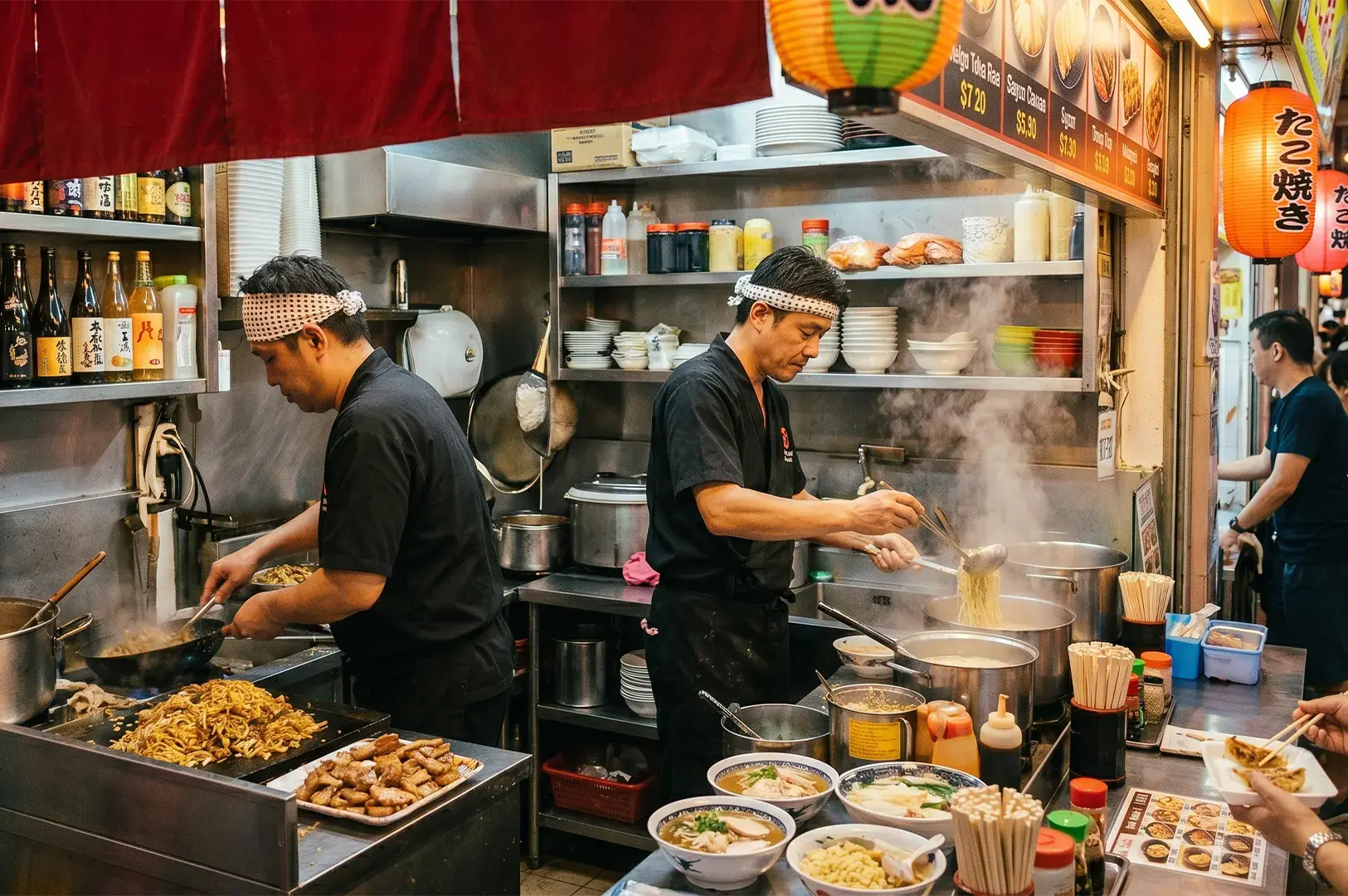
Over the past decade, more kopitiams and hawker centres have added Japanese stalls to their mix. These stalls are not trying to copy the full experience of a sushi bar, an omakase counter, or a restaurant where every dish is shaped by a specialist chef. They respond instead to how people in Singapore actually dine on an ordinary day.
That means shorter lunch breaks, lower price expectations, takeaway orders, and one-plate meals that can be served fast. A stall might offer curry rice, karaage don, teriyaki chicken rice, chicken tempura, ramen, or a beef bowl with an onsen egg. Some even offer additional toppings like cheese, extra meat, vegetables, or a thicker soup base for extra depth. For many diners, the kopitiam version of japanese food is less about luxury and more about access.
Japanese Curry Rice and the Comfort of a Saucy Plate
If one dish explains why Japanese food works so well in the hawker scene, it may be Japanese curry rice. It is filling, mildly sweet, and comforting, with curry sauce that coats the rice and works naturally with fried chicken, pork, beef, fish, or tempura. It feels different from Singapore’s local curry rice, but it still speaks to a familiar love for saucy plates and hearty meals.
Japanese curry also gives hawker stalls room to create a unique take without making the dish difficult to understand. One stall may keep the curry smooth and gentle, while another may add cheese, an onsen egg, or more meat for richness. A bowl can be served with chicken tempura, fried fish, or pork cutlet, and still feel complete. This is one reason hawker stalls have helped make japanese food affordable for diners who want something satisfying without paying restaurant prices.
Donburi, Bento and the Everyday Logic of Cheap Japanese Food
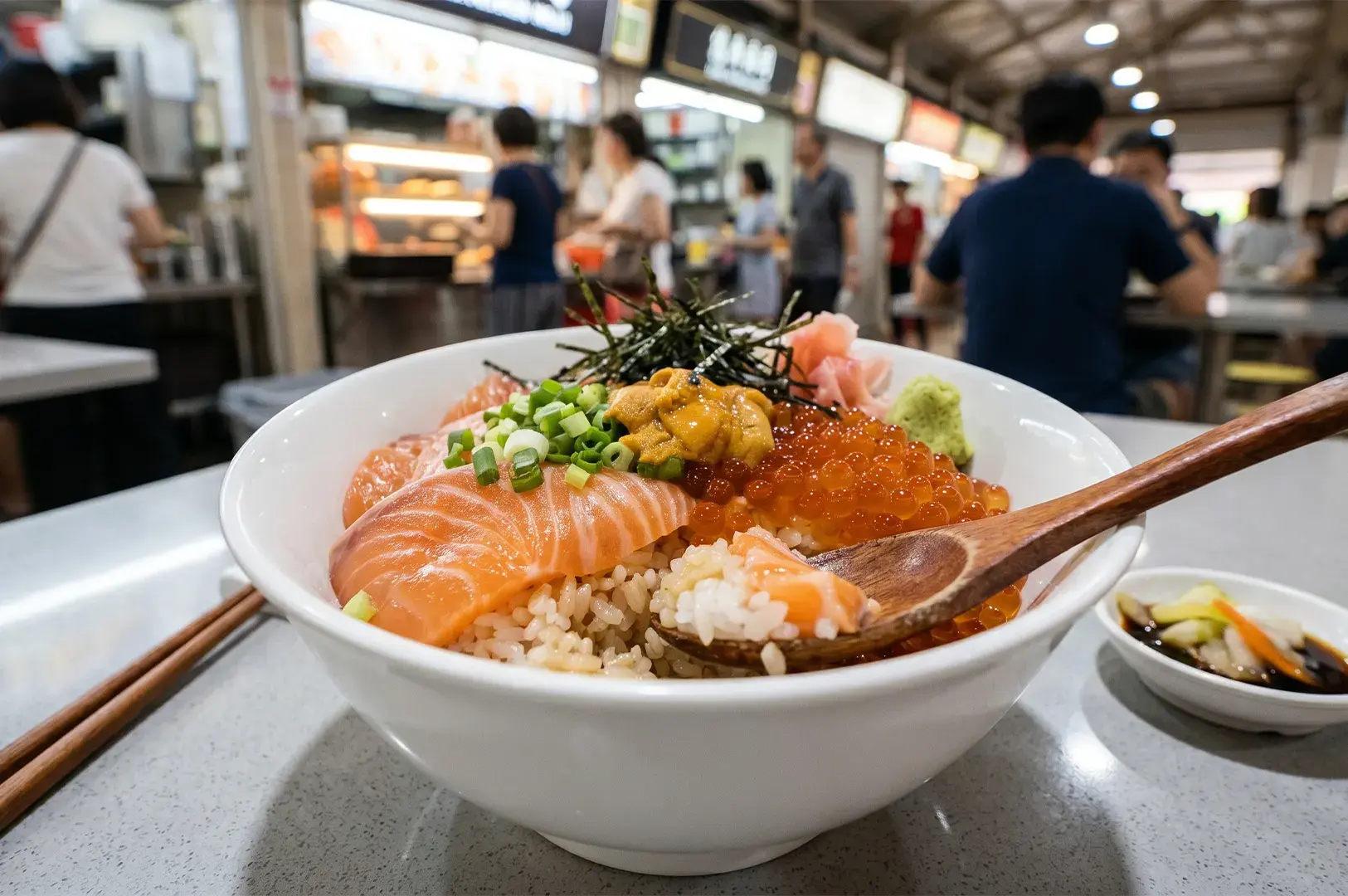
Donburi and bento-style meals fit Singapore’s lunch culture almost perfectly. A bowl of rice with salmon, beef, chicken, pork, or vegetables is complete by design. It gives diners protein, rice, sauce, and sometimes a small side or miso soup, all in one neat meal that can be eaten at a shared table or carried back to the office.
That structure is also why dishes like gyu don, karaage don, katsu don, salmon don, and teriyaki chicken rice work well in hawker centres. They are easier to serve than a multi-course dinner, and they do not need the formality of omakase or an extensive menu of sushi and sashimi. Diners can scan the board, choose a bowl, and know what they are getting. For a family lunch, a quick meal with friends, or a weekday office break, that simplicity is often the whole appeal.
Ramen at Hawker Prices Is Not the Same, and That Is Fine
We should be honest about ramen. A bowl from a hawker stall will rarely have the same richness as a specialist ramen house like Bari Uma, where the soup base may be built slowly and adjusted with careful detail. The noodles, pork, broth, and toppings in a restaurant setting often carry a different level of focus.
But that does not make hawker ramen pointless. It serves a different purpose: warm noodle comfort at a fair price, often in a stall that also sells curry rice, donburi, udon, or fried dishes. If you walk in expecting a destination bowl from Japan, you may miss the point. Judged on its own terms, a simple ramen served hot at a hawker table can still be a good choice, especially when the alternative is spending more money at a full restaurant.
What Hawker Stalls Do Differently From Japanese Restaurants in Singapore
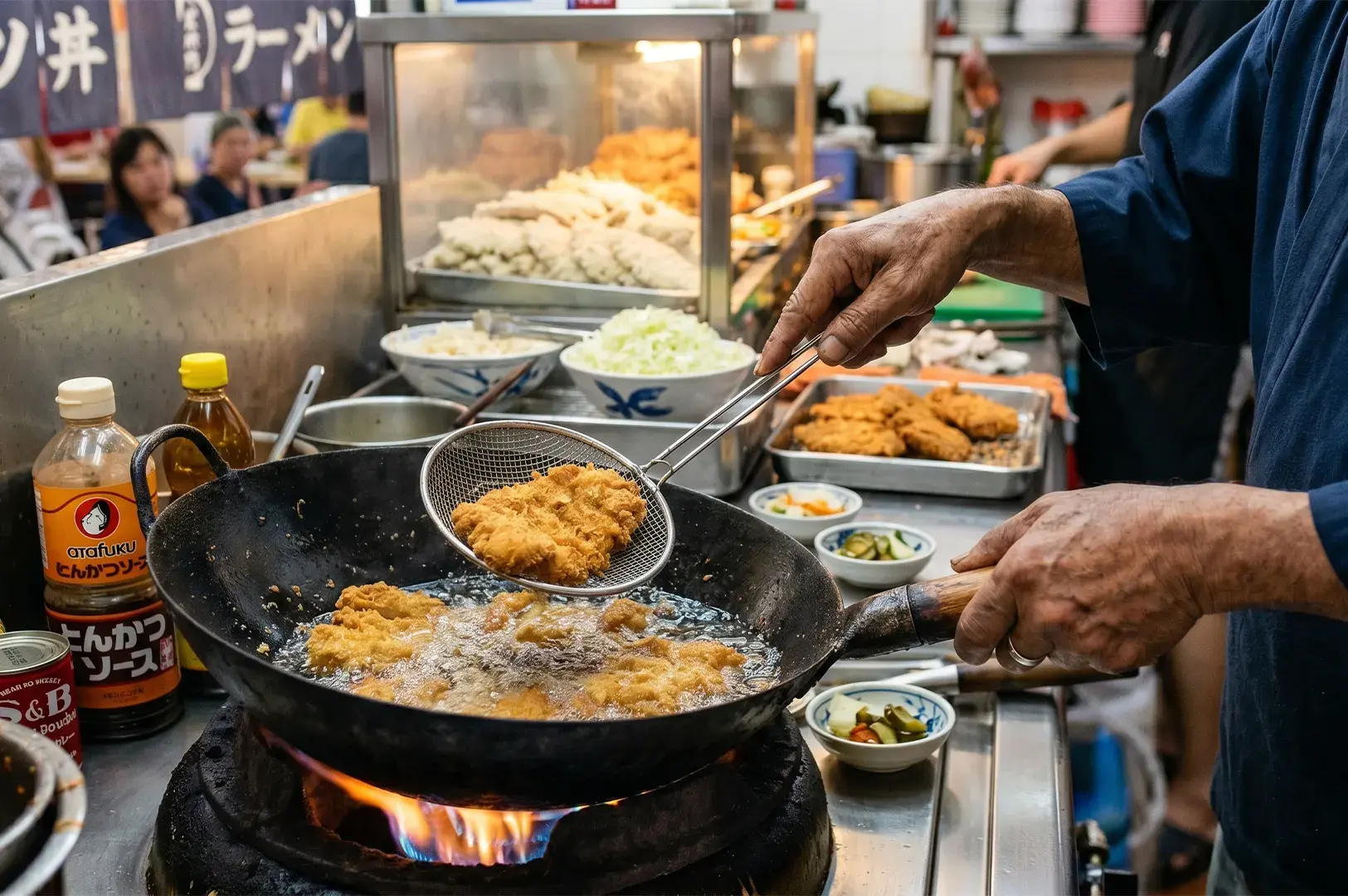
This is the heart of the concept. Hawker Japanese food is shaped by different pressures from a sit-down Japanese restaurant, and those pressures change the food in clear ways. A restaurant may think about ambience, reservations, table service, omakase flow, dinner pacing, and a wider la carte menu. A hawker stall has to think about speed, price, portion size, turnover, and whether the dish can still taste good when served quickly.
That is why hawker Japanese stalls often lean on fried proteins, rice bowls, curry, noodles, and hot dishes that hold up well. They may not serve thick slices of premium sashimi, delicate nigiri, or charcoal grilled seafood in the same way a restaurant does. None of this makes the food less meaningful. It simply shows how japanese food changes when it enters Singapore’s hawker rhythm.
Why Affordability Matters in Singapore’s Japanese Dining Scene
Affordability is the quiet engine behind all of this. Many diners enjoy japanese food, but they would be hard pressed to eat omakase, premium sashimi, or restaurant sushi every week. For readers searching for budget japanese food singapore, the hawker and kopitiam scene offers a more everyday answer.
This matters for students, office workers, heartland residents, and casual diners who want lunch or dinner without overspending. When someone searches for cheap japanese food singapore, it does not always mean they want low-quality food. It often means they want Japanese flavours at a price that fits normal life. Hawker stalls help make japanese food affordable by turning Japanese cuisine into meals that can be repeated, not just saved for Saturday outings or special occasions.
Past the Restaurant Bill, Into the Hawker Routine
Japanese food without the restaurant bill is not only about saving money. It is about how Singapore’s hawker and kopitiam culture takes an international cuisine and makes it local, practical, and repeatable. The same instincts that gave us beloved one-plate hawker classics now shape how we eat curry rice, donburi, ramen, soba, udon, tempura, and karaage on an ordinary day.
So the next time you spot Japanese food in a hawker centre, try not to see it as a lesser version of restaurant Japanese dining. See it instead as its own Singapore hawker expression: fresh, accessible, and built for the way diners actually eat. That, more than any price tag, is what makes this quiet food culture worth noticing.