
For years, I believed my mother’s laksa could not be found outside our kitchen.
It was not because she used a secret ingredient or guarded the recipe like a family treasure. In fact, she was quite casual about it. A spoonful of rempah here, a splash of coconut milk there, a little more dried shrimp if the gravy felt too quiet. She cooked by instinct, not measurement. I watched her do it many times, but I could never copy it properly.
Her laksa had a balance I kept searching for after I moved through different stages of my life. It was rich, but not heavy. Spicy, but not angry. The gravy clung to the noodles without drowning them. The cockles, fishcake, tau pok, and beansprouts all had their place. Even the way she cut the laksa leaves felt correct to me.
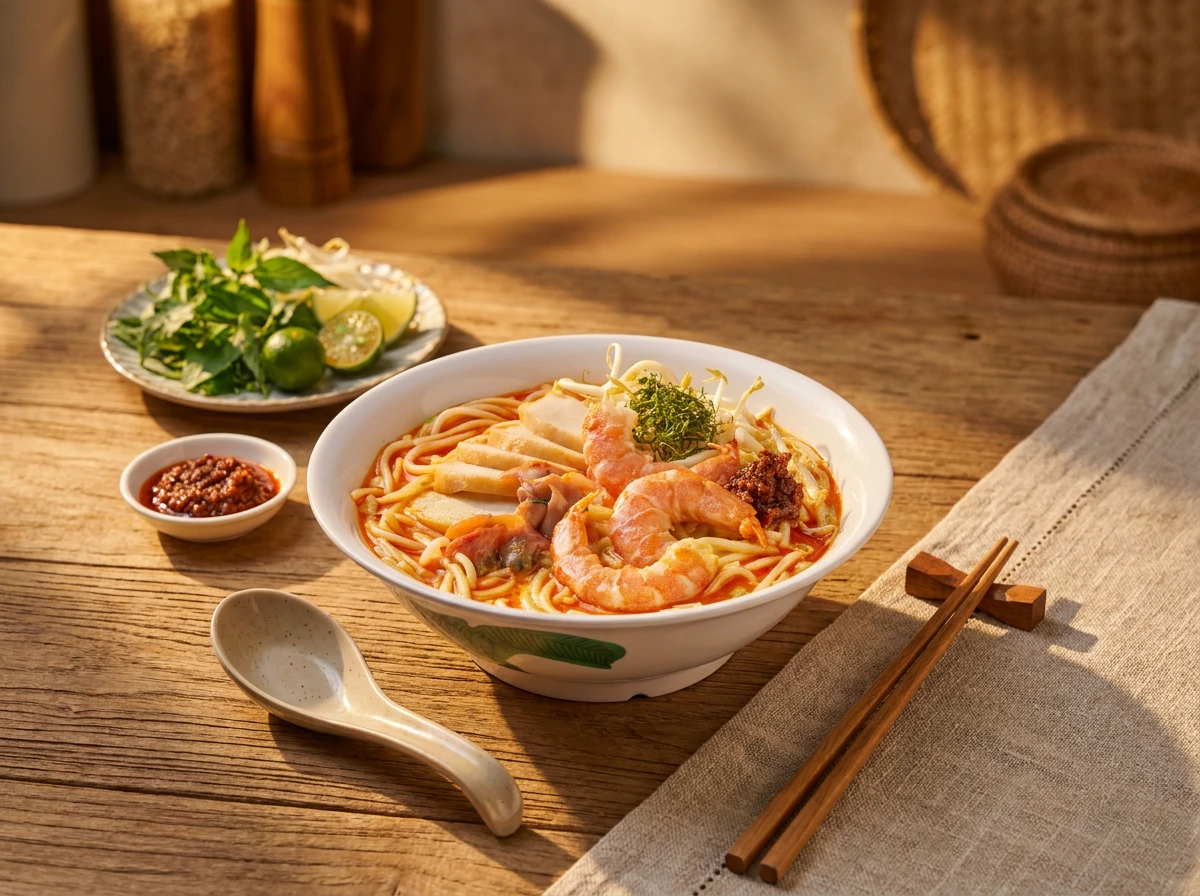
So whenever I ordered laksa at a hawker centre, I was not only ordering lunch. I was testing a memory.
Most bowls failed quietly. Some were too sweet. Some tasted flat, as if the gravy had colour but no depth. Others leaned too hard on coconut milk until every spoonful felt tiring. I would still finish them, because laksa is rarely a bad idea, but I always walked away thinking the same thing, close, but not quite.
I started to wonder if I was being unfair. Maybe I was not looking for laksa at all. Maybe I was looking for my mother, standing over the stove, asking me to taste the gravy before dinner. Maybe no hawker could compete with that.
Then one afternoon, at a hawker stall I had passed many times without much thought, I found it.
The bowl looked ordinary at first. No dramatic presentation, no oversized toppings, no need to announce itself. But the first spoonful stopped me. The gravy had that familiar warmth; dried shrimp, spice, coconut, and a slight roughness that made it taste handmade. The tau pok had soaked up the broth properly. The sambal did not bully the bowl. The noodles were soft in the way I remembered from home.
For a moment, I was not seated at a hawker centre. I was back at our dining table, trying not to splash gravy on my shirt while my mother pretended not to notice.
That is what taste memory does. It turns food into a place you can return to, even when the place has changed. It reminds us that belonging is not always loud or obvious. Sometimes, it is found in a bowl of laksa made by someone who does not know your story, but somehow gets the taste right.
I did not tell the hawker all this, of course. I simply said, “Uncle, very nice.” He nodded, already preparing the next order.
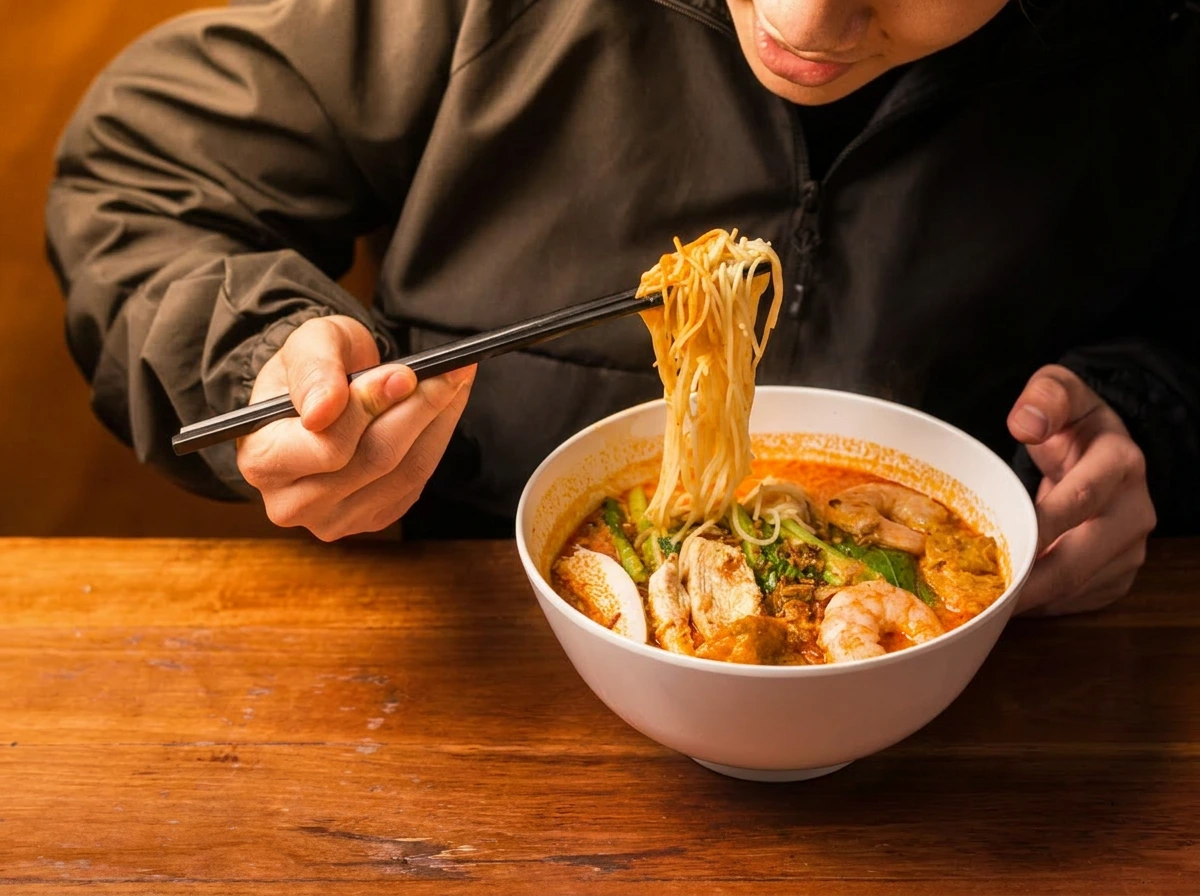
But I went back the following week, and the week after that. Not because it was exactly my mother’s laksa. Nothing can be exact when memory is involved. I returned because it came close enough to make me feel understood.
In Singapore, this is why hawker food matters. It is not only about convenience, price, or tradition. It is about the small emotional maps we carry; the dishes that remind us where we come from, who fed us, and what home used to taste like.
“Some flavours do not just fill the stomach; they bring us home.”
Visit Singapore Hawkers to discover more stories behind the food that shapes our memories.