I spent my childhood standing on a sticky plastic crate behind my family’s hawker stall. While other kids were watching cartoons on Saturday mornings, I was wiping down greasy tables and sorting wet metal spoons. I did not realize it back then, but that cramped space was my first real classroom. Working in a busy food stall teaches you lessons that you simply cannot learn from reading a textbook.
The first thing I learned was the true meaning of patience. Cooking traditional local food is a very stubborn process. My grandmother woke up at three in the morning every single day to start preparing our ingredients. There were absolutely no shortcuts. If you tried to rush the fire, the broth would taste flat. If you boiled the bones too aggressively, the soup became hopelessly cloudy. I watched her stand over the massive aluminum pots for hours; sweating in the suffocating heat of the tiny kitchen. She just waited for the exact right moment to turn down the gas. She taught me that good things require time, consistent effort, and a lot of quiet endurance. You cannot cheat the cooking process, and you cannot fake a good bowl of soup.
The physical environment was brutal. My hands were permanently wrinkled from washing massive stacks of melamine bowls in hot water. Sometimes, the lunchtime crowd was completely overwhelming. Hungry customers could be demanding. They would complain loudly if their food was delayed by just a few minutes. As a teenager, I wanted to argue back. My mother always stopped me with a firm, silent shake of her head. She showed me how to swallow my frustration and keep my hands moving. She explained that losing your temper behind a hot stove only slows you down. You just take a deep breath, focus on the order in front of you, and keep serving the next person. That lesson in emotional control is something I still use every day.
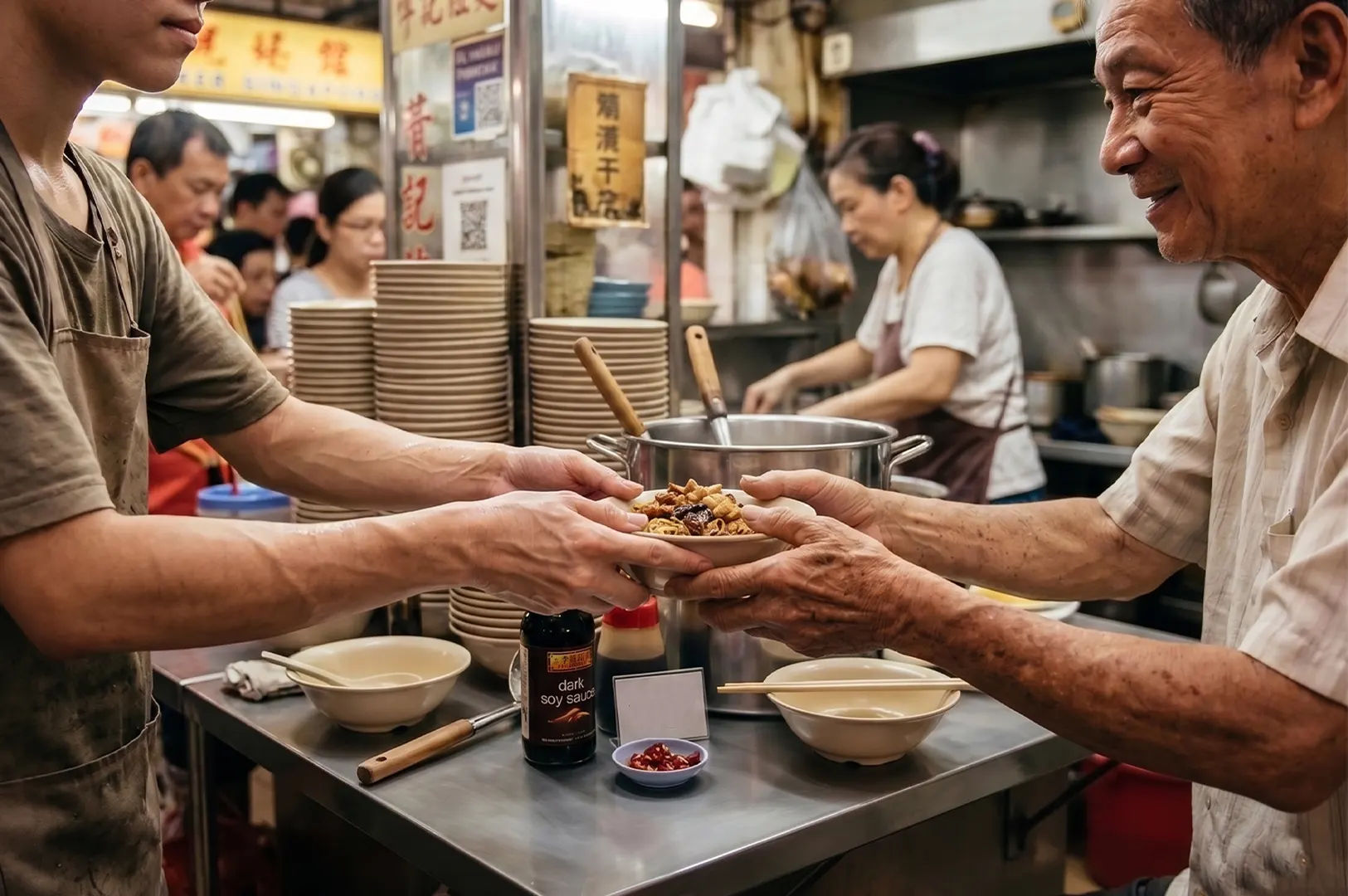
Beyond the intense labor, I learned about the deep importance of community. A hawker centre is essentially a large, chaotic dining room for the entire neighborhood. Over the years, I memorized the specific habits of hundreds of strangers. I knew exactly which retired uncle liked extra dark soy sauce, and which elderly auntie needed softer noodles. People did not just come to our small stall to consume calories. They came to complain about their bosses, share exciting news about their grandchildren, or just find a familiar face. We provided them with a hot meal, and in return, they watched me grow from a clumsy kid into a working adult. They formed a tight, loyal network around our family business.
Looking back, I am deeply grateful for the burns, the blisters, and the exhausting early mornings. The stall gave me a work ethic that I carry into everything I do. It taught me to respect the quiet, unseen labor that keeps our city running smoothly. Most importantly, it showed me that serving food is never just about eating. It is about actively connecting with the people around you, one bowl at a time.
To read more stories about the hardworking families and traditions behind our local food culture, visit our website today.