My journey with local food started in Toa Payoh. When I was a young girl; the Lorong 8 Hawker Centre was practically my family’s dining room. My parents worked long hours, so my dinners were usually eaten on a wobbly plastic table under the bright glare of fluorescent lights. It was never about seeking out famous stalls or following food trends on the internet. It was simply about filling my stomach with good, honest food.
I remember my exact childhood routine. I would order a simple bowl of dry fishball noodles; always with extra chili and a side of soup. The auntie behind the counter knew my face and my usual order. I would sit alone and watch the busy community around me. Old men drank their dark kopi from thick porcelain cups while arguing loudly about the daily news. Large families shared giant plates of greasy oyster omelettes. The air always smelled heavily of fried garlic and sweet soy sauce. That specific neighborhood hawker centre built my fundamental understanding of what Singaporean food should taste like.
As I grew older and started working; my daily world expanded far beyond Toa Payoh. I began to explore different neighborhoods, and I quickly realized that every single food centre has its own distinct personality. My personal food map eventually led me straight to the massive, sprawling Chinatown Complex Food Centre.
Walking into the Chinatown hawker centre for the first time was completely overwhelming. It is a giant maze of narrow aisles and hundreds of competing stalls. It feels much older and far more chaotic than the familiar spaces of my childhood. However, once I learned how to navigate the thick weekend crowds; I found incredible culinary treasures. I discovered stubborn uncles who have been roasting ducks using the exact same method for forty years. I found stalls serving traditional claypot rice, where the intense heat from the charcoal completely dictates the slow pace of your meal.
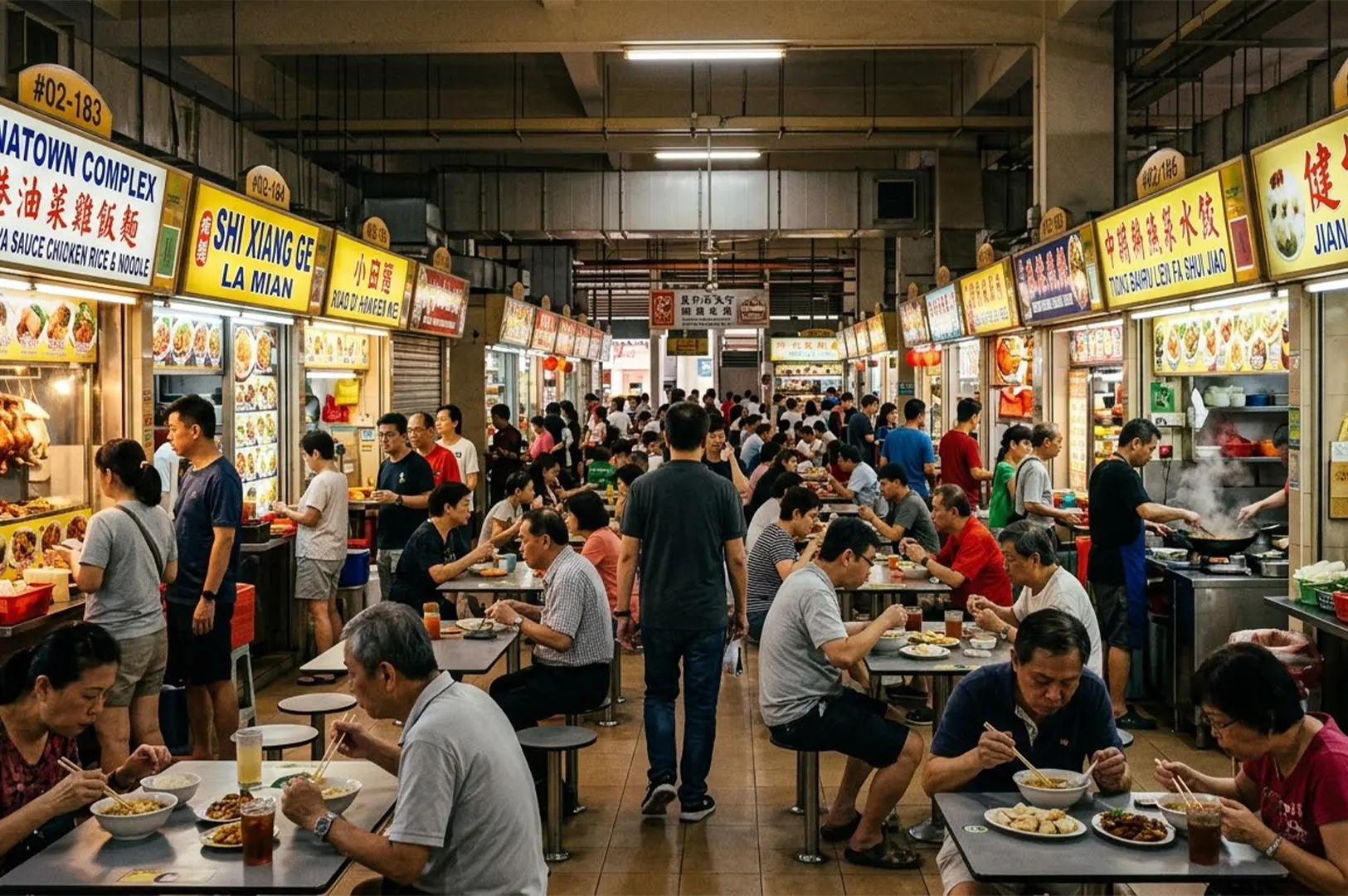
The contrast between my early memories of Toa Payoh and my adult discoveries in Chinatown is fascinating to me. Toa Payoh represents comfort, childhood, and quiet neighborhood routine. Chinatown represents deep heritage, loud energy, and the complex history of our early immigrant culture. Eating in Chinatown feels like participating in a loud historical event; while eating in Toa Payoh simply feels like coming home after a long, tiring day.
This personal journey through our hawker centres taught me something very important. These places do not just feed us calories. They actively track the different stages of our lives. We all have a childhood stall that we measure all other food against. We also have new favorite spots we discover as we grow into adults. No matter where we eventually move across this island; there is always a noisy, crowded food centre waiting to welcome us.
If you want to read more stories about our local culinary heritage and the people behind the stalls, click here to visit us at the Singapore Hawkers website.