
Whenever someone asks me where they should begin their visit to Singapore, I rarely point them first to a shopping mall, rooftop bar, or famous attraction.
I tell them to go to a hawker centre.
It may not look like the most obvious starting point. There are no guided entrances, polished dining rooms, or carefully planned visitor routes. Instead, there are rows of stalls, shared tables, clattering plates, and people deciding what to eat before the lunch crowd arrives.
But that is exactly why it matters.
A hawker centre gives visitors a first look at Singapore as it is actually lived. You see office workers having a quick meal, families sharing dishes, retirees meeting over kopi, and tourists trying to understand the difference between laksa, mee rebus, and char kway teow. Everyone comes for food, but the experience offers much more.
Singapore’s hawker culture grew from the street food traditions of early migrant communities. Chinese, Malay, Indian, and other regional influences shaped the dishes that eventually became part of everyday life here. Over time, street hawkers were moved into organised centres, creating cleaner and more permanent spaces while keeping the spirit of affordable communal dining alive.
That history is still visible in the food.
A bowl of noodles can carry the techniques of southern China. A plate of nasi lemak reflects Malay cooking traditions. Roti prata, biryani, and thosai speak to generations of Indian influence. Peranakan flavours, Indonesian dishes, and regional favourites appear beside them. Visitors do not need to visit a museum to begin understanding Singapore’s multicultural story; they can see it laid out across one table.
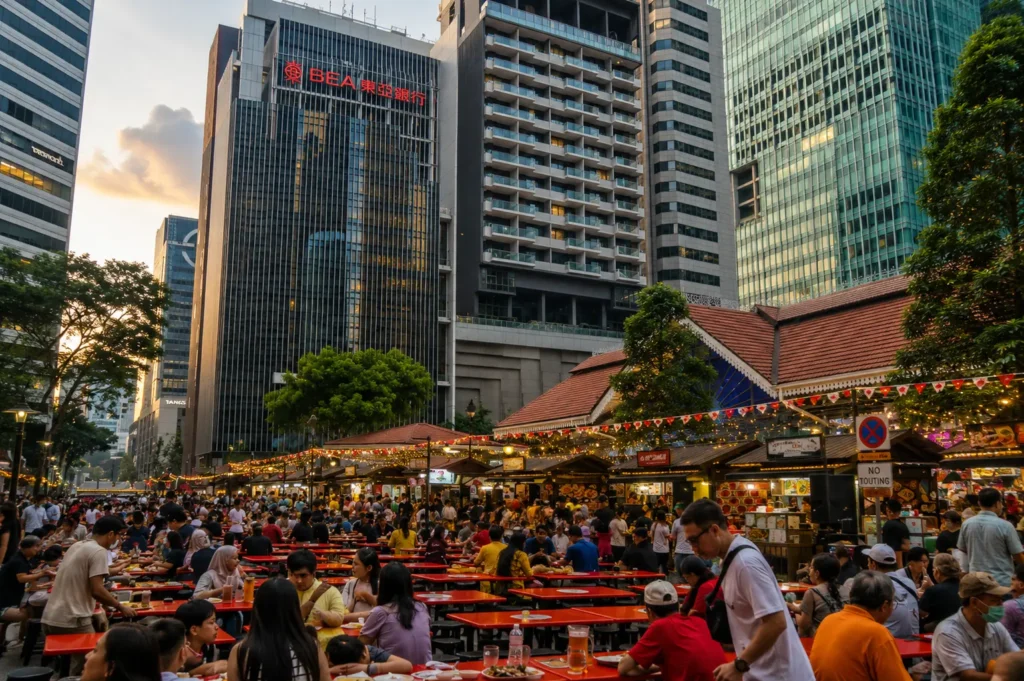
This is why hawker centres are so important to tourism. They allow travellers to participate rather than simply observe. Ordering from a stall, carrying a tray, sharing a table with strangers, and returning your dishes are all small parts of the experience. They help visitors understand the rhythm of daily life.
Hawker centres also make Singapore feel accessible. A traveller does not need a reservation or formal dress. They can arrive hungry, walk around, ask questions, and try several dishes without turning the meal into a major expense. The experience is casual, but it is not insignificant.
I also think hawker centres show visitors a side of Singapore that polished attractions cannot fully capture. They reveal how people from different backgrounds eat in the same space, follow the same unwritten rules, and make room for one another. That shared environment is part of what makes hawker culture worth protecting.
Of course, visitors should see Singapore’s landmarks. They should walk through its neighbourhoods, visit its museums, and admire how much the city has changed. But I believe the story becomes clearer after a meal at a hawker centre.
That is where history stops feeling distant. It becomes something you can taste, share, and remember.
“To understand a place, begin where its people gather to eat.”
Visit Singapore Hawkers to discover more stories, guides, and local favourites that bring you closer to Singapore’s food culture.