
I’d walked past A Noodle Story more times than I can count. The queue always put me off. But last Thursday, hungry and stubborn, I finally joined the line.
It was just past noon. Amoy Street Food Centre was doing its usual lunchtime roar, all clatter and shuffle, office shirts everywhere, the smell of a dozen different woks fighting for space in the air. Someone behind me was already checking their watch. That kind of crowd. Locals know this place well, and on any given day the queue at this famous hawker centre stall tells you everything you need to know about its reputation.
The stall sits at #01-39, tucked into the ground floor of the food centre at 7 Maxwell Road, with a queue that folds back on itself. I waited maybe fifteen minutes. Not terrible, but you feel every minute when the guy in front keeps peering at the pass, willing his bowl to appear. You order, you pay, you wait, you carry it off yourself. No frills. I found a stool at a shared table, a stranger’s tray already sweating condensation next to mine.
A Noodle Story: Where Singapore’s Hawker Culture Meets a Modern Take
Before I get into the food, it’s worth saying a word about what A Noodle Story actually is. Founder Ben Tham built this around a concept you don’t often find among hawker centre noodle stalls: specially ordered thin noodles crafted with a unique recipe, pulling from Japanese ramen sensibility and modern European techniques, then grounding it all firmly in Singapore flavour. It’s a modern take on the kind of bowl most of us grew up with, and it shows in every detail. The stall has talked about its process on Facebook, and it’s the kind of behind-the-scenes detail that makes you eat a little more slowly.
The Singapore-Style Ramen Bowl at Noodle Story
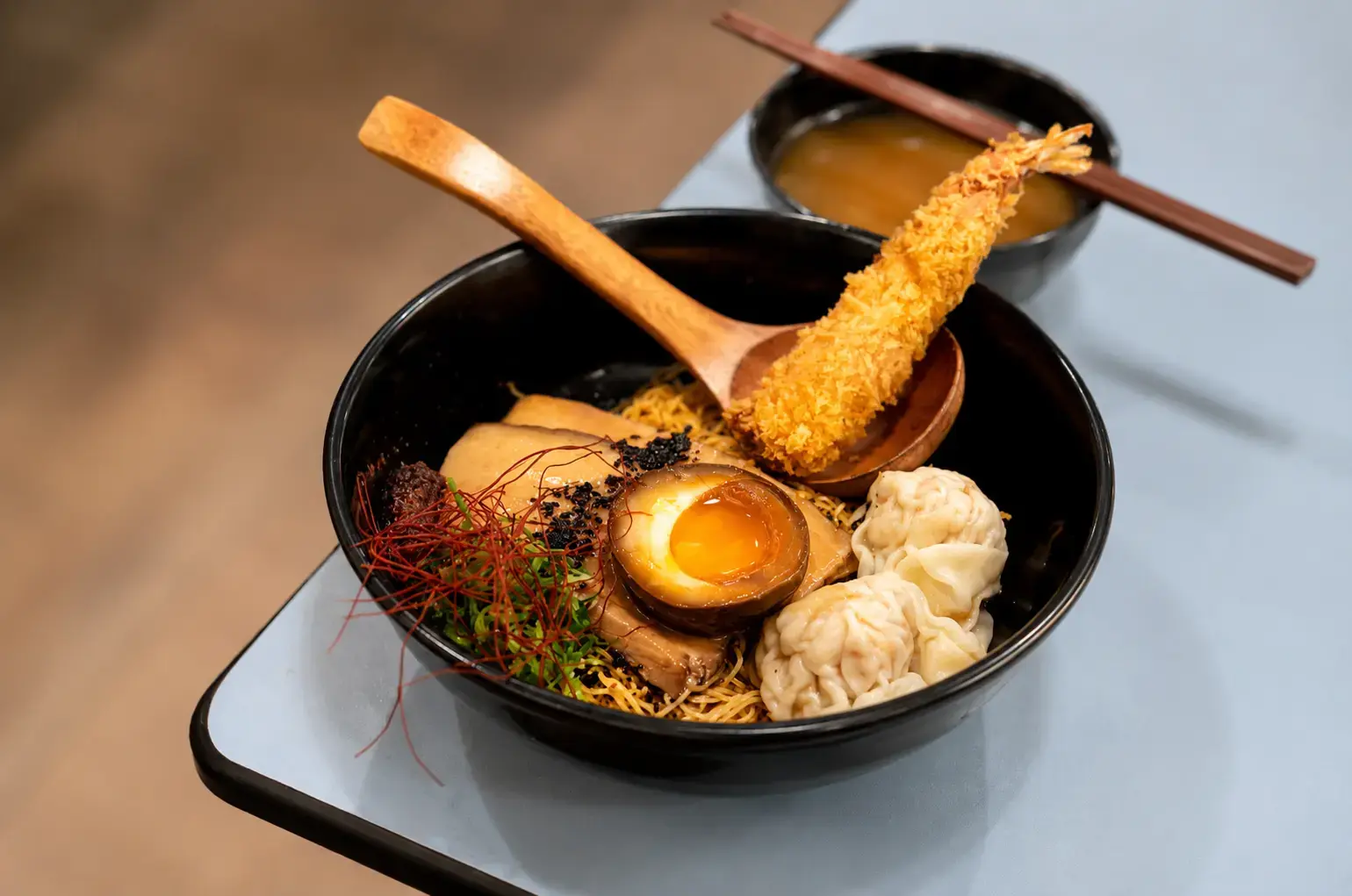
I got the signature Singapore-style ramen. The regular set runs around S$13.50, and the bigger one climbs closer to S$17. I’ll come back to that.
First thing I noticed was how it looked. Neat. Almost too neat for a hawker stall. The noodles sat in a low tangle, glossed in a dark savoury sauce, everything else arranged around them like the cook actually cared where each piece landed. The overall experience started well before the first bite.
The noodles are thin, springy, with a faint alkaline character that gives them a strong alkaline taste some diners might need a moment to adjust to. That said, the lovely bite they carry when tossed through the sauce makes it worth leaning into. I tossed them while they were hot and took a mouthful. Good. The sauce had a quiet sambal heat sitting underneath, not loud, just enough to keep you coming back.
The chashu was the part that stayed with me. Braised pork belly, soft to the point where it barely needed chewing, the fat gone almost liquid. I’ve had plenty of chashu that tries too hard and ends up dry or overly sweet. This one just melted and let you get on with it. Delectable, honestly, in the way that simple things done right tend to be.
Two shrimp wontons, plump, the prawn filling generous and juicy, snapping clean when I bit in. And then the potato-wrapped prawn, the little novelty piece, crisp on the outside with the prawn still juicy inside. I’ll admit I ate that one last, the way you save the thing you’re most curious about.
The hot spring egg went on top. I broke it and let the yolk run into the noodles and soup. That’s the move. It softens the whole bowl, pulls every element of the dish together, and turns something already good into something that lingers in your mouth long after.
Noodle Story’s Michelin Bib Gourmand: Is It Really Worth It?
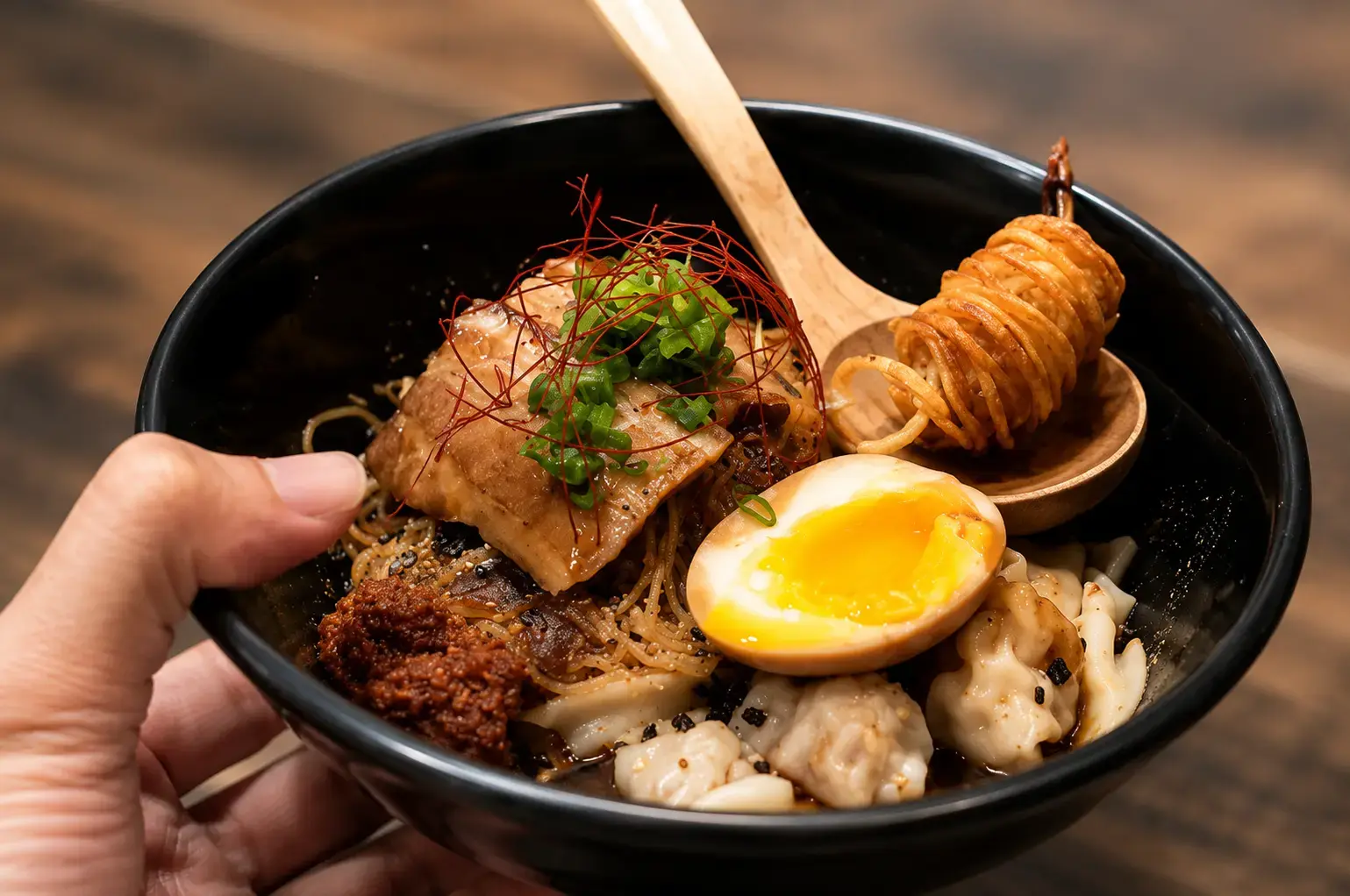
So here’s the thing I kept turning over while I ate. This is a very good bowl of noodles, a genuinely delectable experience by any fair measure. It’s also thirteen-plus dollars for ramen at a hawker centre in Singapore.
I grew up thinking of hawker food as the meal you could always afford. Five dollars, maybe six. A Noodle Story sits well above that, and there’s a part of me that felt it. If you come expecting wanton mee prices, the number on the sign will make you pause. And I’ve seen that comment come up again and again from locals who visit for the first time.
But that’s not really what this is. It’s a different idea wearing hawker clothes. More ingredients, more assembly, more thought per bowl, and the Michelin Bib Gourmand recognition reflects that. A Noodle Story isn’t the only hawker stall to earn that distinction either; many Michelin-recognised hawker stalls across Singapore have built loyal followings by doing something exceptional in their own way. Whether that’s worth the jump is a personal thing.
I’ll also say it’s not traditional wanton mee, and it doesn’t pretend to be. If that’s the comfort you’re chasing, you might walk away feeling like it missed the point. It’s its own thing, making its own space among Singapore’s food stalls.
Visiting A Noodle Story at Amoy Street Food Centre: What to Know
Nearest MRT is Telok Ayer, about a three-minute walk from the food centre at 7 Maxwell. Easy enough.
Hours are Monday to Friday, 11:30am to 2pm and again 5:30 to 7pm. Saturday it’s 11am to 1:15pm, and it’s closed on Sunday. The lunch window is short, so don’t drift in at 1:55 expecting a full menu. Popular dishes can run out, and the place fills fast. Expect that going in and you’ll be fine.
Seating is basic. Stools, shared tables, the usual hawker setup. This is a meal to sit with, eat, and move on from, not a place to linger over a long chat.
Would I Go Back?
Yes, but not every week.
A Noodle Story is best for the curious, the ones who like seeing where local noodles can go when someone like Ben Tham decides to push a little. Foodies, CBD workers with a bit of room in the budget, anyone hunting down the Bib Gourmand names across Singapore’s hawker centres.
If you’re a wanton mee purist, or you don’t eat pork, or you’d rather not queue and pay above the usual for a bowl of ramen at a food stall, this probably isn’t your dish.
Me, I finished mine, sat for a moment in the noise, and found myself thinking about the chashu the whole walk back to the MRT. That’s usually a good sign.
Whether you’re planning your next food hunt or simply love learning about local cuisine, the Singapore Hawkers is your starting point for authentic hawker stories and recommendations.