
The first time I ordered kopi on my own, I froze.
I was maybe nineteen, standing at a drinks stall tucked inside a neighbourhood kopitiam, and the orders were flying past me like a language I half-recognised but couldn’t speak.
“Kopi O kosong.”
“Kopi C siew dai peng.”
“Kopi gau, one.”
The uncle behind the counter didn’t blink. He just kept pouring, one hand already reaching for the next cup before the words finished leaving each person’s mouth. And there I was, holding up the line, trying to remember which combination I’d rehearsed on the walk over.
I said “kopi” and nothing else. He looked at me for half a second, then made it the default way (sweet, strong, condensed milk). It was too sweet for me. But it was mine, and I drank the whole thing.
That’s how it starts for most of us. You don’t learn kopi from a menu. You learn it by getting it slightly wrong, a few times, until one day the kopi terms come out without thinking.
Kopi in Singapore: Why It’s More Than Just a Drink
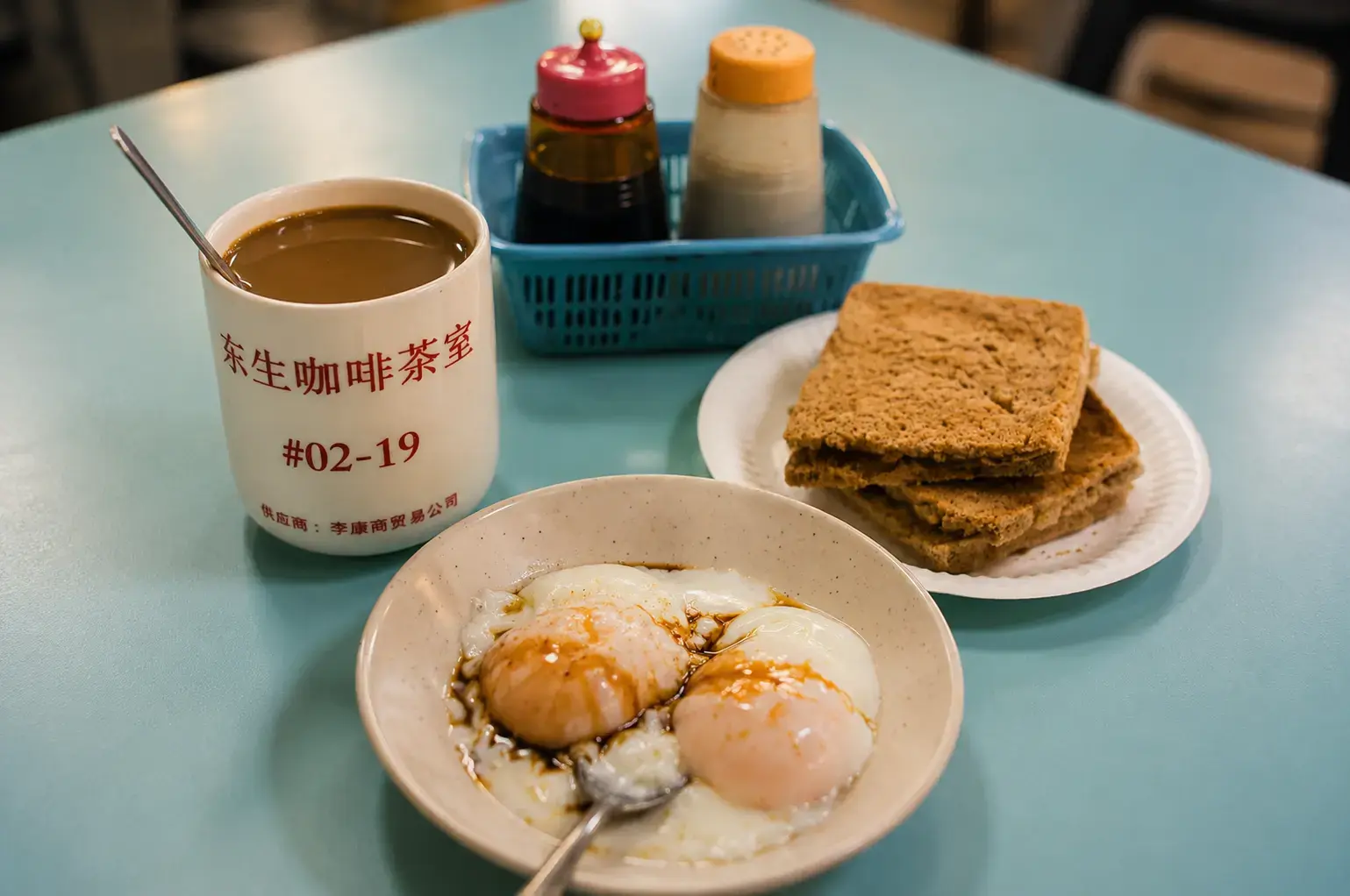
Here’s what I didn’t understand at nineteen: kopi isn’t really about coffee.
It’s about the rhythm of a place. In Singapore, hawker centres run on a quiet daily clock. Uncles arrive at 7am for kopi, kaya toast, and soft-boiled eggs, a newspaper folded under one arm. Office workers rush in at lunch. By mid-afternoon, the same tables hold retirees nursing a warm cup with no hurry to leave.
Kopi threads through all of it. It’s the go-to drink of kopitiam culture, the beverage that ties a morning together, the thing you order almost on instinct.
Our hawker culture is officially part of the country’s heritage now. UNESCO inscribed Hawker Culture in Singapore onto its Representative List on 16 December 2020, recognising these centres as community dining rooms (spaces where people from every background sit, eat, and talk over a cheap, honest cup). Specialty coffee shops have their place, but there’s a reason locals keep coming back to the stalls.
And that cup carries our whole mix of languages in a few syllables. “Kosong” comes from Malay, meaning empty or zero. “Siew dai, gau, po,” and “peng” come from Chinese dialect. English holds the middle together. When you order kopi in Singapore, you’re speaking a little bit of everyone who built this place.
What I love most is that it was never meant to impress anyone.
Café coffee is performative. You get the origin story, the tasting notes, the slow pour. Kopi is the opposite. You say your order, you pay, you step aside. The whole exchange takes seconds. That efficiency isn’t rudeness (it’s respect for the queue behind you, and for the fact that everyone here has somewhere to be).
The Beans, the Roast, and What Makes Kopi Taste Like Kopi
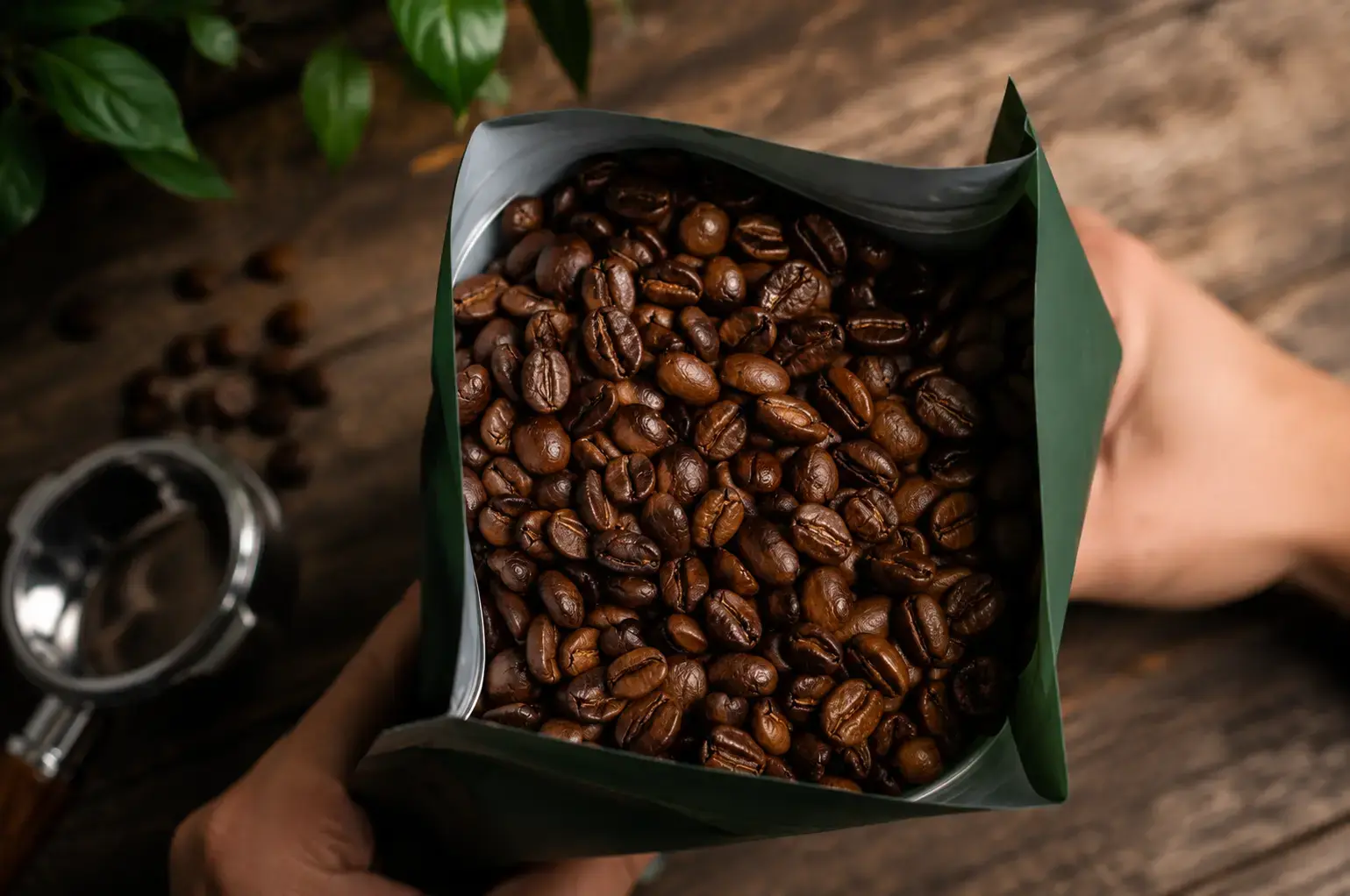
Before we get to the ordering, it helps to understand what’s actually in the cup.
Singapore kopi is traditionally brewed from robusta coffee beans, not the arabica you’d find in most specialty cafes. Robusta beans produce a stronger, more bitter base, which is exactly why condensed milk and sugar became central to the local taste. The roasting process is part of it too. The beans are typically roasted with sugar, butter, or margarine (which gives local kopi that distinctive dark, almost caramelised aroma that hangs over the stall in the morning).
You’ll also notice the brew method. At most kopitiam stalls, the coffee is brewed by pouring hot water through a long cloth sock filter, sometimes called a “kopi sock.” It’s not a slow-drip situation (it’s fast, practiced, and consistent). The result is a strong coffee that’s meant to be softened by milk and sweetness, or drunk black for those who want the full, slightly bitter hit.
Places like Ya Kun Kaya Toast and Tong Ah Eating House have become well-known names in this tradition, pairing their kopi with charcoal grilled toast spread with kaya and butter (or margarine). That combination of a hot aromatic cup beside crisp, fragrant toast is probably the most Singaporean breakfast you can have.
The Kopi Menu Nobody Writes Down
Nobody hands you a kopi guide at the stall. You’re expected to know, or to learn fast.
So here’s the version I wish someone had shown me at nineteen.
| What you say | What you get |
|---|---|
| Kopi | Coffee with condensed milk (the sweet, strong default) |
| Kopi O | Black coffee with sugar, no milk |
| Kopi O Kosong | Black coffee, no sugar, no milk |
| Kopi C | Coffee with evaporated milk and sugar (creamier, lighter than condensed milk) |
| Kopi C Kosong | Coffee with evaporated milk, no sugar |
| Kopi Peng | Iced coffee (a lifesaver in our heat) |
| Kopi Gau | Stronger, thicker brew |
| Kopi Po | Weaker, lighter brew |
| Kopi Siew Dai | Less sweet |
| Kopi Gah Dai | Sweeter |
| Yuan Yang (Kopi Cham) | Coffee mixed with tea, for those who can’t decide |
| Once you see the pattern, it stops feeling like a code. It’s just building blocks. “Siew dai” less sugar, “gah dai” sweeter, “gau” stronger, “po” weaker, “peng” iced. You stack them onto your base drink in the order they naturally come. |
One honest note on sweetness. A regular kopi can carry around four teaspoons of sugar, which surprised me the day I found out. If you grew up on the sweet default like I did, ordering “siew dai” is a small, easy way to pull back the sweetness level without giving up the flavour you love. If you have a really strong sweet tooth, “gah dai” adds even more.
Pro tip: If you’re not sure a stall’s coffee is any good, order it “kosong” or “siew dai” once. Condensed milk and sugar can hide a weak, watery brew. A good kopi still tastes strong and aromatic even when you strip the sweetness away. The robusta beans should do the talking.
How to Order Kopi Like a Local
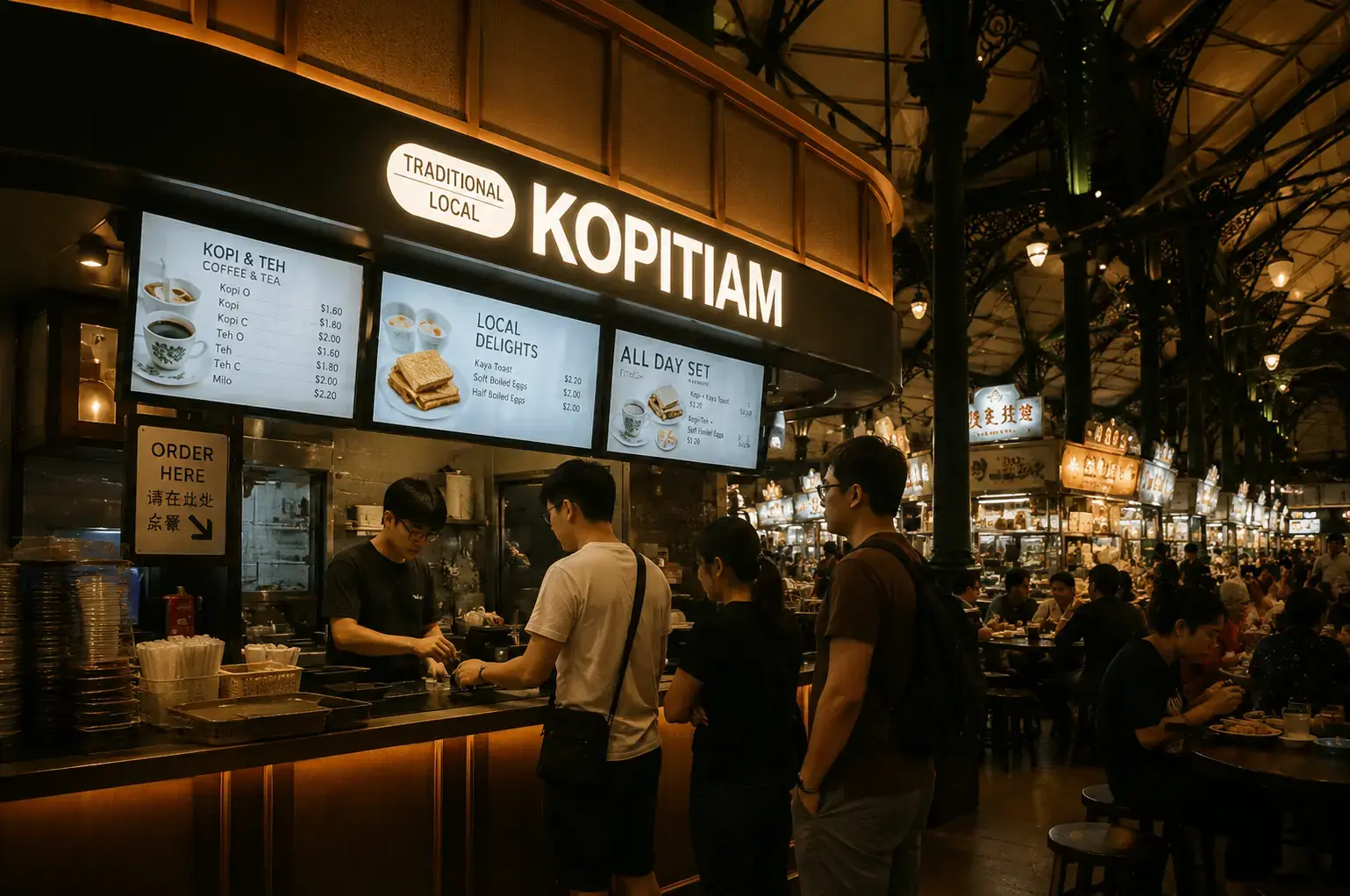
The whole thing runs on one simple formula:
Base drink + milk or sugar preference + strength + hot or iced
That’s it. Let’s go through the main ones.
Kopi O and Kopi O Kosong: For the Black Coffee Drinker
Kopi O is black coffee with sugar, no milk. It’s direct, strong coffee, brewed and served hot with just enough sweetness to take the edge off the bitterness. If you like your black coffee a little sweet, this is your order.
Kopi O Kosong strips it back further. No sugar, no milk. Just the brewed coffee in your own cup, exactly as it came off the stall. It’s the purist’s choice, and honestly a good way to test whether the beans and roasting process at a particular stall are worth coming back for.
Kopi C and Kopi C Kosong: The Evaporated Milk Option
Kopi C uses evaporated milk instead of condensed milk, which makes it creamier but less dense in sweetness. If regular kopi feels too heavy or too sweet, Kopi C is often the better starting point. It also tends to have a slightly frothy top when freshly poured, which I’ve always liked.
Kopi C Kosong gives you the same evaporated milk creaminess without added sugar. Good for those who want the milkiness but prefer to manage their own sweetness level.
Kopi Siew Dai and Kopi Siew: Less Sweet, Still Local
Kopi Siew Dai (sometimes shortened to Kopi Siew) is the order for anyone who finds standard kopi a touch too sweet but doesn’t want to go fully unsweetened. The stall uncle reduces the amount of condensed milk or sugar, leaving you with a cup that still tastes local, just pulled back a little.
I’d call this the everyday compromise. It’s what a lot of regulars settle into once the morning sweet tooth starts to feel like a habit worth softening.
Kopi Peng: The Iced Coffee You Need
Kopi Peng is simply kopi served over ice. In Singapore’s heat, this one sells itself. You can combine “peng” with almost any base order: Kopi O Kosong Peng, Kopi C Siew Dai Peng, whatever suits you. The ice dilutes the drink slightly as it melts, so if you want it strong, ask for kopi gau peng.
My usual, for what it’s worth: Kopi C Siew Dai Peng. Iced coffee, evaporated milk, less sweet. It carries all the local flavour without weighing you down in the middle of a humid afternoon.
Kopi Gu (Gau): For When You Need It Strong
Kopi Gu (or Kopi Gau) is the stronger version. The coffee is brewed longer or with a higher ratio of grounds, giving you a thicker, more intense cup. If the standard brew feels mild, this is the adjustment to make.
A word of honest advice: Kopi Gau at a good stall is genuinely bold. If you’re not used to strong coffee, ease in with the regular version first.
Gah Dai: For the Sweet Tooth
Gah Dai means extra sweet. The stall adds more condensed milk or sugar than the standard pour. If you’ve tried kopi and found it not sweet enough (which does happen, especially for first-timers used to very sweet iced drinks), this is the word to add.
Kaya Toast: What to Eat Alongside Your Cup
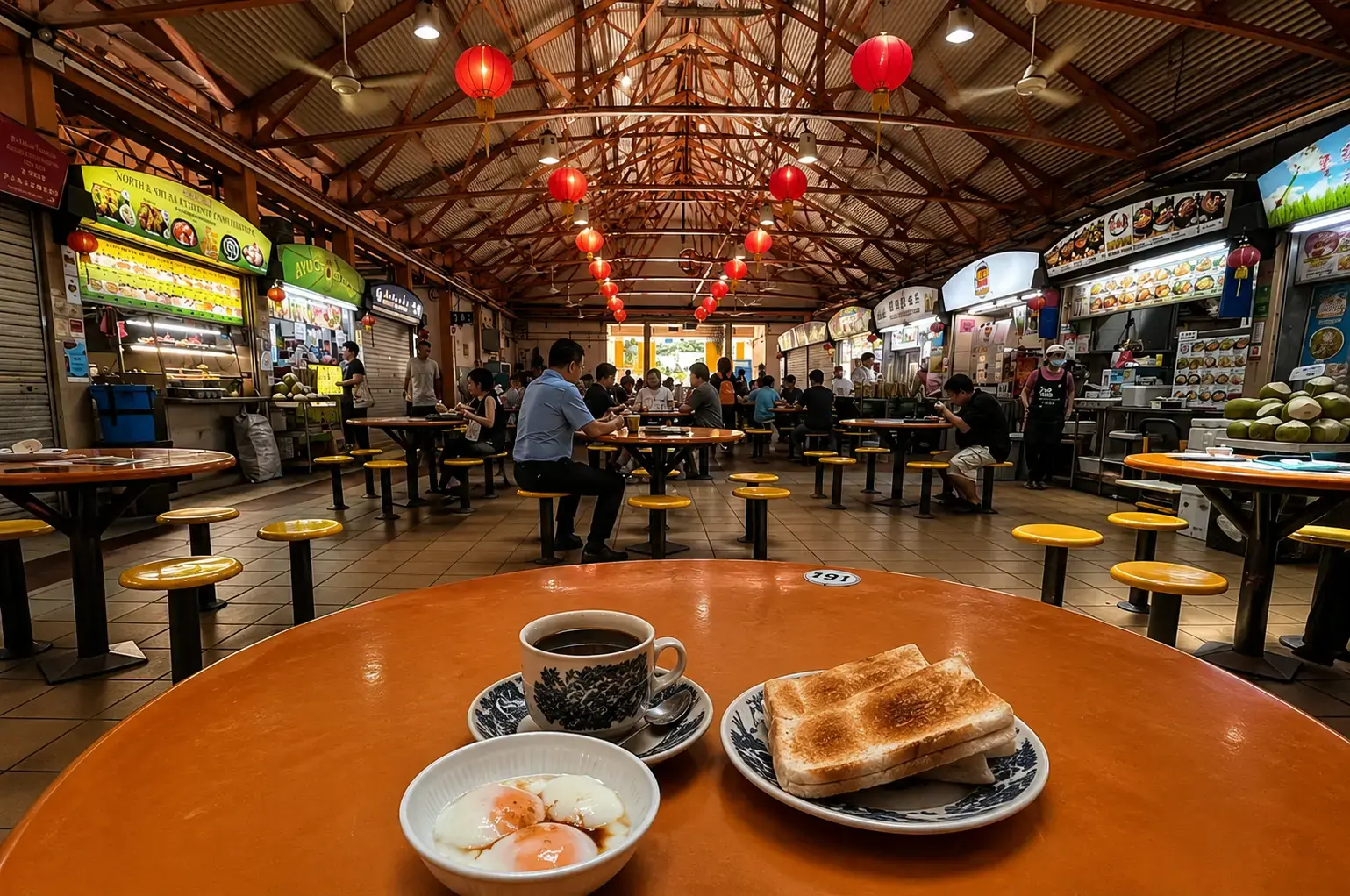
Kopi without kaya toast is a cup without a story.
The classic pairing is simple: charcoal grilled toast spread with kaya (a coconut and egg jam, slightly sweet and fragrant) and a thin slab of butter or margarine. On the side, you get soft-boiled eggs seasoned with a little soy sauce and white pepper. The eggs go into a small bowl, you break the yolk, mix it around, and eat it while the toast is still warm and the kopi is still hot.
This is the full Singapore hawker breakfast. Not a trend. Not a concept. Just a ritual that’s been repeated at kopitiam tables across the island every morning for generations.
If you want to experience it properly, go to an older food centre like Tiong Bahru Market or Chinatown Complex Food Centre, where the breakfast crowd still feels unhurried and the stall uncles haven’t changed their routine in decades.
Where and When to Feel Kopi Culture Properly
You can order kopi almost anywhere on this island. But if you want to actually feel the culture, not just drink the beverage, timing and place both matter.
Go in the morning.
Early morning is when the full ritual shows itself: kopi, kaya toast, soft-boiled eggs, the shuffle of regulars who’ve claimed the same seats for years. This is the version of hawker life that photographs plainly and feels like everything.
For heritage atmosphere, I’d point you to Tiong Bahru Market or Chinatown Complex Food Centre. These older centres carry a slower, deeper breakfast culture (the kind where the drinks uncle knows his regulars by their order, not their names). Sit for a while. Watch how people move.
If you’re a first-timer or bringing visitors, Maxwell Food Centre is a gentler entry point. It’s central, used to tourists and office crowds, so you won’t feel out of place fumbling your first order.
Mid-afternoon has its own quiet charm too. The breakfast rush is gone, the lunch crowd has thinned, and kopi becomes less of a fuel and more of a pause in the day.
Pro tip: Bring small cash. Most stalls now accept digital payment, but the older kopitiam stalls still move faster with coins and small notes. And during peak hours, bring patience more than anything (the queue looks long but clears quickly, because everyone knows exactly what they want).
The Unspoken Rules of the Kopitiam
There’s no rulebook, but there is etiquette. Most of it is common sense wearing local clothes.
Know your order before you reach the front. Say it clearly. Pay promptly. Step aside once your drink is being served, so the next person can go. That’s the whole of it.
Hawker centres are shared spaces. Seating is communal, tables are close, and you’ll often sit beside strangers. That closeness is the point. It’s why the same UNESCO recognition describes these centres as places where people from different walks of life share meals and interact.
If you overexplain your order, or treat the counter like a specialty café where you can customise endlessly, you’ll feel the impatience behind you. It’s not personal. It’s just the pace. Learn it once and you’ll never feel like an outsider again.
Here’s the cultural detail I keep coming back to:
In Singapore, kopi isn’t ordered like a café drink. It’s spoken like a local code, shaped by habit, dialect, and the pace of kopitiam life. The uncle who made my first too-sweet cup didn’t say a word to me. He didn’t need to. The drink said it for him: this is how we do it here, and now you know.
One Last Cup
I still drink Kopi C Siew Dai Peng most mornings. It took me years to land on it, and getting there meant a lot of cups that were too sweet, too weak, or just not mine yet.
That’s the quiet gift of kopi. It’s cheap, it’s brewed fresh at almost every hawker centre on the island, and it asks nothing of you except that you learn its handful of words. Once you do, you’re not a visitor at the counter anymore. You’re part of the rhythm.
So the next time you’re standing at a drinks stall, unsure and holding up the line a little, don’t worry about getting it perfect. Order something. Get it slightly wrong. Come back the next morning and get it a little more right.
That’s how all of us learned.
If this guide gave you a little more confidence to step up to that drinks stall, there’s plenty more waiting for you. Head over to Singapore Hawkers for honest guides, hawker centre stories, and more of the local food culture that makes this island worth eating through, one cup and one plate at a time.